When Not to DIY
Decision guides for repairs that should be documented, reported, or handled by qualified help.
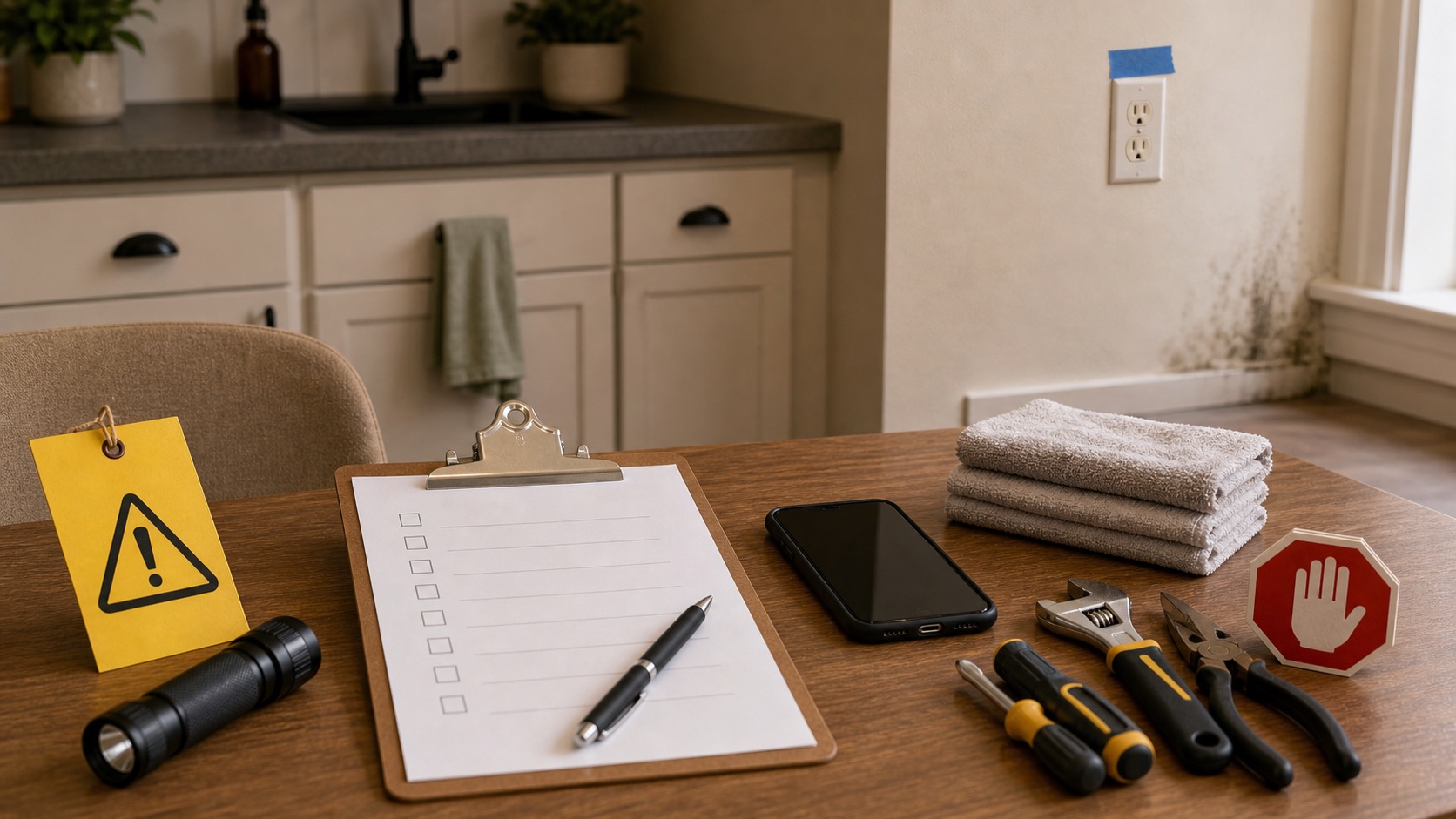
Who This Category Is For
Use this section before a repair crosses into electricity, gas, water, HVAC, locks, appliances, structure, mold, sewage, or anything your lease controls.
Who This Page Is For
This page is for readers who want permission to stop. It helps beginners and renters separate small, reversible tasks from work that belongs to maintenance, a landlord, a utility company, emergency services, or a licensed professional.
Use it before touching electrical parts, plumbing beyond simple observation, locks, HVAC, appliances, mold, pest problems, water damage, structural issues, or anything connected to safety systems. A good outcome is often a clear photo, a calm message, and no unnecessary damage.
It is also useful after you have already tried one safe check and the problem still feels wrong. Repeated failures, worsening symptoms, unclear ownership, missing labels, active water, unusual smells, heat, noise, or anything that affects security are signs that documentation matters more than another attempt.
What to Read First
- Is this repair safe to DIY? - Run the basic decision filter before taking anything apart.
- Small water leak while waiting - Limit damage, avoid electricity, and document the leak without pretending to repair plumbing.
- Heat or AC not working - Check safe basics, document temperature, and avoid unsafe workarounds.
- Safe appliance troubleshooting - Stay with settings, filters, airflow, and documentation instead of opening machines.
Common Beginner Mistakes
- Continuing because a video made the repair look short.
- Opening panels, covers, valves, locks, or appliances without knowing who owns them.
- Skipping photos before cleanup, which makes maintenance harder to understand later.
- Using chemical drain cleaners, improvised electrical fixes, or force on stuck parts.
- Waiting too long to report water, heat, cooling, pest, mold, or security issues in a rental.
- Assuming a problem is safe because it is quiet, hidden, or intermittent. Repeating symptoms can matter even when nothing looks dramatic.
Renter Notes
- Your lease may require the property owner to handle building systems even when the issue looks small.
- Written reports are better than verbal-only reports. Include the location, date, what changed, photos, and whether the problem is getting worse.
- Do not hire outside repair help for property-owned systems unless your lease or property manager allows it in writing.
When to Stop and Ask for Help
Stop immediately for gas smell, smoke, sparks, warm outlets, buzzing panels, active leaks, sewage, flooding, ceiling stains, spreading mold, broken exterior locks, no heat or cooling in unsafe weather, appliance failure, structural cracking, or anything that could affect another unit. Your job is to stay safe, prevent avoidable damage, and contact the right channel.
FAQ
Is calling maintenance overreacting?
No. For rental systems, early reporting protects you, the property, and neighboring units. A short dated note is often the responsible step.
What should I include in a maintenance request?
Include the room, exact location, when you noticed it, photos or video, what you tried safely, and whether it is active, recurring, or getting worse.
Can I still do small fixes as a renter?
Yes, when they are dry, visible, reversible, allowed, and do not involve building systems or safety equipment.
What if I am embarrassed that the issue might be simple?
Send the report anyway when safety, property systems, or habitability are involved. A clear note is better than a delayed report after water, heat, locks, or electrical symptoms get worse.
Guides in This Category
- When Not to DIY a Home Repair - Clear stop signs for repairs that are unsafe, lease-sensitive, or require licensed help.
- Safe to DIY? A Renter's Home Repair Filter - Use a simple safety filter before deciding whether to DIY a repair in your first place.
When to Stop
Stop when a task becomes unsafe, lease-sensitive, wet, electrical, structural, lock-related, or beyond a small reversible fix.