Safe to DIY? A Renter's Home Repair Filter
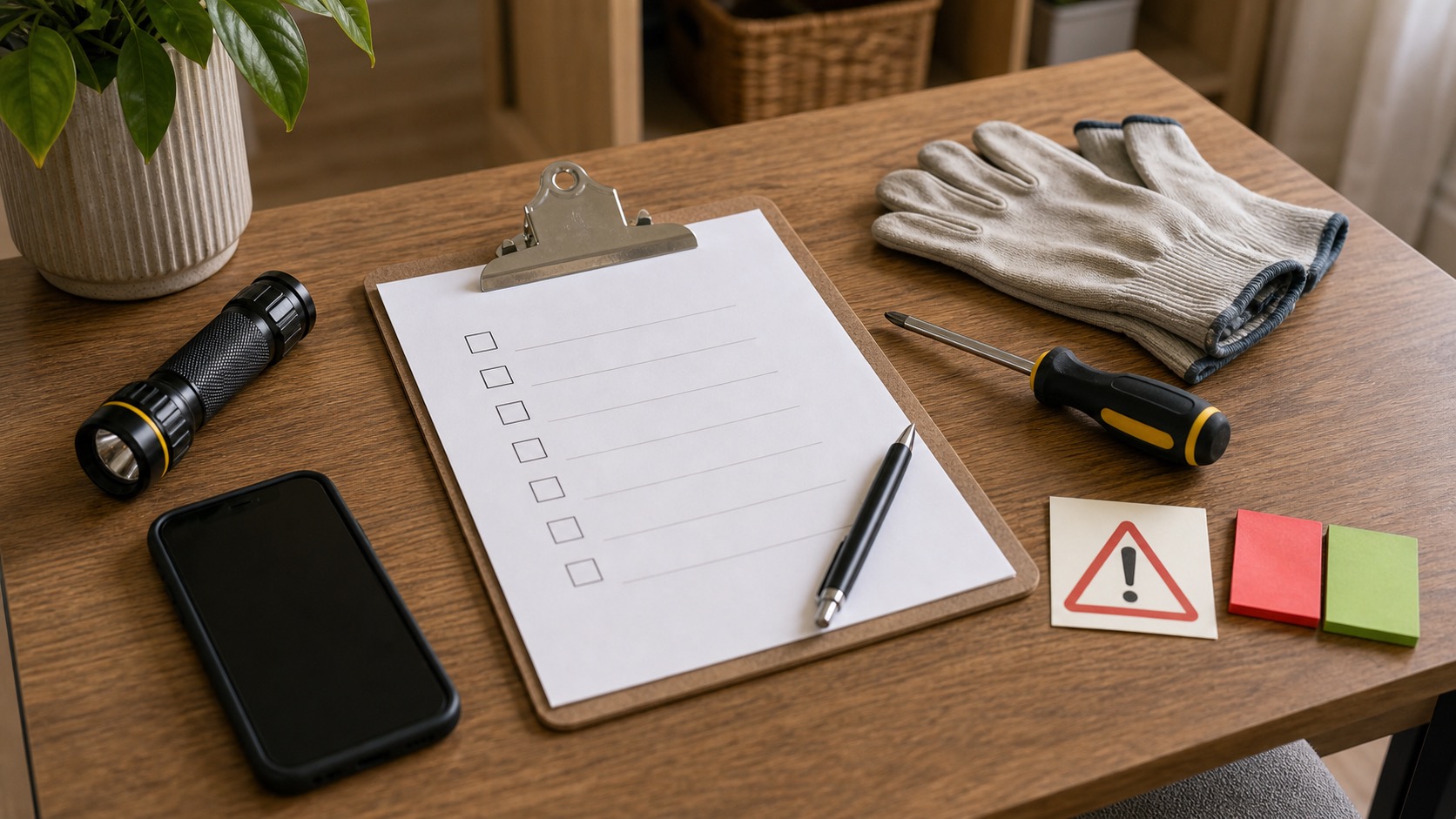
Before following a repair tutorial, use this safety filter for loose parts, leaks, outages, smells, cracks, or any problem that feels bigger than a simple hand-tool task. The goal is to decide before tools come out.
By Portia Me'uan Thomas. Updated August 17, 2026. Edited for renter-aware safety.
Time: 5-10 minutes before starting. Difficulty: Easy. Safety: High importance.
Quick Answer
A repair is more likely DIY-friendly if it is small, reversible, dry, non-electrical, non-structural, allowed by your lease, and uses basic hand tools. Stop and call help for electricity, gas, major water, sewage, mold, locks, appliances, height, structural damage, or anything you cannot undo.
Before You Start
- Ask whether the task touches electricity, gas, water supply, structure, locks, appliances, height, mold, or shared systems.
- Check whether the change is reversible and allowed by your lease.
- Take photos before touching anything if there may be property damage.
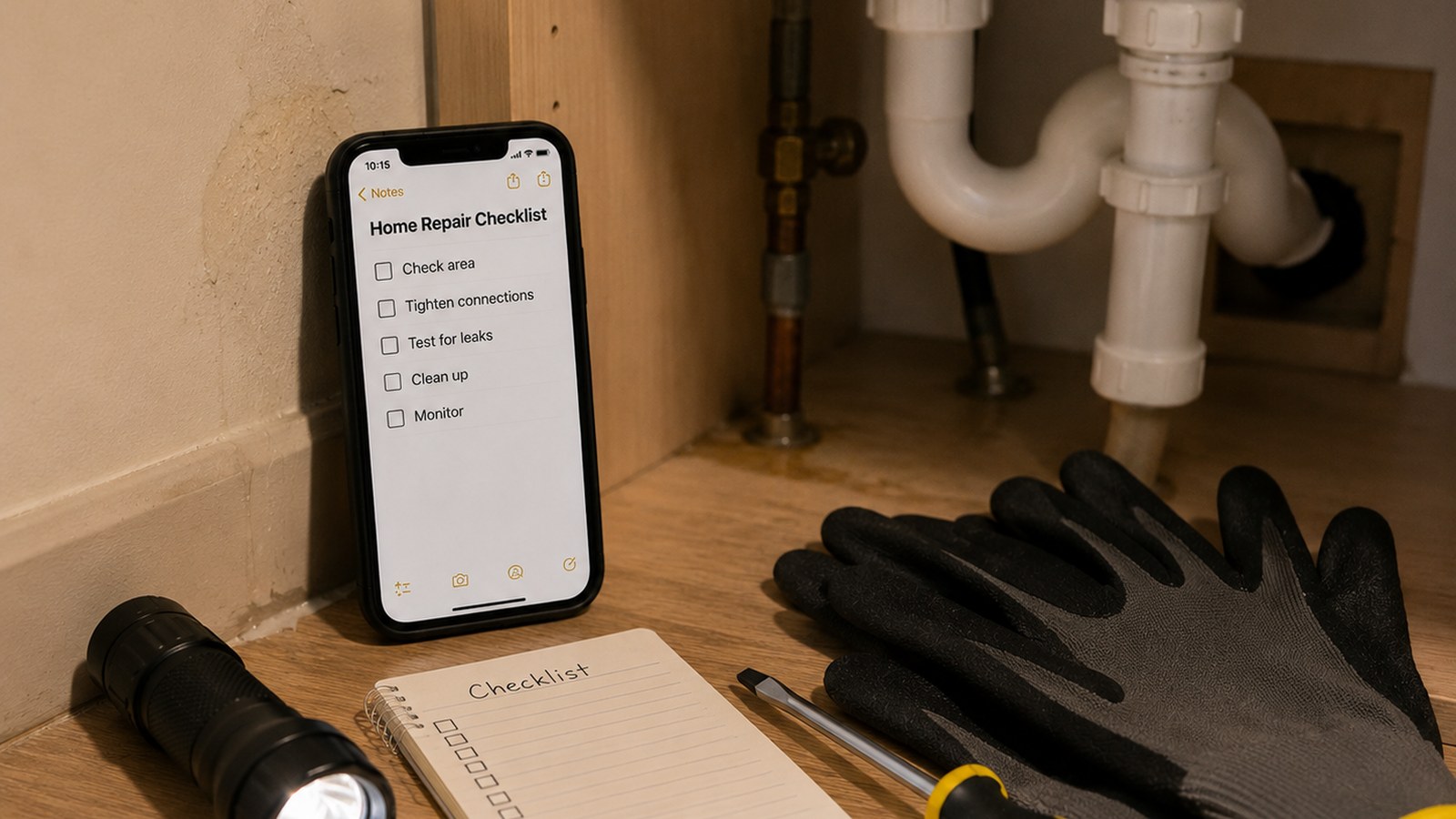
Tools Needed
- Phone for photos
- Lease or resident portal
- Notes app
- Maintenance contact information
- Basic flashlight
Renter Notes
For renters, safety includes lease responsibility. If the repair affects building systems, security, plumbing, wiring, appliances, walls, floors, or shared spaces, contact your landlord or maintenance team before attempting it.
Step-by-Step Guide
- Name the problem in plain language: loose screw, slow drain, active leak, no power, broken lock, or unknown smell.
What I check before the next step: I look for spreading water, wet electrical areas, sewage odor, swelling, or moisture below the fixture. Any of those turns this into a stop-and-report issue. - Check for immediate danger such as smoke, sparks, gas smell, carbon monoxide alarm, flooding, or personal safety risk.
What I check before the next step: I stay dry and hands-off with wiring or panels. Smoke, sparks, heat, burning smell, carbon monoxide alarms, repeated trips, or wet electrical areas mean stop immediately. - Decide whether the task is reversible and limited to cleaning, tightening, measuring, or replacing a simple consumable.
What I check before the next step: I do not mix chemicals or scrub harder if the finish changes. I ventilate, spot-check, and stop for strong odor, spreading stains, mold growth, or damaged surfaces. - Check whether the repair affects landlord-owned systems such as plumbing, electrical, HVAC, appliances, doors, windows, or walls.
What I check before the next step: I stay with accessible, user-facing checks only. Heat, burning smell, leaks, damaged cords, error codes, or panel access means the next step is maintenance. - If the answer is unclear, document the issue and contact maintenance before starting.
What I check before the next step: I make the note useful: date, location, what changed, one wide photo, and one close-up before I touch anything else. - If it is clearly low-risk, use the smallest effective step and stop if the problem changes or gets worse.
What I check before the next step: This is where I decide: if the issue is clearly better, I finish with the checklist; if not, I document it and use the stop line instead of improvising.
Safe Next Steps
- If the result improved, do one normal-use test and finish with the checklist item: Immediate danger checked.
- When a problem crosses into electricity, gas, active water, sewage, HVAC, locks, structure, mold, appliance internals, or immediate danger, the next step is documentation and escalation, not another DIY attempt.
- If the result did not improve or got worse, do not add force, stronger chemicals, hidden disassembly, or a new tool. Call emergency services for the stop signs listed below.
- For a rental, send a short maintenance message with where the issue is, when you noticed it, what changed, what safe check you tried, and two photos. Keep the confirmation.
Common Mistakes
- Letting a short online video make a risky repair look routine.
- Starting with a drill, pry bar, chemical, or power tool before understanding the risk.
- Forgetting that rental property damage can become a lease or deposit issue.
Decision framework
A safe DIY repair is not just a repair that looks easy in a video. For a beginner or renter, I define it as small, visible, dry, reversible, allowed by the lease, and possible with a basic hand tool or gentle cleaning method.
The opposite category is not failure. It is any problem where the safer skill is recognizing ownership, risk, and the right help channel before damage spreads.
What to Check Before You Act
Use this scoring table before a task. It is not a permission slip; it is a way to slow down and make the hidden risk visible.
| Check | Before | After | Interpretation |
|---|---|---|---|
| Reversibility score | Can I undo this in 2 minutes? | Yes = lower risk; no = report first | Non-reversible work is usually not beginner rental DIY. |
| System contact | Does it touch water, power, gas, HVAC, locks, structure, appliance interior? | Any yes = stop or ask | Building systems raise the risk even if the visible part is small. |
| Tool force | Hand pressure only? | Force, drill, pry, chemical, or ladder = higher risk | The more force needed, the faster a mistake becomes damage. |
| Lease clarity | Allowed in writing? | Unclear = maintenance message | Permission is part of safety for renters. |
Common Situations and Stop Points
| Symptom | Possible context | Safe first check | Stop point |
|---|---|---|---|
| Loose visible interior screw | Normal vibration or stripped screw | Photograph and gently tighten once | Screw spins, lock involved, or door will not latch |
| Slow single drain | Hair or surface buildup | Time drain and remove visible debris | Multiple drains slow, sewage odor, leak, or backup |
| Light flickers or outlet warm | Electrical fault, load issue, or fixture problem | Turn off use and document | Any heat, smell, buzz, sparks, repeated trip |
| HVAC not responding | Thermostat setting, filter, or system fault | Check thermostat mode and clear vents | Gas smell, CO alarm, burning smell, ice, water, unsafe temperature |
Try It or Report It?
| Situation | Beginner can try | Do not touch | Contact |
|---|---|---|---|
| Small, dry, visible, reversible task | Clean, measure, tighten, replace a simple consumable | Hidden systems or permanent changes | Document if anything looks damaged |
| Active water or stain | Move belongings, bucket, photos, timing notes | Pipes, valves that resist, walls, ceilings | Emergency maintenance if active or spreading |
| Electrical symptom | Switch off, unplug if safe, photograph from distance | Outlets, wiring, fixture internals, panel covers | Maintenance, licensed electrician, or emergency services |
| Entry lock or security concern | Test from inside, photograph, report | Lock cylinder, strike drilling, lock picking | Landlord, approved locksmith, emergency help if unsafe |
Renter-Safe First Steps
- Tightening a visible screw on an interior, non-security item.
- Cleaning visible hair from a drain cover without chemicals.
- Testing a smoke detector with the test button from a stable position.
- Measuring, photographing, timing, and documenting symptoms.
Stop Lines
- Stop for gas smell, smoke, sparks, burning smell, or carbon monoxide alarm.
- Stop for active flooding, sewage, spreading ceiling stains, or water near electricity.
- Stop for mold growth that is recurring, widespread, fuzzy, or tied to moisture.
- Stop for entry locks, structural movement, appliance internals, HVAC panels, roofs, or high ladders.
- Stop whenever the lease, manual, or your own understanding is unclear.
Additional FAQ
Is a task safe because it only needs a screwdriver?
No. A screwdriver on a cabinet pull is different from a screwdriver on an outlet cover, appliance panel, entry lock, or HVAC access panel.
What should I do if I already started and feel unsure?
Stop, make the area safe, take photos, write down what you touched, and contact maintenance without guessing further.
Does calling maintenance mean I failed at DIY?
No. For renters, calling maintenance at the right time is part of the repair skill.
Related Next Steps
- When Not to DIY a Home Repair - Use it for the larger stop-sign list.
- Starter Tools for Living Alone: What Actually Earns Space - Build a small kit that supports safe checks.
- Small Water Leak: What to Do While Waiting for Maintenance - See the leak-specific version of stop, document, and report.
What Not to Do
- Do not DIY electrical wiring, gas lines, structural work, major plumbing, sewage, extensive mold, roofs, tall ladders, or appliance internals.
- Do not bypass safety devices, disable alarms, or alter locks without approval.
- Do not keep going after you feel unsure, smell burning, see water spreading, or damage a part.
When to Pause and Ask for Help
Call emergency services for immediate danger. Contact landlord or maintenance for rental systems and property-owned fixtures. Use a licensed professional for electrical, plumbing, HVAC, locksmith, remediation, or structural work when you are responsible for arranging repair.
FAQ
What makes a repair beginner-friendly?
It is small, dry, reversible, allowed by the lease, done with basic hand tools, and unlikely to affect building systems.
Is tightening a screw usually safe?
Often, yes, if it is not part of a lock, electrical device, appliance, plumbing fixture, or structural connection.
What if maintenance takes a long time?
Document the issue, follow up through official channels, and use temporary safety steps only if they do not create new risk.
Can I hire my own professional in a rental?
Check your lease first. Many landlords require approval before outside work is done.
Final Checklist
- Immediate danger checked
- Lease responsibility considered
- Repair confirmed reversible
- Building systems avoided
- Photos taken if needed
- Maintenance contacted when unclear
References
Use these official resources as background context. Product manuals, lease rules, local requirements, property maintenance instructions, and qualified professional advice should still come first for your exact home.
- Electrical safety - U.S. Consumer Product Safety Commission. Electrical symptoms are stop signs for beginner DIY.
- A brief guide to mold, moisture and your home - U.S. Environmental Protection Agency. Moisture and mold concerns need source control and appropriate escalation.
You May Also Like
More beginner-safe guides that connect to this repair, the same room, or the next safety decision a renter may need.
- When Not to DIY a Home Repair - Clear stop signs for repairs that are unsafe, lease-sensitive, or require licensed help.
- Tripped Circuit Breaker: A Safe Reset Checklist - Reset a clearly labeled tripped breaker only when conditions are dry, safe, and renter-appropriate.
- Small Water Leak: What to Do While Waiting for Maintenance - Contain a small apartment water leak while waiting for maintenance, document the damage, avoid electrical danger, and know when to escalate.
- Starter Tools for Living Alone: What Actually Earns Space - Build a compact toolkit for apartment living with renter-safe basics, a buy-first order, and clear limits on tools you do not need yet.
- Appliance Problem or Repair Risk? A Beginner Troubleshooting Filter - Use a beginner safety filter before checking a fridge, washer, dryer, dishwasher, AC, or stove.
- Heat or AC Stopped in an Apartment: Safe First Moves - Handle apartment heat or AC problems safely while you document the issue and contact maintenance.
- First Apartment Maintenance Checklist - A realistic monthly checklist for keeping a first apartment safer and easier to manage.
- Basic Emergency Kit for Living Alone - Build a practical emergency kit for outages, storms, minor injuries, and apartment disruptions.