Small Water Leak: What to Do While Waiting for Maintenance
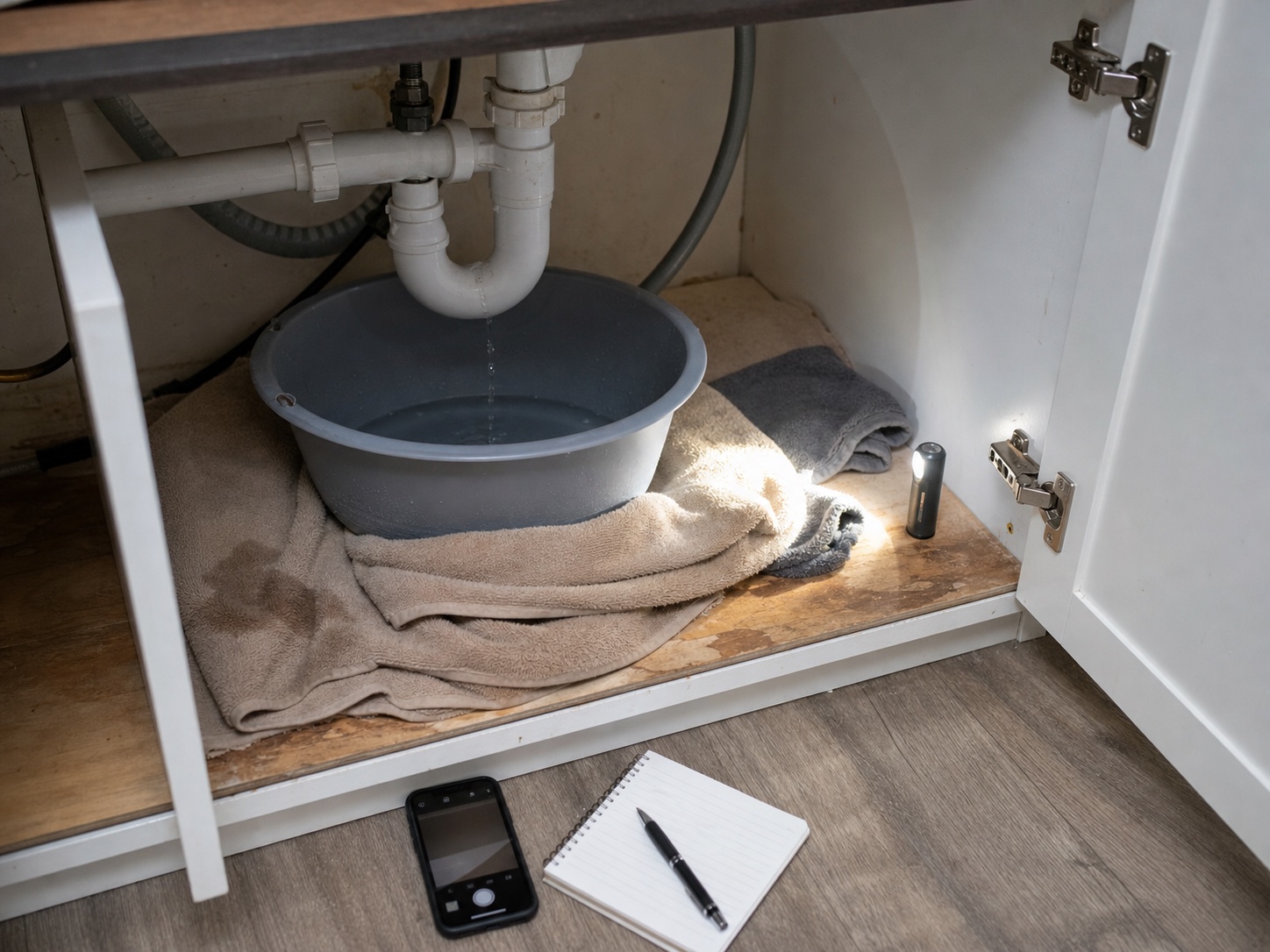
While waiting for maintenance after a small water leak, protect people first, move belongings, contain the drip, photograph the source and water path, and keep the property updated. This is temporary damage control, not plumbing repair. Even a slow leak under a sink, beside a toilet, near an appliance, or from a ceiling can damage cabinets, floors, walls, and neighboring units.
By Portia Me'uan Thomas. Updated August 17, 2026. Edited for renter-aware safety.
Time: Immediate action, then ongoing monitoring. Difficulty: Easy. Safety: Medium to high depending on location.
Quick Answer
Move belongings away, avoid water near electricity, place a bucket or towels under the drip, take photos before cleaning everything, report the leak immediately, and use a nearby shutoff valve only if you know it controls the leaking fixture and it turns without force. Escalate quickly for ceiling leaks, spreading water, sewage odor, water near outlets or appliances, sagging drywall, or any leak you cannot contain while waiting. Your job is to reduce damage and communicate clearly, not to prove you can repair plumbing.
Before You Start
- Do not step into standing water near outlets, cords, appliances, or breaker panels.
- Move electronics and belongings away if you can do so safely.
- Call emergency services if water is near active electricity, ceilings are sagging, or you feel unsafe.
- If the leak is coming from a ceiling, treat it as more urgent than an under-sink drip because the source may be above you.
- If you smell sewage, gas, burning, or strong chemicals, leave the area if safe and escalate immediately.
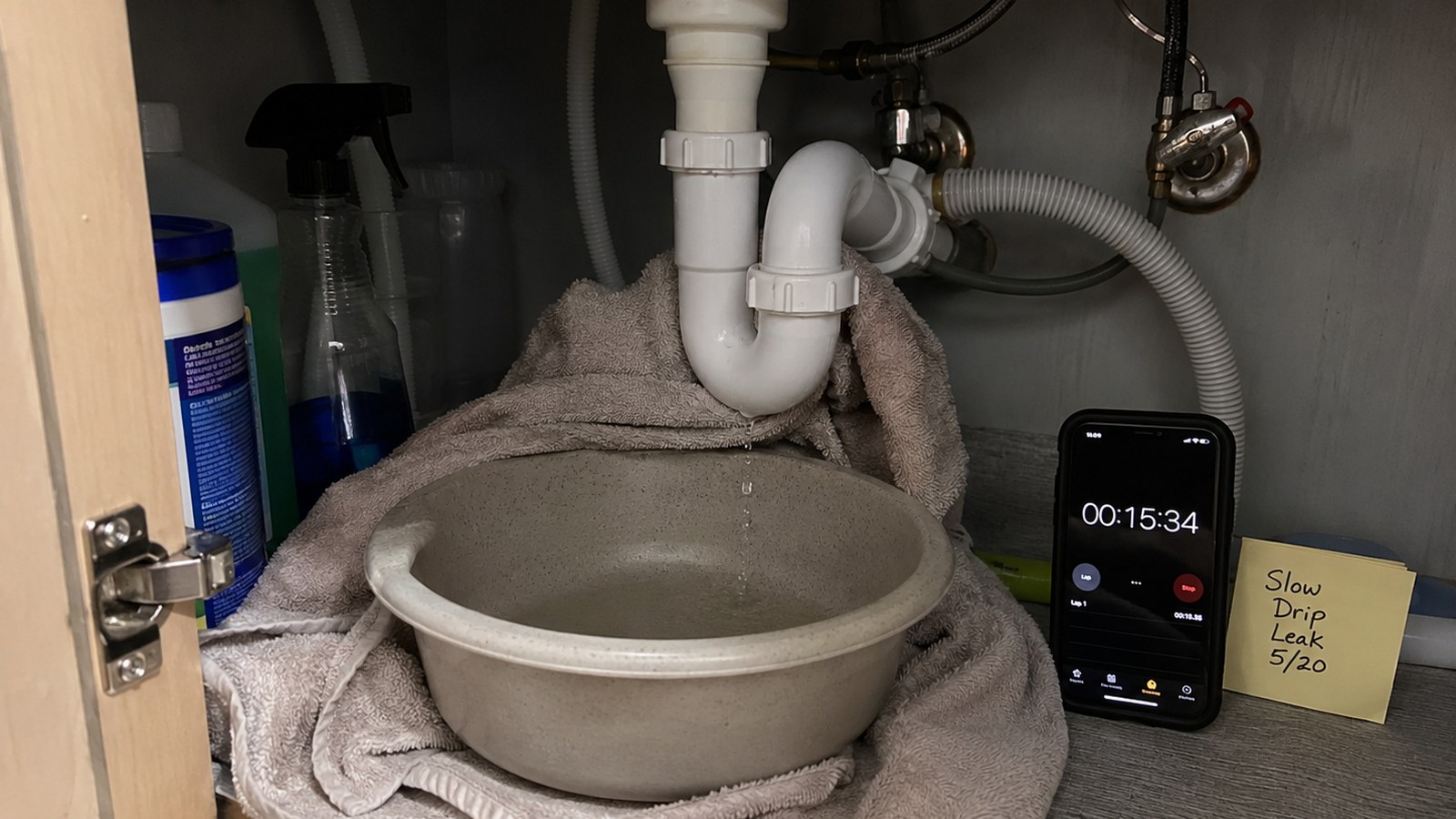
Tools Needed
- Phone camera
- Bucket or bowl
- Old towels
- Flashlight
- Gloves
- Plastic bin for moving belongings
- Maintenance contact information
- Mop or absorbent cloth if the floor is safe and dry enough
Renter Notes
Leaks can damage the building and neighboring units, so renters should report them right away even when the drip looks minor. Use the emergency maintenance line if water is active, spreading, coming from above, or near electricity. Do not take apart pipes, force valves, remove appliance panels, or wait several days to see if the leak gets worse. If you do close a small fixture shutoff, tell maintenance exactly what you touched.
Step-by-Step Guide
- Identify the safest distance you can work from and avoid wet electrical areas.
What I check before the next step: I stay dry and hands-off with wiring or panels. Smoke, sparks, heat, burning smell, carbon monoxide alarms, repeated trips, or wet electrical areas mean stop immediately. - Move items away from the leak path, especially paper, rugs, electronics, and stored boxes.
What I check before the next step: I look for spreading water, wet electrical areas, sewage odor, swelling, or moisture below the fixture. Any of those turns this into a stop-and-report issue. - Place a bucket or towels under the drip to reduce spreading damage.
What I check before the next step: I look for spreading water, wet electrical areas, sewage odor, swelling, or moisture below the fixture. Any of those turns this into a stop-and-report issue. - Take clear photos or a short video showing the leak source and surrounding area.
What I check before the next step: I make the note useful: date, location, what changed, one wide photo, and one close-up before I touch anything else. - Add one note with the time, approximate drip rate, and whether the water is clear, dirty, hot, cold, or coming from above.
What I check before the next step: I make the note useful: date, location, what changed, one wide photo, and one close-up before I touch anything else. - Submit an urgent maintenance request or call the building emergency line.
What I check before the next step: Before continuing, I confirm the step stayed dry, visible, reversible, and within the lease or my comfort level. - If there is a clearly labeled fixture shutoff valve that turns easily, close it gently and tell maintenance what you did.
What I check before the next step: Before continuing, I confirm the step stayed dry, visible, reversible, and within the lease or my comfort level. - Check the bucket or towels regularly while you wait, but do not leave the apartment if water is still active and uncontained.
What I check before the next step: I look for spreading water, wet electrical areas, sewage odor, swelling, or moisture below the fixture. Any of those turns this into a stop-and-report issue. - After maintenance responds, save the ticket number, photos, and any instructions about cleanup or follow-up.
What I check before the next step: I make the note useful: date, location, what changed, one wide photo, and one close-up before I touch anything else.
Safe Next Steps
- If the result improved, do one normal-use test and finish with the checklist item: Electrical risk avoided.
- If the result is mixed, stop after the listed low-risk checks and decide whether the issue belongs with maintenance, your landlord, or a licensed professional.
- If the result did not improve or got worse, do not add force, stronger chemicals, hidden disassembly, or a new tool. Contact maintenance immediately for the stop signs listed below.
- For a rental, send a short maintenance message with where the issue is, when you noticed it, what changed, what safe check you tried, and two photos. Keep the confirmation.
Common Mistakes
- Waiting until morning because the drip looks small.
- Forcing a rusty shutoff valve and causing a bigger leak.
- Cleaning everything before taking photos for maintenance documentation.
- Putting towels down and then forgetting to check whether water has spread underneath.
- Assuming a ceiling stain is old without touching only the surrounding dry area visually checking for new moisture or sagging.
- Using a fan or heater near water and electrical outlets.
What to Do While Waiting for Maintenance
A small water leak is water appearing where it should not, even if it is only dripping. The beginner-safe goal is not to repair the plumbing; it is to reduce damage, stay away from electrical risk, document clearly, and get maintenance moving.
In a rental, a small leak can become a building issue because water travels into cabinets, floors, ceilings, walls, and neighboring units.
What to Check Before You Act
Use this table only if the area is safe and dry enough to observe. Do not run tests around electricity, sagging ceilings, sewage, or fast-spreading water.
| Check | Before | After | Interpretation |
|---|---|---|---|
| Drip rate | Drops per minute to record | Timed drop count after observation | A rate helps maintenance judge urgency. |
| Towel saturation | Dry folded paper towel | Wet after [time] | Shows whether moisture is active or old. |
| Bucket level | Empty bowl or bucket | Water depth after 15 minutes | Useful if waiting for emergency maintenance. |
| Spread distance | Water edge at start | Water edge after 10 minutes | Spreading water raises urgency. |
Common Situations and Stop Points
| Symptom | Possible context | Safe first check | Stop point |
|---|---|---|---|
| Drip only when faucet runs | Drain or fixture leak | Stop running water and photograph | Do not open trap or tighten fittings by force |
| Drip even when unused | Supply leak or leak from above | Place bucket if safe | Emergency maintenance if active |
| Ceiling stain growing | Leak above | Move belongings and avoid sagging area | Call emergency maintenance immediately |
| Water near cord or outlet | Electrical contact risk | Stay clear and report | Emergency help if unsafe |
Try It or Report It?
| Situation | Beginner can try | Do not touch | Contact |
|---|---|---|---|
| Slow contained drip | Bucket, towels, photos, timing notes | Pipe joints, valves that resist, disposal wiring | Urgent maintenance |
| Ceiling leak | Move items, photograph from safe distance | Ceiling material or light fixtures | Emergency maintenance |
| Leak near electricity | Leave area and avoid contact | Outlet, cord, appliance, breaker if wet | Emergency services or emergency maintenance |
| Sewage or dirty backup | Avoid contact and isolate area | Drain chemicals or cleanup with bare hands | Emergency maintenance or professional remediation |
Renter-Safe First Steps
- Move belongings out of the wet area.
- Place a bucket or towel under a contained drip if there is no electrical risk.
- Take photos and a short video before full cleanup.
- Use an obvious fixture shutoff only if it turns easily and controls the leak.
Stop Lines
- Stop for water near outlets, cords, appliances, lights, panels, or standing electrical equipment.
- Stop for ceiling sagging, spreading stains, active flooding, or water entering another unit.
- Stop for sewage odor, dirty backup, mold-like growth, or unknown contamination.
- Stop if a shutoff valve is rusty, stiff, painted, leaking, or not clearly tied to the fixture.
- Stop if you cannot monitor the leak safely while waiting.
Additional FAQ
What should I do while waiting for maintenance after containing the leak?
Keep the area isolated, monitor the container and water path from a safe position, send changes to maintenance, and avoid using the affected fixture until they advise you.
Should I keep using the sink if the drip is tiny?
No. Stop using the fixture until maintenance advises, especially if the drip appears when water runs.
Is a towel enough?
A towel is damage control, not repair. Use it only to reduce spread while you report and wait.
What if maintenance asks what I touched?
Tell them plainly: photos taken, belongings moved, bucket placed, and whether you gently closed an obvious shutoff.
Related Next Steps
- Under-Sink Leak Check: What to Look For Before Touching Plumbing - Routine leak checks before a leak becomes urgent.
- Power Outage Alone: A Calm Apartment Safety Plan - Electrical safety boundaries around water.
- First Apartment Maintenance Checklist - Monthly checks that catch leaks early.
What Not to Do
- Do not open walls, ceilings, appliance panels, or pipe connections.
- Do not use electrical devices in or near wet areas.
- Do not ignore ceiling stains, sewage odor, or water spreading from another unit.
- Do not pour drain cleaner into a leaking or backed-up fixture.
- Do not promise neighbors you fixed it if maintenance has not inspected the source.
- Do not force a shutoff valve, especially if it is rusty, painted, leaking, or hard to identify.
When to Pause and Ask for Help
Contact maintenance immediately for any active leak, recurring leak, ceiling stain, swollen cabinet, damp flooring, appliance leak, toilet supply leak, or water that could affect another unit. Call emergency services if water contacts electrical equipment, a ceiling bulges, flooding spreads quickly, sewage appears, a fire or carbon monoxide alarm is involved, or you cannot reach maintenance during an urgent building-damage situation. Use a licensed plumber only if your lease makes you responsible for arranging service and the landlord approves it.
FAQ
Should I turn off the water?
Only use a nearby fixture shutoff if it is obvious, accessible, and turns easily. Do not force stuck valves or touch shared building valves.
Is a slow drip urgent?
Yes in a rental. Slow leaks can damage cabinets, floors, ceilings, and neighboring units, and they can become bigger without warning.
What photos should I take?
Show the leak source, nearby fixtures, damaged surfaces, wet belongings, and any water path across floors, cabinets, walls, or ceilings.
Can I patch it with tape?
Tape is not a reliable repair. Use a bucket or towels for temporary control and wait for maintenance.
What if water is coming from the ceiling?
Move belongings, avoid the area under sagging material, photograph from a safe spot, and call emergency maintenance immediately.
Should I clean up before maintenance sees it?
Prevent spreading damage if safe, but take photos first and do not hide evidence of an active leak.
Final Checklist
- Electrical risk avoided
- Belongings moved
- Bucket or towels placed
- Photos taken before full cleanup
- Maintenance contacted urgently
- Valve used only if safe and obvious
- Leak monitored while waiting
- Ticket or confirmation saved
References
Use these official resources as background context. Product manuals, lease rules, local requirements, property maintenance instructions, and qualified professional advice should still come first for your exact home.
- Fix a Leak Week - EPA WaterSense. Use as background for why small leaks should be documented and reported early.
- A brief guide to mold, moisture and your home - U.S. Environmental Protection Agency. Use as background for why active water and damp materials should be dried, documented, and escalated promptly.
You May Also Like
More beginner-safe guides that connect to this repair, the same room, or the next safety decision a renter may need.
- Under-Sink Leak Check: What to Look For Before Touching Plumbing - Check under a kitchen or bathroom sink for early leak signs without taking plumbing apart.
- First Apartment Maintenance Checklist - A realistic monthly checklist for keeping a first apartment safer and easier to manage.
- Tripped Circuit Breaker: A Safe Reset Checklist - Reset a clearly labeled tripped breaker only when conditions are dry, safe, and renter-appropriate.
- When Not to DIY a Home Repair - Clear stop signs for repairs that are unsafe, lease-sensitive, or require licensed help.
- Slow Shower Drain: Safe Hair and Soap Buildup Cleanup - Clear hair and soap buildup from a slow shower drain without harsh chemicals or pipe damage.
- Slow Bathroom Sink: Renter-Safe First Checks Before Maintenance - Try safe first steps for a slow bathroom sink before escalating to apartment maintenance.
- Running Toilet in an Apartment: What You Can Check Safely - Check a running toilet tank without replacing plumbing parts or risking a leak.
- Garbage Disposal Smell: Safe Cleaning Without Reaching Inside - Freshen a garbage disposal with safe cleaning steps and clear stop points for jams or leaks.