Living Alone Safety
Smoke detectors, outage plans, front-door confidence, emergency kits, and safer next steps when you live alone.
Who This Category Is For
Use this section for alarms, outages, entry safety, emergency supplies, packages, balcony checks, and the basic safety habits that matter when you live alone.
Who This Page Is For
This page is for people who want a calmer plan for alarms, outages, locks, light, basic emergency supplies, and safety decisions at home. It is especially useful if you live alone, are new to an apartment building, or have never had to decide whether a household problem is urgent.
The focus is simple first actions: test what can be safely tested, document what you notice, keep important contacts reachable, and know the conditions that require emergency services, property maintenance, or licensed help. It does not teach high-risk repair work.
Think of this page as a household readiness checklist rather than a repair manual. It helps you prepare before stress is high: where the flashlight is, who to call, what counts as an emergency, what should be reported in writing, and what should not be handled alone.
What to Read First
- Test a smoke detector - Confirm the alarm responds, document missing or failed units, and avoid disabling safety equipment.
- Power outage guide - Use flashlights, protect phone battery, check neighbors safely, and avoid unsafe electrical work.
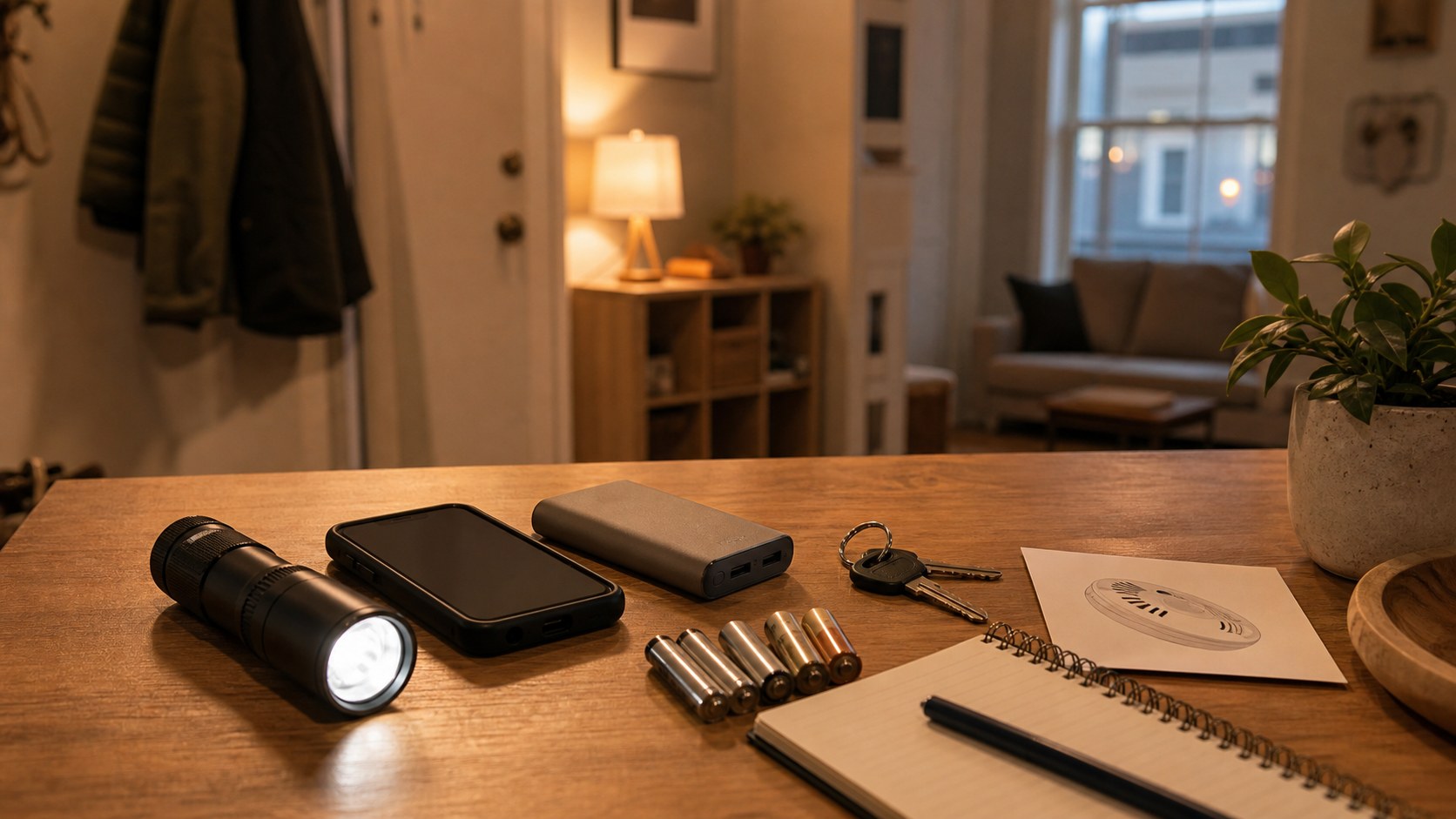
- Basic home emergency kit - Set aside light, water, charging, first aid, and contact information before a stressful night.
- Lost keys or locked out - Follow the property process without damaging doors, windows, locks, or lease standing.
Common Beginner Mistakes
- Waiting until an outage or alarm problem happens to look for flashlights, batteries, or emergency contacts.
- Taking down or covering a smoke detector instead of reporting a failed or nuisance alarm.
- Using candles, ovens, grills, or unsafe heaters during an outage or heating problem.
- Trying to force a locked door or climb through a window instead of using the approved lockout process.
- Treating a safety concern as a normal DIY task because the first visible step looks simple.
Renter Notes
- Report missing, chirping, loose, painted-over, or failed smoke and carbon monoxide alarms promptly and keep a dated note.
- Save your property manager, emergency maintenance line, utility outage page, and local non-emergency number in your phone.
- For broken locks, no heat, no cooling during unsafe temperatures, electrical issues, leaks, pests, or security concerns, use your building's required reporting path.
When to Stop and Ask for Help
Leave the area if safe and call emergency services for fire, smoke, gas smell, carbon monoxide alarms, sparking, flooding, suspected break-in, violence, medical emergencies, or any immediate danger. For non-immediate rental safety issues, stop DIY, take photos, write down times, and contact maintenance or the property manager.
FAQ
How often should I test a smoke detector?
Use your building guidance first. As a simple habit, test regularly with the button and report any failed, missing, loose, or unreachable alarm.
Are candles okay during a power outage?
Flashlights and battery lanterns are safer. Candles add fire risk, especially when you are tired, moving around, or living with pets or roommates.
What is the safest first step when I feel unsure?
Pause, move away from the hazard, document what you can safely see, and contact the right help instead of testing the problem further.
What information should I keep on my phone?
Save your address, unit number, property office, emergency maintenance line, utility outage page, local non-emergency number, and one trusted contact. Keep a written backup in case your phone battery dies.
Guides in This Category
- Basic Emergency Kit for Living Alone - Build a practical emergency kit for outages, storms, minor injuries, and apartment disruptions.
- Safer Mail and Package Habits for Apartment Living - Use apartment mailroom best practices to reduce missing packages, protect delivery details, and report broken locks or repeated security problems.
- Apartment Balcony Cleaning and Safety Check - Keep an apartment balcony clean and safe with dry sweeping, secured loose items, visible drainage, and no-ladder renter-friendly checks.
- Stop Dirt at the Door: First-Apartment Entry Setup - Reduce entryway dirt with renter-safe mats, shoe habits, and simple cleaning routines.
- What I Do Differently Now When Something Breaks at Night (Living Alone Edition) - Use a calm nighttime decision plan when something breaks while you live alone: screen for immediate danger, contact the right help, document safely, and decide whether the home is safe for rest.
When to Stop
Stop when a task becomes unsafe, lease-sensitive, wet, electrical, structural, lock-related, or beyond a small reversible fix.