Appliance Problem or Repair Risk? A Beginner Troubleshooting Filter
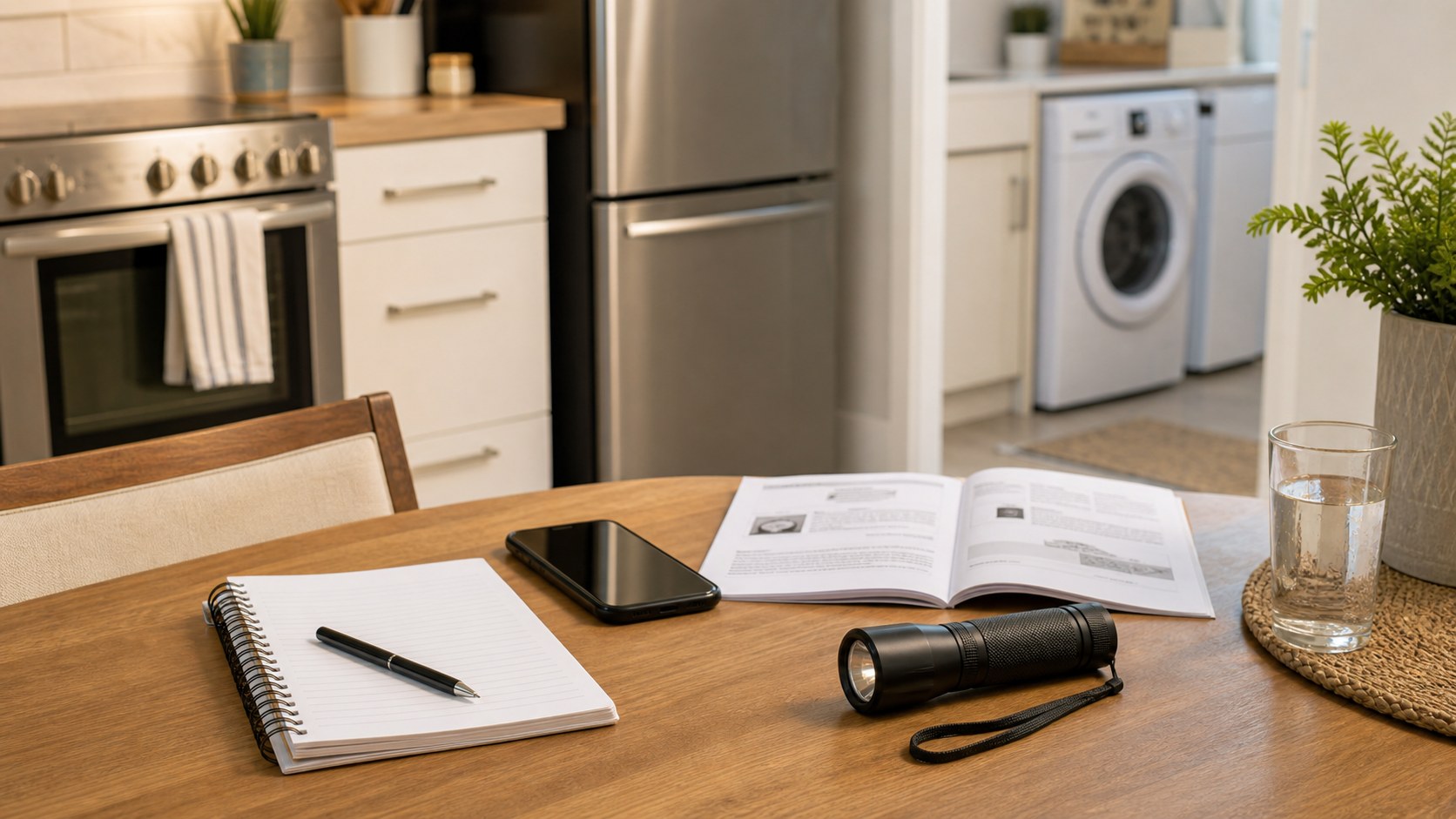
Use this before you troubleshoot a household appliance in a first apartment or rental. The safe beginner zone is observation, cleaning accessible parts, checking settings, checking filters, and documenting symptoms; it does not include opening machines.
By Portia Me'uan Thomas. Updated August 17, 2026. Edited for renter-aware safety.
Time: 5-10 minutes. Difficulty: Easy. Safety: Decision guide.
Quick Answer
It is usually safe to check settings, power status from a dry area, vents, filters, odors, load size, and obvious user-accessible parts. Stop for gas smell, burning smell, sparks, water near electricity, damaged cords, leaks, error codes you do not understand, or anything requiring panels, motors, compressors, control boards, gas lines, or high voltage.
Material Fit
For appliances, the material table is really an access table: user-facing parts are different from mechanical or electrical parts.
| Material or surface | Safest first method | Conditional next method | Avoid / stop line |
|---|---|---|---|
| Removable plastic bin or shelf | Mild dish soap, warm water, complete drying. | Clean outside the appliance if it lifts out without force. | Stop if the part cracks or resists removal. |
| Rubber gasket or seal | Damp cloth and mild soap; dry the fold gently. | Use only products allowed by the manual. | Avoid sharp tools, bleach mixes, and pulling the gasket loose. |
| Lint screen / removable filter | Clean only if it is meant for user access. | Reinstall exactly as found. | Stop if access needs tools, panel removal, or force. |
| Panel, motor, compressor, hose, wiring, gas line | No beginner DIY. | Document symptoms and call maintenance. | Do not open, move, disconnect, or bypass. |
Before You Start
- Ask whether the appliance problem could create fire, shock, gas, water, or food-safety risk.
- Keep floors and hands dry before checking plugs or controls.
- Do not move heavy appliances alone.
- Do not remove panels, covers, hoses, wiring, gas lines, or fixed parts.
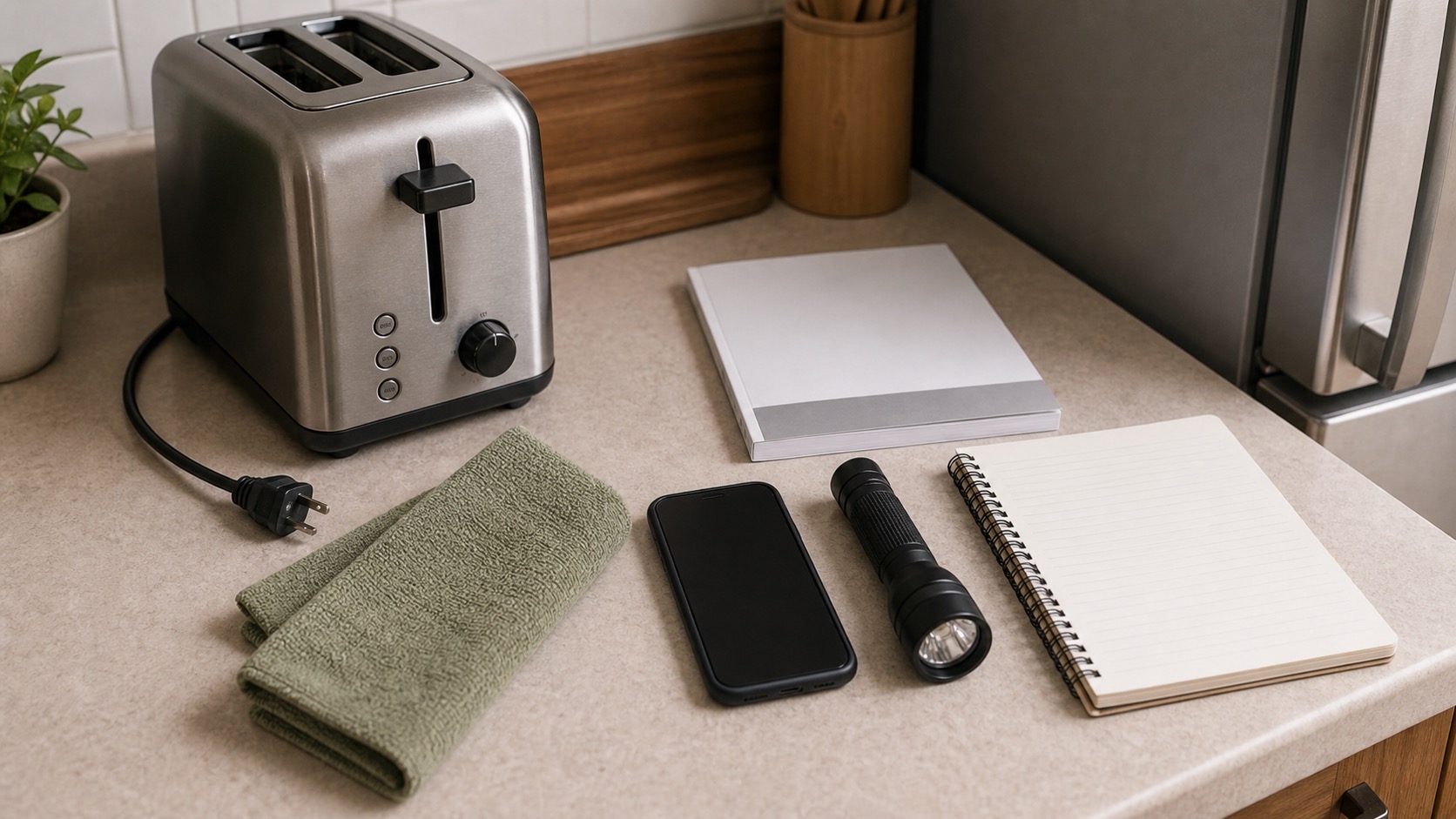
Tools Needed
- Phone camera
- Notepad
- Appliance manual if available
- Flashlight
- Lease or resident portal
Renter Notes
Before troubleshooting a rental appliance, check whether your lease makes the appliance your responsibility or the landlord's. When in doubt, document the issue and submit a maintenance request instead of taking things apart.
Step-by-Step Guide
- Identify the symptom in plain language: smell, no power, poor cooling, poor drying, leak, noise, or error code.
What I check before the next step: I stay with accessible, user-facing checks only. Heat, burning smell, leaks, damaged cords, error codes, or panel access means the next step is maintenance. - Check the lease, manual, or posted rules for who handles the appliance.
What I check before the next step: I stay with accessible, user-facing checks only. Heat, burning smell, leaks, damaged cords, error codes, or panel access means the next step is maintenance. - Look for immediate stop signs: gas smell, burning, sparks, smoke, leak, damaged cord, or water near electricity.
What I check before the next step: I look for spreading water, wet electrical areas, sewage odor, swelling, or moisture below the fixture. Any of those turns this into a stop-and-report issue. - If no stop signs exist, check only user controls, settings, filters, vents, load size, and visible obstructions.
What I check before the next step: I stay with accessible, user-facing checks only. Heat, burning smell, leaks, damaged cords, error codes, or panel access means the next step is maintenance. - Take photos or notes of the symptom and any error code.
What I check before the next step: I make the note useful: date, location, what changed, one wide photo, and one close-up before I touch anything else. - Submit a maintenance request when the problem repeats, affects safety, or goes beyond user cleaning.
What I check before the next step: I do not mix chemicals or scrub harder if the finish changes. I ventilate, spot-check, and stop for strong odor, spreading stains, mold growth, or damaged surfaces.
Safe Next Steps
- If the result improved, do one normal-use test and finish with the checklist item: Lease checked.
- If the result is mixed, stop after the listed low-risk checks and decide whether the issue belongs with maintenance, your landlord, or a licensed professional.
- If the result did not improve or got worse, do not add force, stronger chemicals, hidden disassembly, or a new tool. Contact your landlord, maintenance team, appliance service provider, utility company, or emergency services depending on the.
- For a rental, send a short maintenance message with where the issue is, when you noticed it, what changed, what safe check you tried, and two photos. Keep the confirmation.
Common Mistakes
- Watching repair videos and opening appliance panels.
- Ignoring burning smells because the appliance still runs.
- Using extension cords for large appliances.
- Moving a heavy appliance and damaging floors, hoses, or cords.
Appliance troubleshooting decision filter
an appliance symptom that may or may not be safe for a beginner check is treated here as a beginner observation and control problem first, not a chance to prove you can take apart the home. The safe version is visible, reversible, and easy to stop.
For renters, the important line is ownership. You can usually observe, photograph, time, clean lightly, or tighten a visible non-security part, but hidden systems, building-owned fixtures, and lease-controlled hardware belong to maintenance.
What to Check Before You Act
Record the starting condition, perform only one low-risk check at a time, and compare immediate hazard scan, ownership and instructions, user-access checks, result and recurrence. Do not repeat a step that needs more force, chemical, height, access, or disassembly.
| Check | Before | After | Interpretation |
|---|---|---|---|
| Immediate hazard scan | Record gas, smoke, burning odor, heat, sparks, water, damaged cord, and abnormal sound | After one safe check: keep distance and stop use before documenting | Any hazard signal overrides ordinary troubleshooting Stop if an immediate warning is present. |
| Ownership and instructions | Record lease responsibility, model number, manual, posted rules, and warranty | After one safe check: find the official user troubleshooting section | Ownership and instructions define the safe user zone Stop if the appliance or allowed scope is unclear. |
| User-access checks | Record settings, display code, load, door closure, external airflow, and named removable filter | After one safe check: perform one manual-listed user check | A normal user correction can be observed without opening systems Stop if the step needs tools, force, movement, or a panel. |
| Result and recurrence | Record whether the same symptom returns after one normal cycle or restart | After one safe check: record one result without repeated resets | Recurrence supports service rather than escalating DIY Stop if the symptom returns, worsens, or trips power. |
Common Situations and Stop Points
| Symptom | Possible context | Safe first check | Stop point |
|---|---|---|---|
| Immediate hazard scan | Any hazard signal overrides ordinary troubleshooting | keep distance and stop use before documenting | an immediate warning is present |
| Ownership and instructions | Ownership and instructions define the safe user zone | find the official user troubleshooting section | the appliance or allowed scope is unclear |
| User-access checks | A normal user correction can be observed without opening systems | perform one manual-listed user check | the step needs tools, force, movement, or a panel |
| Result and recurrence | Recurrence supports service rather than escalating DIY | record one result without repeated resets | the symptom returns, worsens, or trips power |
Try It or Report It?
| Situation | Beginner can try | Do not touch | Contact |
|---|---|---|---|
| Observe and document | Name the symptom and perform an immediate hazard scan. Check lease responsibility and the official manual. | Hidden, fixed, energized, pressurized, structural, or lease-controlled parts | Use the record if the baseline is abnormal |
| One reversible first step | Use only normal controls and clearly user-accessible parts. Record one result, error code, sound, odor, and recurrence. | Anything that needs force, drilling, cutting, panel removal, or mixed chemicals | Maintenance if the first step fails or the condition returns |
| Condition persists | Repeat the observation for immediate hazard scan and ownership and instructions, not the repair | Do not escalate tools or improvise a workaround | Landlord, maintenance, manufacturer support, or the responsible professional |
| Warning sign appears | Stop, keep distance, and photograph only if that is safe | Stop for gas, smoke, burning odor, sparks, heat, water near electricity, or damaged cords. Stop before moving the appliance or opening panels. Stop before gas, plumbing, wiring, motors, compressors, heating elements, or refrigerant. | Urgent maintenance, utility, emergency services, or another appropriate safety channel |
Renter-Safe First Steps
- Name the symptom and perform an immediate hazard scan.
- Check lease responsibility and the official manual.
- Use only normal controls and clearly user-accessible parts.
- Record one result, error code, sound, odor, and recurrence.
Stop Lines
- Stop for gas, smoke, burning odor, sparks, heat, water near electricity, or damaged cords.
- Stop before moving the appliance or opening panels.
- Stop before gas, plumbing, wiring, motors, compressors, heating elements, or refrigerant.
- Stop before bypassing switches or performing repeated resets.
- Stop when ownership, instructions, or safe access is unclear.
Additional FAQ
Is unplugging an appliance always safe?
No. Do not reach behind a heavy appliance, touch a damaged cord, or approach water, heat, sparks, or gas. Follow the manual and emergency guidance.
Can I clear an error code and continue?
Record the code first and follow the official manual. Repeated codes or resets indicate a service issue.
What should I include in a maintenance message?
Include the exact location, when it started, photos, the immediate hazard scan and ownership and instructions and user-access checks and result and recurrence, what safe check you performed, and whether the condition improved, stayed the same, or worsened.
Related Next Steps
- Fridge Not Cooling Properly: First Checks Before Repair - Apply the filter to temperature and food-safety symptoms.
- Dryer Taking Too Long: Lint and Vent Clues to Check - Use fire-safe limits for dryer airflow symptoms.
- When Not to DIY a Home Repair - Escalate symptoms that cross a system boundary.
What Not to Do
- Do not troubleshoot gas lines, compressors, motors, heating elements, control boards, or high-voltage parts.
- Do not bypass safety switches or tape controls down.
- Do not keep using an appliance that leaks, sparks, smokes, or smells like burning.
- Do not assume rental appliance repair is your responsibility without checking the lease.
When to Pause and Ask for Help
Contact your landlord, maintenance team, appliance service provider, utility company, or emergency services depending on the risk. Use emergency services or utility emergency contacts for gas smell, smoke, fire, carbon monoxide alarms, sparks, or immediate danger.
FAQ
Is checking a plug safe?
Only if the area is dry, the cord looks undamaged, and you can reach it without moving a heavy appliance.
Can I reset a breaker for an appliance?
Only follow your building's safe breaker guidance. Repeated trips, burning smells, or sparks are stop signs.
Are filters okay to clean?
Usually only user-accessible filters named in the manual, such as lint screens, range hood filters, or approved AC filters.
What should I tell maintenance?
Share the appliance, symptom, timing, photos, sounds, smells, error codes, and whether the issue is affecting food, water, heat, or safety.
Final Checklist
- Lease checked
- Stop signs considered
- Only user-accessible checks attempted
- No panels opened
- Symptoms documented
- Maintenance contacted when needed
References
Use these official resources as background context. Product manuals, lease rules, local requirements, property maintenance instructions, and qualified professional advice should still come first for your exact home.
- Electrical safety - U.S. Consumer Product Safety Commission. Stop for appliance symptoms involving heat, burning smells, sparks, damaged cords, or repeated trips.
You May Also Like
More beginner-safe guides that connect to this repair, the same room, or the next safety decision a renter may need.
- Fridge Not Cooling Properly: First Checks Before Repair - Check safe fridge basics like temperature setting, airflow, door seal, and maintenance reporting.
- Dryer Taking Too Long: Lint and Vent Clues to Check - Check lint, load size, airflow, and safe stop points when a dryer runs too long.
- Heat or AC Stopped in an Apartment: Safe First Moves - Handle apartment heat or AC problems safely while you document the issue and contact maintenance.
- When Not to DIY a Home Repair - Clear stop signs for repairs that are unsafe, lease-sensitive, or require licensed help.
- Washing Machine Smells Bad: Renter-Safe Odor Checks - Freshen a smelly washer with safe cleaning, ventilation, and renter-aware maintenance steps.
- Dishwasher Smells Bad: Safe Cleaning Before You Call Maintenance - Clean common dishwasher odor sources without taking the appliance apart.
- Bad Fridge Smell: A Step-by-Step Odor Reset - Track down refrigerator odors with a safe cleanout routine for renters and first apartments.
- First Apartment Maintenance Checklist - A realistic monthly checklist for keeping a first apartment safer and easier to manage.