Heat or AC Stopped in an Apartment: Safe First Moves
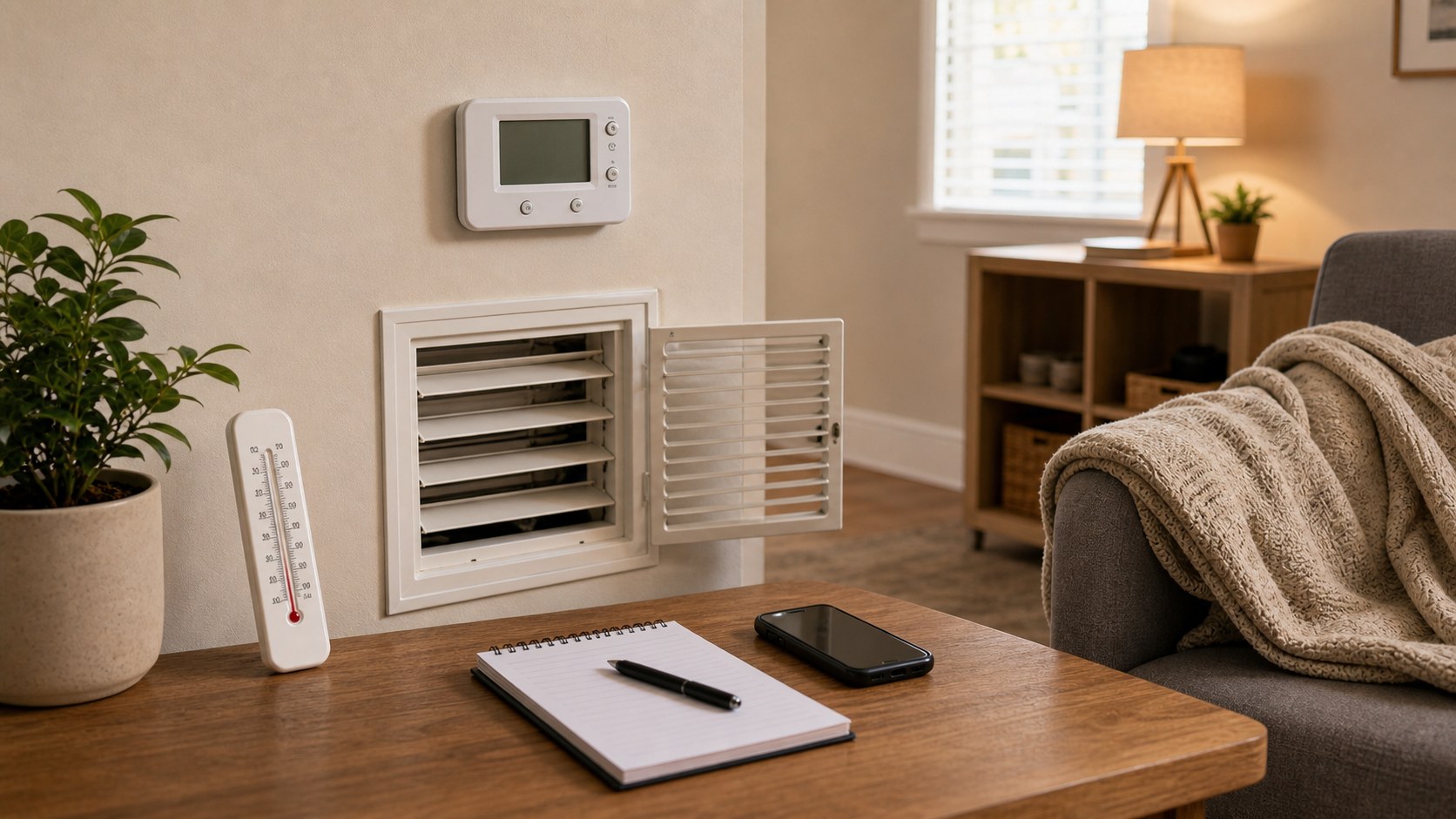
Use this when your apartment suddenly feels too cold or too hot, the thermostat does not respond, air is not coming from vents, or the system runs but the room temperature moves the wrong direction. The goal is to check safe basics, document conditions clearly, and contact maintenance before the situation becomes a health or building issue. This guide is not HVAC repair. It does not include opening furnace panels, handling refrigerant lines, relighting pilots, rewiring thermostats, or resetting equipment you do not recognize.
By Portia Me'uan Thomas. Updated August 17, 2026. Edited for renter-aware safety.
Time: 10-20 minutes for checks, then monitoring. Difficulty: Easy. Safety: Medium to high during extreme temperatures.
Quick Answer
Check thermostat mode and batteries, make sure vents and returns are not blocked, check only tenant-accessible filters if your lease allows it, ask safely whether neighbors have the same issue, document indoor temperature and time, and contact maintenance. Do not open HVAC panels, reset unknown equipment, touch wiring, handle refrigerant lines, or use unsafe heating or cooling workarounds such as ovens, grills, generators, or overloaded extension cords.
Before You Start
- Do not open furnace, air handler, condenser, or electrical panels.
- Leave the area and call emergency services if you smell gas, smell burning, see smoke, or a carbon monoxide alarm sounds.
- Check on pets, medications, and anyone in the home who may be sensitive to heat or cold.
- Look for water near HVAC equipment or outlets before touching anything nearby.
- If the thermostat is blank, treat it as a clue, not a reason to open wiring.
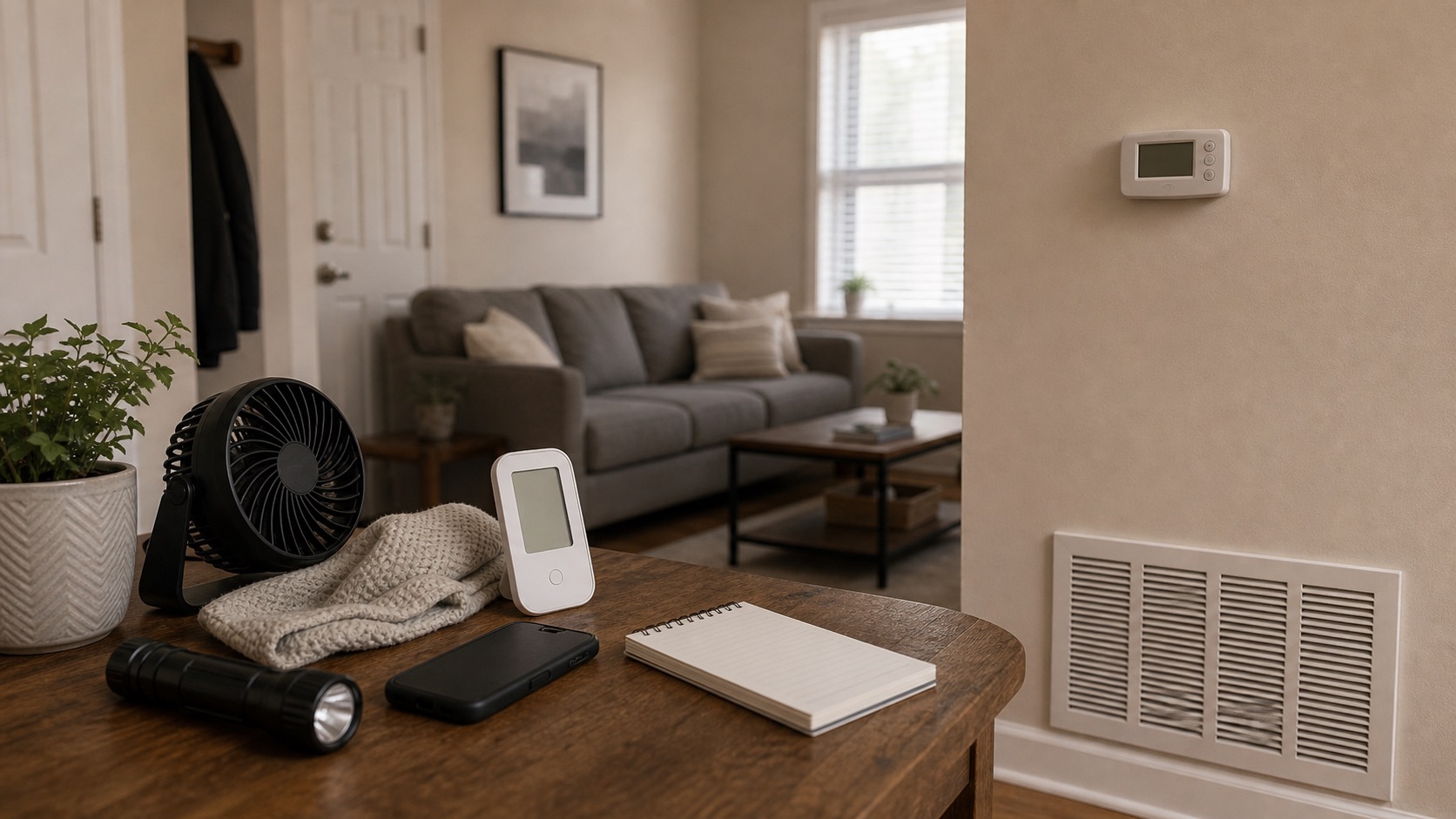
Tools Needed
- Thermometer if available
- Phone camera
- Notes app
- Maintenance contact information
- Blankets or safe fans as temporary comfort items
- Thermostat manual or property instructions if provided
Renter Notes
Heating and cooling systems are usually landlord-maintained, and many places have rules about minimum heat, habitability, or emergency repair response. Report failures promptly, especially during legally required heating seasons, heat waves, cold snaps, medical risk, pet risk, or when the system makes unusual noises or smells. Keep your notes factual: room temperature, thermostat setting, time, rooms affected, and what safe checks you performed. If management gives phone instructions, write down the name, time, and exact instruction before touching anything beyond thermostat settings or tenant-accessible filters.
Step-by-Step Guide
- Check that the thermostat is set to heat or cool, at a reasonable temperature, and has power if it uses batteries.
What I check before the next step: I stay with accessible, user-facing checks only. Heat, burning smell, leaks, damaged cords, error codes, or panel access means the next step is maintenance. - Make sure vents are open and not blocked by furniture, rugs, curtains, or storage.
What I check before the next step: I stay with accessible, user-facing checks only. Heat, burning smell, leaks, damaged cords, error codes, or panel access means the next step is maintenance. - Check whether other rooms or neighboring units have the same problem if you can ask safely.
What I check before the next step: I treat the result as information. If the problem improves, I verify once; if it stays the same or worsens, I do not keep repeating the step with more force. - Look for obvious warning signs such as water near equipment, burning smells, loud buzzing, or ice on accessible visible parts.
What I check before the next step: I look for spreading water, wet electrical areas, sewage odor, swelling, or moisture below the fixture. Any of those turns this into a stop-and-report issue. - Check whether the problem is one room, one side of the apartment, or the entire unit because that detail helps maintenance distinguish airflow, thermostat, and system issues.
What I check before the next step: I stay with accessible, user-facing checks only. Heat, burning smell, leaks, damaged cords, error codes, or panel access means the next step is maintenance. - Write down indoor temperature, time, thermostat setting, and what you checked.
What I check before the next step: I make the note useful: date, location, what changed, one wide photo, and one close-up before I touch anything else. - Submit a maintenance request or call the emergency maintenance line if conditions are unsafe or outside normal response time.
What I check before the next step: I treat the result as information. If the problem improves, I verify once; if it stays the same or worsens, I do not keep repeating the step with more force. - Use only safe temporary comfort steps while waiting, such as layers, blankets, closing blinds during heat, opening approved windows when safe, or using a listed fan or space heater according to instructions.
What I check before the next step: Before continuing, I confirm the step stayed dry, visible, reversible, and within the lease or my comfort level. - Follow up with updated temperature readings if the issue continues or conditions worsen.
What I check before the next step: This is where I decide: if the issue is clearly better, I finish with the checklist; if not, I document it and use the stop line instead of improvising.
Safe Next Steps
- If the result improved, do one normal-use test and finish with the checklist item: Thermostat mode checked.
- If the result is mixed, stop after the listed low-risk checks and decide whether the issue belongs with maintenance, your landlord, or a licensed professional.
- If the result did not improve or got worse, do not add force, stronger chemicals, hidden disassembly, or a new tool. Contact maintenance for the stop signs listed below.
- For a rental, send a short maintenance message with where the issue is, when you noticed it, what changed, what safe check you tried, and two photos. Keep the confirmation.
Common Mistakes
- Using an oven, gas stove, grill, or outdoor heater to warm the apartment.
- Opening panels because a video made HVAC repair look simple.
- Waiting too long to report extreme heat or cold.
- Blocking return vents with furniture and then assuming the whole system failed.
- Running a space heater on an extension cord or too close to bedding.
- Reporting only 'AC broken' without temperature, thermostat setting, time, or rooms affected.
HVAC failure documentation
heat or AC failure is treated here as a beginner observation and control problem first, not a chance to prove you can take apart the home. The safe version is visible, reversible, and easy to stop.
For renters, the important line is ownership. You can usually observe, photograph, time, clean lightly, or tighten a visible non-security part, but hidden systems, building-owned fixtures, and lease-controlled hardware belong to maintenance.
What to Check Before You Act
Use a temperature log so maintenance sees the problem. Do not delay escalation during heat waves, cold snaps, medical risk, or unsafe indoor temperatures.
| Check | Before | After | Interpretation |
|---|---|---|---|
| Indoor temperature | At first notice | Record every 30-60 minutes | Shows whether conditions are worsening. |
| Thermostat setting | Mode and setpoint | Record response/no response | Helps maintenance diagnose. |
| Vent airflow | Hand near vent | Record none/weak/normal | Safe visible check only. |
| Room spread | One room affected? | Record all rooms/one room | Distinguishes system vs airflow issue. |
Common Situations and Stop Points
| Symptom | Possible context | Safe first check | Stop point |
|---|---|---|---|
| Thermostat blank | Battery, power, or equipment issue | Check batteries only if user-accessible | No wiring |
| Airflow weak | Blocked vent/filter/system issue | Move furniture away | No panel access |
| Burning or gas smell | Hazard | Leave/avoid use | Emergency |
| Ice or water visible | System fault or drainage | Photograph | Maintenance |
Try It or Report It?
| Situation | Beginner can try | Do not touch | Contact |
|---|---|---|---|
| Thermostat setting error | Mode and setpoint check | Wiring | Maintenance if no response |
| Blocked vents | Move furniture and note airflow | Ducts or panels | Maintenance if still weak |
| Allowed filter access | Photograph label/orientation | Equipment panels | Maintenance for dirty/missing/wet filter |
| Unsafe temperature | Safe temporary comfort steps | Ovens, grills, generators indoors | Emergency maintenance/local resources |
Renter-Safe First Steps
- Check thermostat mode.
- Move furniture from vents.
- Record room temperature.
- Check only allowed filter access.
Stop Lines
- Stop for gas smell.
- Stop for carbon monoxide alarm.
- Stop for burning smell.
- Stop for water or ice at equipment.
- Stop before opening HVAC panels.
Additional FAQ
Can I use the oven for heat?
No. Ovens, grills, and fuel-burning equipment are unsafe heating substitutes.
Should I reset HVAC equipment?
Only follow written property instructions. Do not reset or open equipment you do not recognize.
What should I report?
Indoor temperature, thermostat setting, rooms affected, airflow, time noticed, and any smell, sound, water, or ice.
Related Next Steps
- HVAC Air Filter First Check: What Renters Can Safely Do - Allowed filter access boundaries.
- Basic Emergency Kit for Living Alone - Prepare for heat, cold, and outages.
- Power Outage Alone: A Calm Apartment Safety Plan - Electrical and outage overlap.
What Not to Do
- Do not use gas stoves, ovens, charcoal, grills, or generators for indoor heating.
- Do not touch wiring, refrigerant lines, burners, pilot assemblies, or internal HVAC parts.
- Do not block vents permanently or cover return grilles with furniture.
- Do not chip ice off HVAC equipment or pour hot water on frozen parts.
- Do not use extension cords for space heaters or portable AC units unless the device instructions explicitly allow it and the setup is safe.
- Do not ignore carbon monoxide alarms, burning smells, smoke, or gas smell while waiting for a normal maintenance appointment.
When to Pause and Ask for Help
Contact maintenance for no heat, no cooling, weak airflow, strange noises, water leaks, ice buildup, burning smells, thermostat failures, repeated system shutdowns, blocked building equipment, or unsafe indoor temperatures. Call emergency services for gas smell, carbon monoxide alarms, smoke, fire, electrical burning, or heat/cold exposure that threatens health. Use a licensed HVAC professional only if your lease makes you responsible for arranging service and the landlord approves it.
FAQ
Should I reset the breaker?
Only if your lease allows it, the panel is dry and labeled, and there are no warning signs. Otherwise contact maintenance.
Can I change the air filter?
Only if the filter is accessible, your lease allows it, and you know the correct type. Many rentals assign this to maintenance.
Is no heat an emergency?
It can be, depending on temperature, local rules, time of day, and health risk. Use your building's emergency maintenance process.
Can I use a space heater?
Only use a listed indoor heater according to its instructions, away from fabric and never with extension cords. Follow lease rules.
What should I include in the maintenance request?
Include indoor temperature, thermostat setting, time, rooms affected, whether air is blowing, warning smells or sounds, and photos if visible conditions matter.
Final Checklist
- Thermostat mode checked
- Vents and returns unblocked
- Warning signs noted
- Temperature documented
- Maintenance contacted
- Safe temporary comfort steps used
- Unsafe heat sources avoided
References
Use these official resources as background context. Product manuals, lease rules, local requirements, property maintenance instructions, and qualified professional advice should still come first for your exact home.
- Energy Saver 101: Home Cooling - U.S. Department of Energy. Use as background for airflow and filter basics, not for tenant HVAC repair.
- About Heat and Your Health - Centers for Disease Control and Prevention. Use for extreme-heat context, cooling centers, fan limits, and escalation when indoor temperatures become unsafe.
- Extreme Heat - Ready.gov. Use for preparedness and safe temporary comfort steps during heat emergencies or AC failures.
You May Also Like
More beginner-safe guides that connect to this repair, the same room, or the next safety decision a renter may need.
- HVAC Air Filter First Check: What Renters Can Safely Do - Check and clean a reusable HVAC filter only when your rental system and lease allow it.
- Tripped Circuit Breaker: A Safe Reset Checklist - Reset a clearly labeled tripped breaker only when conditions are dry, safe, and renter-appropriate.
- Basic Emergency Kit for Living Alone - Build a practical emergency kit for outages, storms, minor injuries, and apartment disruptions.
- Safe to DIY? A Renter's Home Repair Filter - Use a simple safety filter before deciding whether to DIY a repair in your first place.
- Drafty Apartment Window: Renter-Safe First Fixes - Reduce cold window drafts with removable renter-friendly steps before asking maintenance for repair.
- First Apartment Maintenance Checklist - A realistic monthly checklist for keeping a first apartment safer and easier to manage.
- When Not to DIY a Home Repair - Clear stop signs for repairs that are unsafe, lease-sensitive, or require licensed help.
- Small Water Leak: What to Do While Waiting for Maintenance - Contain a small apartment water leak while waiting for maintenance, document the damage, avoid electrical danger, and know when to escalate.