When Not to DIY a Home Repair
Use this before starting a repair that feels bigger than a loose screw or simple cleaning task. A safe home skill includes knowing when to stop and call the right person.
By Portia Me'uan Thomas. Updated August 17, 2026. Edited for renter-aware safety.
Time: Use before any repair. Difficulty: Easy. Safety: High importance.
Quick Answer
Call help for electrical work, gas smells, structural damage, major leaks, sewage, extensive mold, hot water heaters, HVAC, roof or ladder work, security locks, appliance internals, and anything your lease assigns to maintenance.
Before You Start
- Ask whether the issue involves electricity, gas, structure, water damage, sewage, mold, height, or security.
- Leave the area if there is immediate danger.
- Take photos only if you can do so safely.
Tools Needed
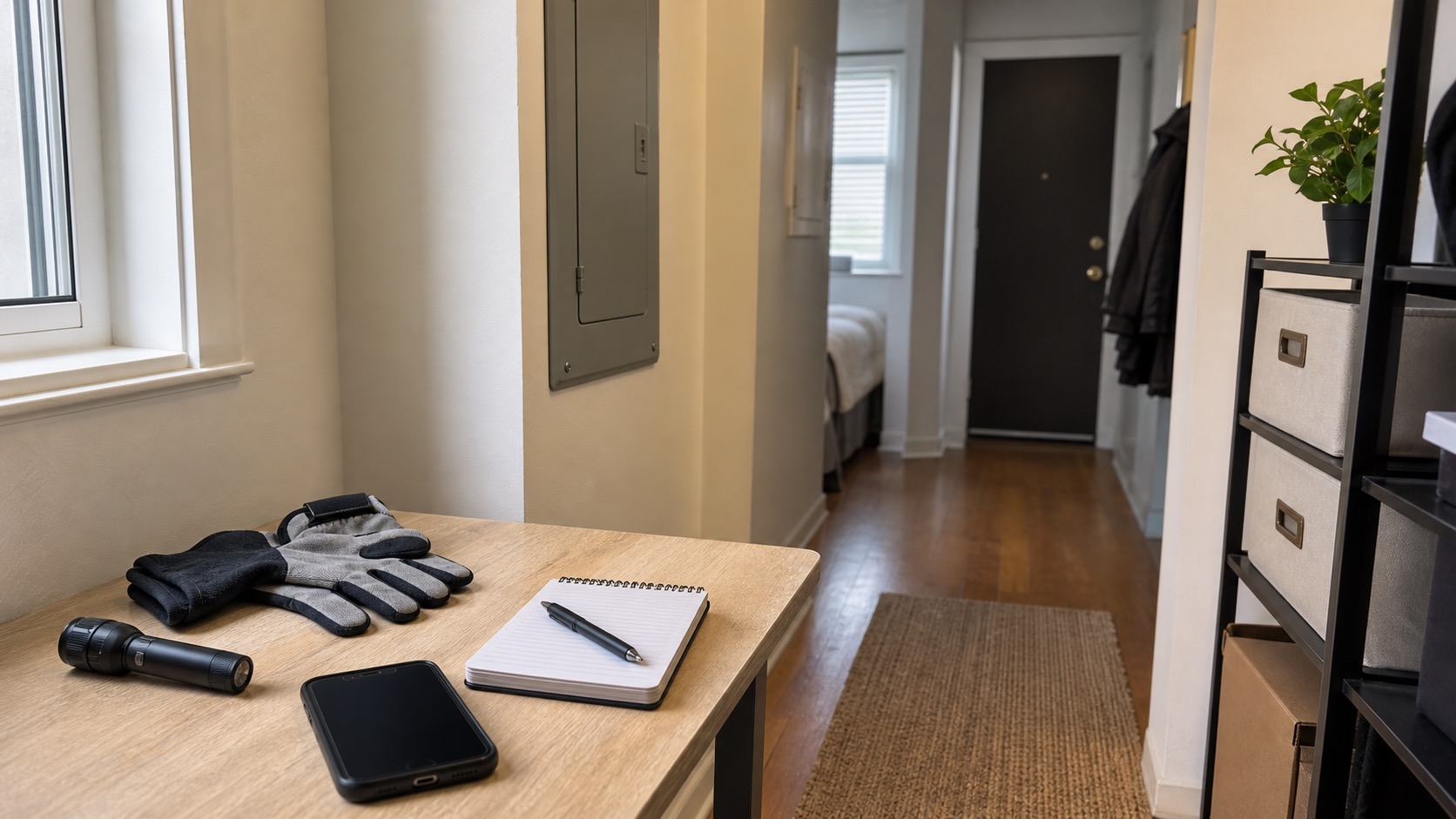
- Phone
- Lease or resident portal
- Photos from a safe distance
- Emergency contact list
Renter Notes
Renters should report building systems through the landlord or maintenance process. Document problems with photos from a safe distance and avoid repairs that could violate the lease.
Step-by-Step Guide
- Stop DIY if there is fire, smoke, gas smell, carbon monoxide alarm, sparking, flooding, or personal danger.
What I check before the next step: I stay dry and hands-off with wiring or panels. Smoke, sparks, heat, burning smell, carbon monoxide alarms, repeated trips, or wet electrical areas mean stop immediately. - Use emergency services for immediate danger.
What I check before the next step: If this confirms a system problem or danger sign, I stop there and contact the right help instead of trying a workaround. - Use landlord or maintenance for rental property systems.
What I check before the next step: If this confirms a system problem or danger sign, I stop there and contact the right help instead of trying a workaround. - Use a licensed professional for specialized work when you own the repair responsibility.
What I check before the next step: If this confirms a system problem or danger sign, I stop there and contact the right help instead of trying a workaround. - Save the date, contact method, photos, and response for your records.
What I check before the next step: I make the note useful: date, location, what changed, one wide photo, and one close-up before I touch anything else.
Safe Next Steps
- If the result improved, do one normal-use test and finish with the checklist item: High-risk categories checked.
- When a problem crosses into electricity, gas, active water, sewage, HVAC, locks, structure, mold, appliance internals, or immediate danger, the next step is documentation and escalation, not another DIY attempt.
- If the result did not improve or got worse, do not add force, stronger chemicals, hidden disassembly, or a new tool. Call emergency services for the stop signs listed below.
- For a rental, send a short maintenance message with where the issue is, when you noticed it, what changed, what safe check you tried, and two photos. Keep the confirmation.
Common Mistakes
- Trying one more quick fix after noticing a burning smell.
- Waiting to report a leak until visible damage spreads.
- Assuming a video tutorial overrides lease rules or local code.
Stop-line guide
A not-DIY repair is any home problem where the consequences of being wrong are injury, fire, flood damage, contamination, lock failure, code risk, lease violation, or damage to another unit.
The phrase 'call a pro' can mean different channels. In a rental, it often means landlord or maintenance first. If you own the responsibility, it may mean a licensed electrician, plumber, HVAC technician, locksmith, remediation professional, or appliance technician.
What to Check Before You Act
Use this table to choose the right help channel. It is intentionally conservative because the cost of stopping early is usually lower than the cost of stopping late.
| Check | Before | After | Interpretation |
|---|---|---|---|
| Emergency speed | Immediate danger present? | Yes = emergency services | Do not wait for a normal maintenance queue. |
| Ownership line | Rental fixture or building system? | Yes = landlord/maintenance | The owner normally controls repair access and approved vendors. |
| License line | Electrical, plumbing, HVAC, locksmith, remediation, structural? | Yes = qualified help | Specialized systems are not beginner practice. |
| Documentation need | Visible damage or recurring issue? | Photos + written ticket | A record protects both safety and deposit questions. |
Common Situations and Stop Points
| Symptom | Possible context | Safe first check | Stop point |
|---|---|---|---|
| Gas smell | Leak or appliance issue | Leave if safe and avoid switches/flames | Immediate emergency response |
| Water dripping from ceiling | Leak above or pipe issue | Move belongings and photograph safely | Sagging, spreading, electrical contact, or active drip |
| Outlet sparks or smells hot | Electrical fault | Stop using device if safe | No outlet or wiring work |
| Entry door will not lock | Lock, latch, frame, or strike issue | Document and stay safe | Security concern requires property or locksmith channel |
Try It or Report It?
| Situation | Beginner can try | Do not touch | Contact |
|---|---|---|---|
| Immediate life safety | Leave if safe and call emergency services | Source equipment, switches, fuel lines, wiring | Emergency services |
| Rental building system | Document, reduce damage, submit ticket | Shared valves, panels, locked rooms, fixtures | Landlord or maintenance |
| Specialized owned repair | Gather model, photos, symptom timing | Disassembly or code-sensitive parts | Licensed professional |
| Low-risk household task | Follow dry, reversible steps | Anything that escalates category | Ask before continuing if uncertain |
Renter-Safe First Steps
- Take photos from a safe distance.
- Move belongings away from water if no electrical risk is present.
- Turn off a user-facing switch or appliance only when safe and obvious.
- Submit a concise maintenance request with facts and timing.
Stop Lines
- Stop for gas smell, smoke, fire, sparks, carbon monoxide alarm, or burning odor.
- Stop for active flooding, sewage, water near electricity, ceiling sagging, or unknown water source.
- Stop for structural movement, cracked beams, shifting walls, roof access, or high ladder work.
- Stop for lock-security work, appliance internals, HVAC panels, electrical panels, or plumbing beyond observation.
- Stop for anything your lease prohibits or assigns to maintenance.
Additional FAQ
Should I call my own contractor in a rental?
Check the lease and contact the landlord first. Unauthorized work can create access, warranty, insurance, and payment problems.
What if maintenance is slow?
Send a dated follow-up with photos and updated conditions. Escalate through emergency maintenance or local emergency services if safety changes.
Is stopping too early a problem?
Usually no. Stopping early preserves options. Stopping late can create injury, damage, or a lease dispute.
Related Next Steps
- Safe to DIY? A Renter's Home Repair Filter - Use the shorter pre-repair filter first.
- Power Outage Alone: A Calm Apartment Safety Plan - Electrical and outage stop lines.
- Heat or AC Stopped in an Apartment: Safe First Moves - HVAC-specific stop points and messages.
What Not to Do
- Do not open electrical panels, gas lines, walls, ceilings, or major appliances as beginner DIY.
- Do not climb onto roofs or tall ladders alone.
- Do not disturb extensive mold, sewage, or unknown hazardous materials.
When to Pause and Ask for Help
Call emergency services for immediate danger. Contact landlord or maintenance for rental systems. Hire licensed electricians, plumbers, HVAC technicians, locksmiths, or remediation professionals when specialized work is required.
FAQ
What counts as electrical work?
Anything beyond changing a bulb or resetting a safe, labeled breaker can be electrical work. Outlets, wiring, panels, fixtures, and burning smells need qualified help.
When is a leak urgent?
Active dripping, ceiling stains, water near electricity, sewage, or spreading water should be reported immediately.
Is mold a DIY cleaning task?
Small surface mildew can be cleaned carefully, but extensive mold, recurring mold, or mold from leaks should be reported.
What if I feel embarrassed calling maintenance?
Report anyway. Early reporting protects safety, the building, and your lease record.
Can I call my own pro in a rental?
Check your lease first. Many rentals require landlord approval before outside repair work.
Final Checklist
- High-risk categories checked
- DIY stopped when unsafe
- Photos taken safely
- Correct contact used
- Emergency services called for immediate danger
References
Use these official resources as background context. Product manuals, lease rules, local requirements, property maintenance instructions, and qualified professional advice should still come first for your exact home.
- Electrical safety - U.S. Consumer Product Safety Commission. Use as a general boundary for electrical risks that should not be handled as beginner repairs.
- Smoke alarms - U.S. Fire Administration. Missing, failed, painted, or unreachable alarms should be handled through the right property or safety channel.
You May Also Like
More beginner-safe guides that connect to this repair, the same room, or the next safety decision a renter may need.
- Power Outage Alone: A Calm Apartment Safety Plan - A calm power outage plan for people living alone, with clear electrical safety boundaries.
- Apartment Smoke Detector Test: A Safe Monthly Check - Learn how to test an apartment smoke detector with its test button, what a failed test or chirp means, and when renters should call maintenance.
- Slow Bathroom Sink: Renter-Safe First Checks Before Maintenance - Try safe first steps for a slow bathroom sink before escalating to apartment maintenance.
- First Apartment Maintenance Checklist - A realistic monthly checklist for keeping a first apartment safer and easier to manage.
- Safe to DIY? A Renter's Home Repair Filter - Use a simple safety filter before deciding whether to DIY a repair in your first place.
- Appliance Problem or Repair Risk? A Beginner Troubleshooting Filter - Use a beginner safety filter before checking a fridge, washer, dryer, dishwasher, AC, or stove.
- Small Water Leak: What to Do While Waiting for Maintenance - Contain a small apartment water leak while waiting for maintenance, document the damage, avoid electrical danger, and know when to escalate.
- Heat or AC Stopped in an Apartment: Safe First Moves - Handle apartment heat or AC problems safely while you document the issue and contact maintenance.