Portia Me'uan Thomas
I write First Place Fix from more than two decades of renting, living alone, moving often, and solving ordinary home problems with a safety-first mindset. My guides start with the visible symptom, a photo record, a safe measurement when one is appropriate, and a clear stop line before a beginner reaches for the wrong tool.
Who We Are
First Place Fix is an independent educational home-care site for beginners, renters, first-apartment readers, and people living alone. When the site says "we," it means the First Place Fix editorial process and field-note archive, not a repair company or a large contractor team.
Why This Site Exists
Many small home problems are stressful because the safe first step is unclear. First Place Fix turns those moments into a calm sequence: observe, document, try only reversible low-risk checks, and stop before the task becomes building-owned, lease-sensitive, or professional work.
Author Introduction
Portia Me'uan Thomas has rented, moved, lived alone, repaired, documented, and handed homes back for more than two decades. Her guides turn that lived repair history into calm, safety-first steps for beginners and renters.
In Portia's Words
Hi, I am Portia Me'uan Thomas, the person behind First Place Fix and someone who has treated do-it-yourself home care as part of my everyday life.
My repair story started in 2000, when I dragged my suitcase into my first rental. Since then, I have moved 17 times, rented and closely maintained 9 apartments, and lived alone for more than 15 years. In that sense, my home-repair education has been a long, practical field exercise rather than a neat classroom path.
Over the years, I have personally replaced more than 40 faucets, cleared countless slow drains and floor drains, and once climbed into an attic late at night to trace the first visible signs of a leak. Clogged kitchen sinks, running toilet tanks, wall crack repairs, loose door locks, washing-machine drainage problems, light-fixture changes, aging bathroom sealant, and small waterproofing failures have all shown up in my real life, and I have had to break them down, fix what was safe to fix, and verify the result.
For me, home repair has never been only about saving money. It is a practical form of self-reliance: knowing where a problem may be coming from, knowing when I can safely handle the first step myself, and knowing when the correct answer is to stop and bring in maintenance or a qualified professional. Every screw I tighten, sealant bead I smooth, filter I replace, and leak path I check is part of building a safer, more orderly home.
Because I have rented for so long, I care deeply about repairs that are reversible, low-damage, and landlord-friendly. Before moving out, I check faucets, door locks, walls, drains, light fixtures, cabinet hinges, and other parts that tend to show wear. I try to leave the home clean, stable, and easy to hand over. That habit has helped me avoid negative move-out feedback and has often made the handoff calmer for everyone involved.
I also do not want First Place Fix to be only a collection of personal stories. I have studied books, manuals, and reference material on residential plumbing and electrical basics, pipe maintenance, basic carpentry, wall repair, waterproofing and sealing, household tool use, electrical safety, rental maintenance, and home hazard checks. The goal is to combine practical lived experience with grounded, repeatable methods that ordinary readers can understand and judge safely.
I do not chase flashy social-media remodels, and I do not encourage people to tear into systems they do not understand. I care more about the small problems that interrupt normal life: why a toilet keeps running, why a sink smells bad, whether a wall crack needs immediate attention, whether slow washing-machine drainage is a machine issue or a drain issue, whether a smart lock needs landlord approval or professional installation, how to repair wall holes after renting, and whether a leaking kitchen drain needs a simple gasket, a washer, or maintenance support.
In my guides, I try to make every recommendation clear, specific, and usable. I list the tools and materials, explain when a task may be reasonable for a beginner, and name the operations that are too risky for ordinary DIY. When I label a method as tested, my standard is to check it in real conditions at least three times and include the mistakes, safety notes, and common failure points that can help readers avoid wasting time, buying the wrong part, or making damage worse.
I believe home repair should not feel mysterious. Many problems are not as complicated as they look. The hard part is often that nobody tells you where to start, which way the screw turns, how thick a bead of sealant should be, how to measure a replacement part, or when to stop and ask for professional help.
Here, you will not find distant jargon or show-off tutorials. You will find real-life repair judgment, clear steps, and the simple habit I trust most: turn in the right direction, use the right amount of force, judge the problem first, and only then pick up the tool.
I hope my experience helps you feel less panicked when something small goes wrong at home. I hope it saves you some waiting time, prevents a few wrong-tool and wrong-part purchases, and, most importantly, helps you build the steady life skill of caring for your own home even when you live alone.
How First-Hand Experience Is Shown
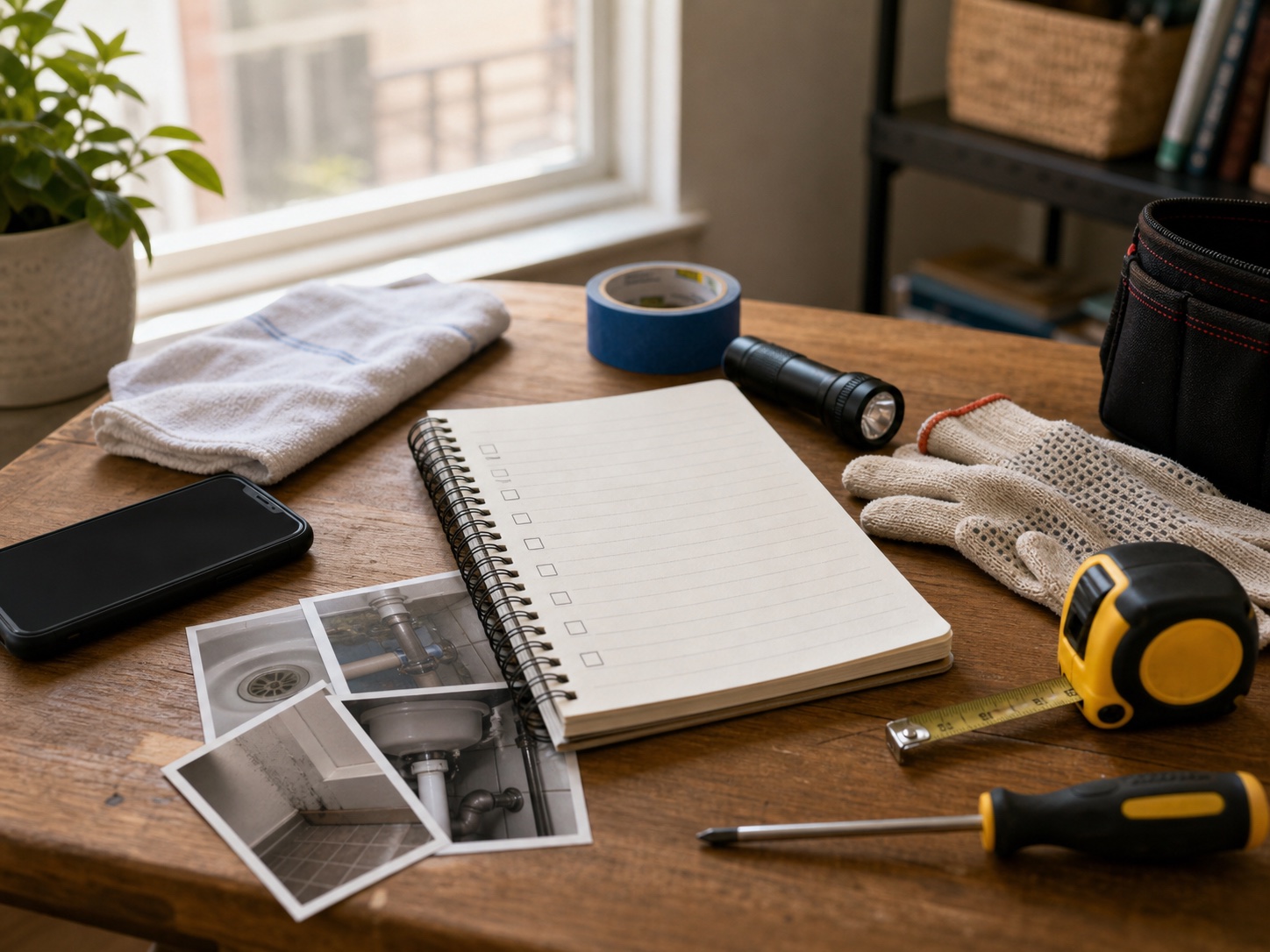
- Photo record first: capture the wide scene, close-up detail, tool or towel placement, and final documented state before a guide asks the reader to touch anything.
- Measure only safe variables: drain time, drip location, towel moisture, visible looseness, temperature logs, stain transfer, and whether a latch catches are useful because they do not require hidden-system work.
- Stop line before steps: each repair guide names what not to touch, when maintenance should take over, and when emergency help matters before the step-by-step section.
Editorial Process
- Start with a real beginner scenario, such as a slow drain, loose handle, small leak, failed alarm, outage, heat problem, or move-in documentation issue.
- Define what a renter or beginner can safely observe before tools come out.
- Separate reversible first checks from building systems, lease-controlled fixtures, electrical, gas, HVAC, locks, appliances, mold, sewage, and structural work.
- Add measurements where they help: drain timing, leak severity, temperature logs, tool usefulness, symptom tables, or before-and-after observations.
- Add original visuals or process visuals that show tools, parts, stop points, and documentation steps without copying copyrighted images.
- Add official or professional references when a topic involves fire, carbon monoxide, mold, heat, electricity, leaks, emergency supplies, or other safety-sensitive claims.
How Content Is Reviewed
- Every strengthened guide is checked for safety stop lines, renter boundaries, emergency escalation language, landlord or maintenance communication, and common mistakes.
- First Place Fix Field Notes is an editorial safety check label, not a licensed professional reviewer claim.
- A professional reviewed-by field should stay blank unless a real qualified electrician, plumber, HVAC technician, locksmith, remediation professional, inspector, or other relevant expert reviews that exact article and agrees to be named.
- Guides are edited to remove filler, fake testing claims, invented expert quotes, fake credentials, and instructions that push beginners into dangerous work.
How We Keep Content Accurate
- We favor official sources such as USFA, NFPA, CPSC, CDC, EPA, DOE, Ready.gov, product manuals, lease rules, and local emergency or maintenance instructions when safety claims need support.
- We do not invent measurements. If a test has not been performed, the article should explain what to record rather than presenting fake results.
- We update content when safety guidance changes, a source link breaks, a guide needs clearer renter boundaries, a process image can better explain the structure, or a correction points out an unclear step.
- Readers should still follow their lease, building rules, product manuals, local law, emergency services, property maintenance instructions, and licensed professional advice for their exact home.
Contact
For corrections, accessibility issues, source notes, and non-urgent editorial questions, email contact@firstplacefix.com.
This inbox is not for emergency repairs, legal advice, personal diagnosis, contractor referrals, or safety dispatch.
Last Updated Guides
Guide pages are listed by their latest update date, newest first. This makes recent safety edits, clearer stop lines, and expanded renter notes easier to find.
- Apartment Balcony Cleaning and Safety Check - Updated August 17, 2026. Keep an apartment balcony clean and safe with dry sweeping, secured loose items, visible drainage, and no-ladder renter-friendly checks.
- Apartment Laundry Without Damaging Clothes - Updated August 17, 2026. Use shared apartment laundry machines with fewer mistakes, safer habits, and less clothing damage.
- Apartment Showerhead Replacement: The Renter-Safe Version - Updated August 17, 2026. Find out whether renters can replace an apartment showerhead, how to ask permission, save the original part, and avoid damaging wall plumbing.
- Apartment Smoke Detector Test: A Safe Monthly Check - Updated August 17, 2026. Learn how to test an apartment smoke detector with its test button, what a failed test or chirp means, and when renters should call maintenance.
- Appliance Problem or Repair Risk? A Beginner Troubleshooting Filter - Updated August 17, 2026. Use a beginner safety filter before checking a fridge, washer, dryer, dishwasher, AC, or stove.
- Assemble Furniture Alone Without Cracking Boards - Updated August 17, 2026. Assemble flat-pack furniture by yourself with safer staging, sorting, and stop points.
- Bad Fridge Smell: A Step-by-Step Odor Reset - Updated August 17, 2026. Track down refrigerator odors with a safe cleanout routine for renters and first apartments.
- Basic Emergency Kit for Living Alone - Updated August 17, 2026. Build a practical emergency kit for outages, storms, minor injuries, and apartment disruptions.
- Bathroom Mold Spots: Clean, Document, or Report? - Updated August 17, 2026. Handle small bathroom mold spots with ventilation, protective gear, and clear renter stop points.
- Coffee on Carpet: Blot, Test, and Stop Before Damage - Updated August 17, 2026. Blot a fresh or recent coffee stain from carpet with gentle, renter-safe steps and clear stop points.
- Curtains in a Rental: Hang Them Without Wall Damage - Updated August 17, 2026. Add privacy with renter-friendly curtain options that avoid drilling and wall damage.
- Dishwasher Smells Bad: Safe Cleaning Before You Call Maintenance - Updated August 17, 2026. Clean common dishwasher odor sources without taking the appliance apart.
Practical Repair Background
- More than two decades of practical rental-home maintenance since 2000, including 17 moves, 9 closely maintained apartments, and more than 15 years of living alone.
- Hands-on work with faucet replacement, slow drains, floor drains, running toilet tanks, wall crack repair, loose locks and handles, washing-machine drainage symptoms, light-fixture changes, aging sealant, and small leak tracing.
- Personal repair history includes replacing more than 40 faucets and repeatedly documenting, testing, and correcting ordinary household problems before deciding whether they were safe to finish or needed professional support.
- Hands-on beginner repair documentation: loose interior handles, squeaky hinges, slow drains, under-sink leak checks, apartment safety checks, carpet stains, and move-in condition logs.
- Field-note style comparison planning: timing drain tests, checking whether a paper towel shows new moisture, scoring starter tools by usefulness, and photographing the setup before and after a safe check.
- Renter-first documentation habits: wide photo, close-up photo, location note, date/time, what changed, what was not touched, written maintenance request, and a saved confirmation.
- Guide editing from the reader's room outward: what they can see, what they can safely measure, what belongs to the building, and what should be reported before any part is moved.
Renter-Aware Approach
- Long-term rental experience has shaped a repair style that prioritizes reversible work, low damage, written permission when needed, and clean move-out handoffs.
- Before move-out, I check faucets, door locks, walls, drains, light fixtures, cabinet hinges, and other wear-prone parts so the home is easier to hand back in stable condition.
- The guides assume the reader may not own the fixture, may be alone, and may need landlord approval before making changes.
- Every repair article separates reversible first checks from building-owned work that belongs to maintenance.
- The writing avoids asking renters to open walls, panels, shared plumbing, HVAC equipment, entry locks, or appliance interiors.
- When an article includes a possible DIY step, it also names the record a renter should keep if maintenance, a landlord, a neighbor, or a move-out inspection later asks what happened.
Testing Philosophy
- When a guide labels a method as tested, my standard is to check it in real conditions at least three times before presenting it as a finished recommendation.
- Measure what a beginner can measure safely: time, water level, visible looseness, temperature, drip rate, tool usefulness, and before/after photos.
- When a number has not been measured yet, say that clearly and show readers what to record instead of inventing results.
- A useful test is one that can be repeated with low risk and stopped immediately when the situation changes.
- I prefer small observable variables over diagnosis: does the towel get wet, how long does the drain take, does the latch catch, does the stain transfer, does the room temperature keep falling?
Safety Philosophy
- The safest repair is often documentation plus the right maintenance request.
- Stop lines should be visible before the steps, not buried after the reader is already committed.
- Emergency language belongs in ordinary guides because beginners often meet emergencies first as small confusing symptoms.
- The article should help a reader stop sooner, not feel pressured to prove they can finish a repair.
What We Cover
- Dry, visible, reversible tasks.
- Renter-safe cleaning, observation, tightening, timing, and documentation.
- Communication frameworks for landlord and maintenance requests.
- Everyday first-apartment problems such as running toilets, slow drains, sink odors, loose handles, small wall damage, cabinet hardware, light bulbs, emergency supplies, and move-in records.
What We Do Not Cover
- Electrical wiring, gas, HVAC repair, structural work, roofing, sewage, extensive mold, appliance-internal repair, lock replacement, and code compliance.
- Medical, legal, security, emergency-dispatch, or tenant-advocacy advice.
- Fake product tests, fake credentials, or invented expert quotes.
Disclosure
Portia Me'uan Thomas has not provided a licensed electrician, plumber, HVAC technician, locksmith, remediation professional, or inspector credential for this author profile. Treat the content as general education and follow lease rules, manuals, emergency services, maintenance instructions, and licensed professional advice.
Selected Guides
- Safe to DIY? A Renter's Home Repair Filter - Use a simple safety filter before deciding whether to DIY a repair in your first place.
- When Not to DIY a Home Repair - Clear stop signs for repairs that are unsafe, lease-sensitive, or require licensed help.
- Small Water Leak: What to Do While Waiting for Maintenance - Contain a small apartment water leak while waiting for maintenance, document the damage, avoid electrical danger, and know when to escalate.
- Under-Sink Leak Check: What to Look For Before Touching Plumbing - Check under a kitchen or bathroom sink for early leak signs without taking plumbing apart.
- First Apartment Maintenance Checklist - A realistic monthly checklist for keeping a first apartment safer and easier to manage.
- Starter Tools for Living Alone: What Actually Earns Space - Build a compact toolkit for apartment living with renter-safe basics, a buy-first order, and clear limits on tools you do not need yet.