Food Spill Inside the Fridge: Clean It Without Spreading Odor
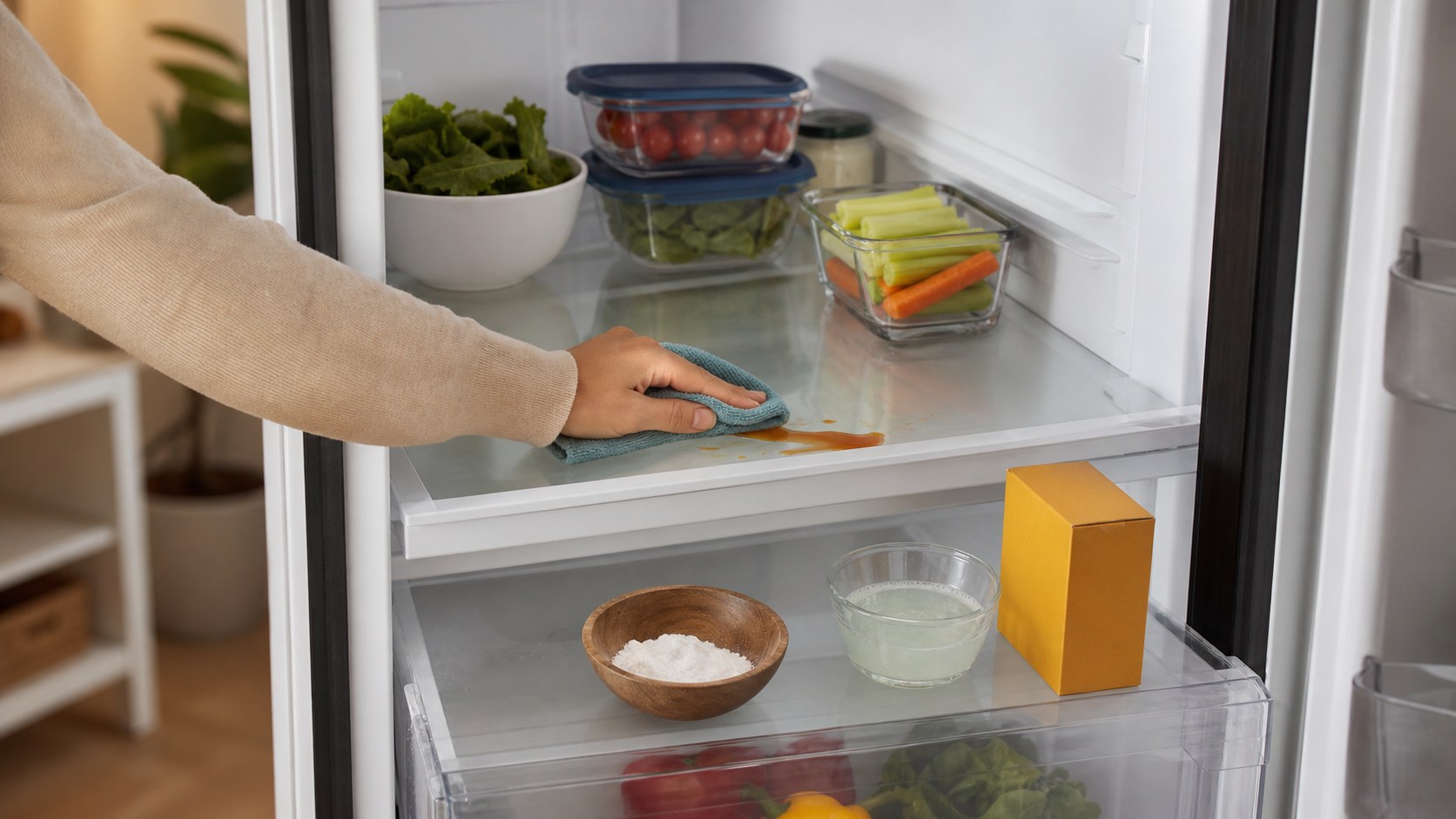
Use this when sauce, juice, milk, or leftovers spill inside the refrigerator. This is a basic food-area cleanup guide, not appliance repair or deep disassembly.
By Portia Me'uan Thomas. Updated August 17, 2026. Edited for renter-aware safety.
Time: 20-45 minutes. Difficulty: Easy. Safety: Low unless the fridge is not cooling.
Quick Answer
Move food aside, throw away spoiled items, remove only shelves or bins that lift out easily, wash with mild dish soap, wipe interior surfaces with a damp cloth, dry everything fully, and confirm the fridge is still cold.
Material Fit
For appliances, the material table is really an access table: user-facing parts are different from mechanical or electrical parts.
| Material or surface | Safest first method | Conditional next method | Avoid / stop line |
|---|---|---|---|
| Removable plastic bin or shelf | Mild dish soap, warm water, complete drying. | Clean outside the appliance if it lifts out without force. | Stop if the part cracks or resists removal. |
| Rubber gasket or seal | Damp cloth and mild soap; dry the fold gently. | Use only products allowed by the manual. | Avoid sharp tools, bleach mixes, and pulling the gasket loose. |
| Lint screen / removable filter | Clean only if it is meant for user access. | Reinstall exactly as found. | Stop if access needs tools, panel removal, or force. |
| Panel, motor, compressor, hose, wiring, gas line | No beginner DIY. | Document symptoms and call maintenance. | Do not open, move, disconnect, or bypass. |
Before You Start
- Move perishables to a cooler if the door will be open for more than a few minutes.
- Check that the fridge feels cold before you start.
- Do not use bleach, ammonia, oven cleaner, or strong scented cleaners where food is stored.
- Never mix bleach and ammonia or combine unknown cleaners.
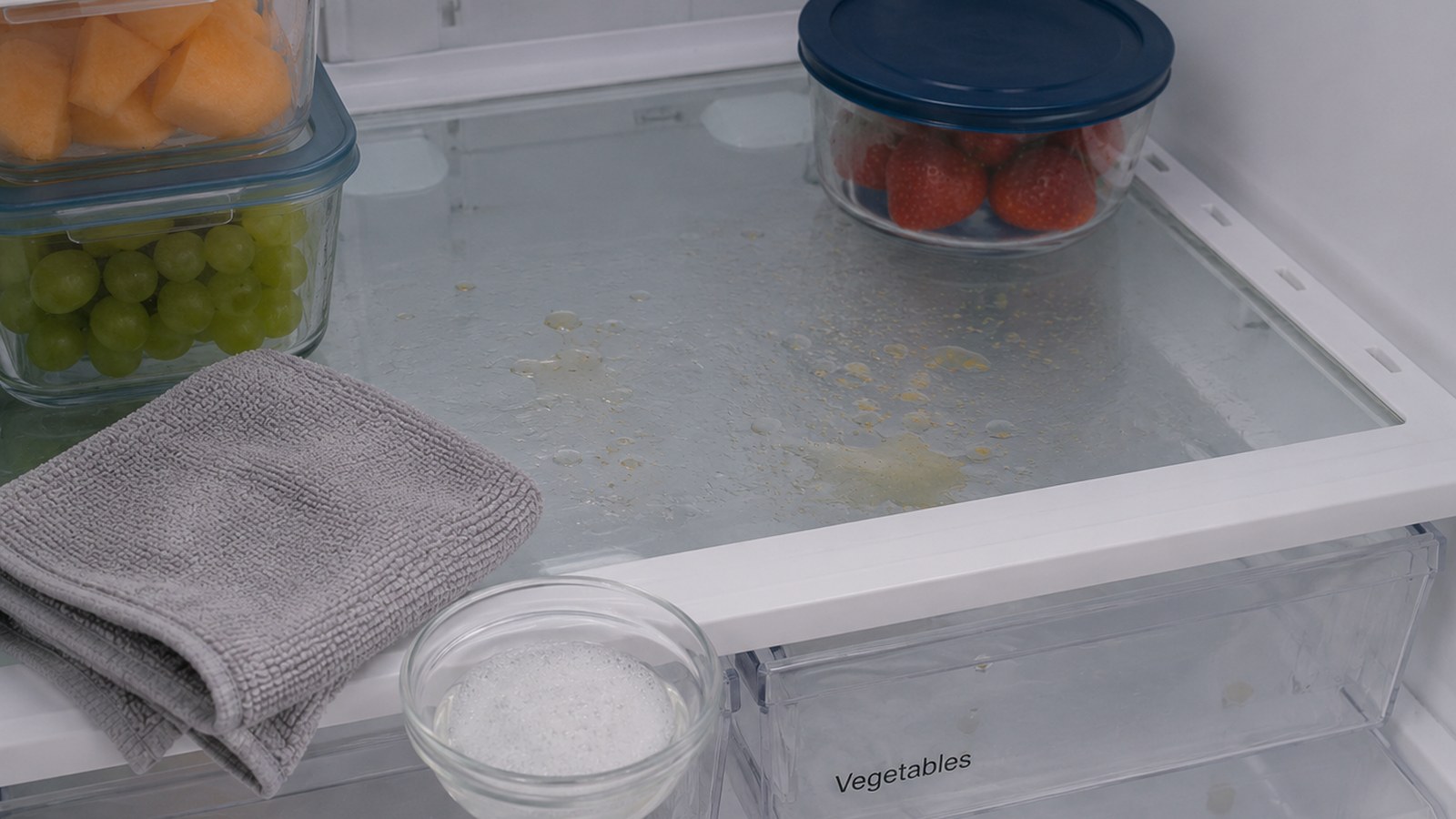
Tools Needed
- Trash bag
- Cooler or insulated bag
- Mild dish soap
- Soft sponge
- Microfiber cloths
- Clean towel
- Baking soda
Renter Notes
Clean removable parts gently and avoid forcing drawers, glass shelves, panels, vents, or seals. Report broken shelves, leaks, warm temperatures, or recurring odors to maintenance.
Step-by-Step Guide
- Throw away spoiled, leaking, or unsafe food and take trash out promptly.
What I check before the next step: I look for spreading water, wet electrical areas, sewage odor, swelling, or moisture below the fixture. Any of those turns this into a stop-and-report issue. - Remove shelves and drawers only if they lift out easily without force.
What I check before the next step: Before continuing, I confirm the step stayed dry, visible, reversible, and within the lease or my comfort level. - Wash removable parts with warm water and mild dish soap, then dry them fully.
What I check before the next step: I look for spreading water, wet electrical areas, sewage odor, swelling, or moisture below the fixture. Any of those turns this into a stop-and-report issue. - Wipe interior walls, seams, door bins, and seals with a damp soapy cloth.
What I check before the next step: I keep the door or window from trapping me while testing. Entry locks, broken latches, cracked frames, or security uncertainty belong with maintenance or a locksmith. - Wipe again with plain water so soap residue does not touch food.
What I check before the next step: I look for spreading water, wet electrical areas, sewage odor, swelling, or moisture below the fixture. Any of those turns this into a stop-and-report issue. - Dry surfaces, reload food, add baking soda for lingering odor, and check that the fridge returns to a safe cold temperature.
What I check before the next step: I stay with accessible, user-facing checks only. Heat, burning smell, leaks, damaged cords, error codes, or panel access means the next step is maintenance.
Safe Next Steps
- If the result improved, do one normal-use test and finish with the checklist item: Spoiled food removed.
- If the result is mixed, stop after the listed low-risk checks and decide whether the issue belongs with maintenance, your landlord, or a licensed professional.
- If the result did not improve or got worse, do not add force, stronger chemicals, hidden disassembly, or a new tool. Contact maintenance if any stop sign appears.
- For a rental, send a short maintenance message with where the issue is, when you noticed it, what changed, what safe check you tried, and two photos. Keep the confirmation.
Common Mistakes
- Using strong cleaners that leave chemical smells around food.
- Putting glass shelves into hot water while cold, which can crack them.
- Leaving wet drawers or seals that create new smells.
- Ignoring a spill that ran into vents or under fixed panels.
Refrigerator spill containment
a food or liquid spill inside a refrigerator is treated here as a beginner observation and control problem first, not a chance to prove you can take apart the home. The safe version is visible, reversible, and easy to stop.
For renters, the important line is ownership. You can usually observe, photograph, time, clean lightly, or tighten a visible non-security part, but hidden systems, building-owned fixtures, and lease-controlled hardware belong to maintenance.
What to Check Before You Act
Record the starting condition, perform only one low-risk check at a time, and compare temperature, spill type and reach, affected food, clean and dry result. Do not repeat a step that needs more force, chemical, height, access, or disassembly.
| Check | Before | After | Interpretation |
|---|---|---|---|
| Temperature | Record center-zone thermometer reading and time | After one safe check: keep the door closed except for organized cleanup | Safe cooling must be maintained during cleanup Stop if temperature is above 40°f or warm duration is unknown. |
| Spill type and reach | Record food type, raw-food contact, volume, shelf, seam, vent, light, and drain involvement | After one safe check: contain the visible spill before moving items | A surface spill differs from hidden contamination Stop if liquid entered electrical or inaccessible appliance areas. |
| Affected food | Record open packages, direct contact, dates, and safe holding time | After one safe check: separate questionable items and follow official food-safety guidance | Cross-contaminated or temperature-abused food may need disposal Stop if safety cannot be established. |
| Clean and dry result | Record residue, odor, moisture, shelf damage, and return after cooling | After one safe check: clean per the appliance instructions, rinse if required, and dry fully | A dry intact odor-free surface is the target Stop if odor, moisture, cracks, or residue remain in hidden areas. |
Common Situations and Stop Points
| Symptom | Possible context | Safe first check | Stop point |
|---|---|---|---|
| Temperature | Safe cooling must be maintained during cleanup | keep the door closed except for organized cleanup | temperature is above 40°F or warm duration is unknown |
| Spill type and reach | A surface spill differs from hidden contamination | contain the visible spill before moving items | liquid entered electrical or inaccessible appliance areas |
| Affected food | Cross-contaminated or temperature-abused food may need disposal | separate questionable items and follow official food-safety guidance | safety cannot be established |
| Clean and dry result | A dry intact odor-free surface is the target | clean per the appliance instructions, rinse if required, and dry fully | odor, moisture, cracks, or residue remain in hidden areas |
Try It or Report It?
| Situation | Beginner can try | Do not touch | Contact |
|---|---|---|---|
| Observe and document | Verify refrigerator temperature and organize the cleanup. Contain visible liquid and separate affected food. | Hidden, fixed, energized, pressurized, structural, or lease-controlled parts | Use the record if the baseline is abnormal |
| One reversible first step | Clean removable and accessible parts according to appliance instructions. Dry fully and recheck temperature and odor. | Anything that needs force, drilling, cutting, panel removal, or mixed chemicals | Maintenance if the first step fails or the condition returns |
| Condition persists | Repeat the observation for temperature and spill type and reach, not the repair | Do not escalate tools or improvise a workaround | Landlord, maintenance, manufacturer support, or the responsible professional |
| Warning sign appears | Stop, keep distance, and photograph only if that is safe | Stop if the refrigerator is above 40°F or food history is uncertain. Stop for broken glass or a cracked shelf. Stop if liquid reached lights, controls, vents, cords, drains, or hidden seams. | Urgent maintenance, utility, emergency services, or another appropriate safety channel |
Renter-Safe First Steps
- Verify refrigerator temperature and organize the cleanup.
- Contain visible liquid and separate affected food.
- Clean removable and accessible parts according to appliance instructions.
- Dry fully and recheck temperature and odor.
Stop Lines
- Stop if the refrigerator is above 40°F or food history is uncertain.
- Stop for broken glass or a cracked shelf.
- Stop if liquid reached lights, controls, vents, cords, drains, or hidden seams.
- Stop before removing appliance panels or fixed parts.
- Stop when safe food handling cannot be established.
Additional FAQ
Can I put a cold glass shelf into hot water?
Avoid sudden temperature changes that may crack glass. Follow the appliance instructions and let removable parts adjust safely.
Can I keep food that was beside the spill?
Consider direct contact, packaging, food type, time, and temperature. When safety is uncertain, follow official food-safety guidance rather than tasting.
What should I include in a maintenance message?
Include the exact location, when it started, photos, the temperature and spill type and reach and affected food and clean and dry result, what safe check you performed, and whether the condition improved, stayed the same, or worsened.
Related Next Steps
- Fridge Not Cooling Properly: First Checks Before Repair - Verify food-safe temperature before and after cleanup.
- Bad Fridge Smell: A Step-by-Step Odor Reset - Track odor after the spill source is removed.
- Simple Weekly Cleaning Routine for a First Apartment - Add a quick covered-food and spill scan.
What Not to Do
- Do not remove interior panels or vents.
- Do not scrape plastic with knives or metal tools.
- Do not keep food from a fridge that has been warm for an unknown amount of time.
- Do not use bleach or ammonia inside the fridge.
When to Pause and Ask for Help
Contact maintenance if the fridge is not cooling, water pools under drawers, a spill entered vents or fixed panels, shelves are broken, odor returns after cleaning, or the cord, outlet, or appliance smells like burning.
FAQ
Can I use disinfecting wipes?
Use caution in food storage areas. If you use a food-safe product, follow the label and rinse surfaces if required.
What if milk spilled?
Clean it quickly and dry well because milk residue can sour and smell even after the visible spill is gone.
Should I unplug the fridge?
Usually not for a basic spill cleanup. Follow the appliance manual or ask maintenance for deeper work.
How cold should the fridge be after cleaning?
It should return to 40 degrees Fahrenheit or below. If it does not, contact maintenance.
Final Checklist
- Spoiled food removed
- Removable parts washed gently
- Interior wiped
- Soap residue rinsed
- Everything dried
- Temperature checked
- Maintenance contacted if cooling is poor
References
Use these official resources as background context. Product manuals, lease rules, local requirements, property maintenance instructions, and qualified professional advice should still come first for your exact home.
- Are you storing food safely? - U.S. Food and Drug Administration. Use as food-storage background before cleaning spills, odors, and questionable leftovers.
- Food safety prevention - Centers for Disease Control and Prevention. Use for basic food-safety habits around cleaning, separating foods, and handling spoiled items.
You May Also Like
More beginner-safe guides that connect to this repair, the same room, or the next safety decision a renter may need.
- Bad Fridge Smell: A Step-by-Step Odor Reset - Track down refrigerator odors with a safe cleanout routine for renters and first apartments.
- Fridge Not Cooling Properly: First Checks Before Repair - Check safe fridge basics like temperature setting, airflow, door seal, and maintenance reporting.
- Garbage Disposal Smell: Safe Cleaning Without Reaching Inside - Freshen a garbage disposal with safe cleaning steps and clear stop points for jams or leaks.
- Simple Weekly Cleaning Routine for a First Apartment - Create a realistic weekly cleaning routine for a first apartment without turning it into a full-day project.
- Under-Sink Leak Check: What to Look For Before Touching Plumbing - Check under a kitchen or bathroom sink for early leak signs without taking plumbing apart.
- Loose Cabinet Handles and Drawer Pulls: A 10-Minute Check - Tighten loose cabinet knobs and drawer pulls without stripping screws or damaging rental cabinets.
- Grease on Kitchen Walls: Gentle Cleaning for Painted Surfaces - Learn how to clean grease off painted kitchen walls with a gentle spot test, minimal moisture, and stop points that protect rental finishes.
- Stovetop Burn Marks: Safe Cleaning After the Surface Cools - Clean light stovetop scorch and cooked-on food without scratching glass, enamel, or rental appliances.