Simple Weekly Cleaning Routine for a First Apartment
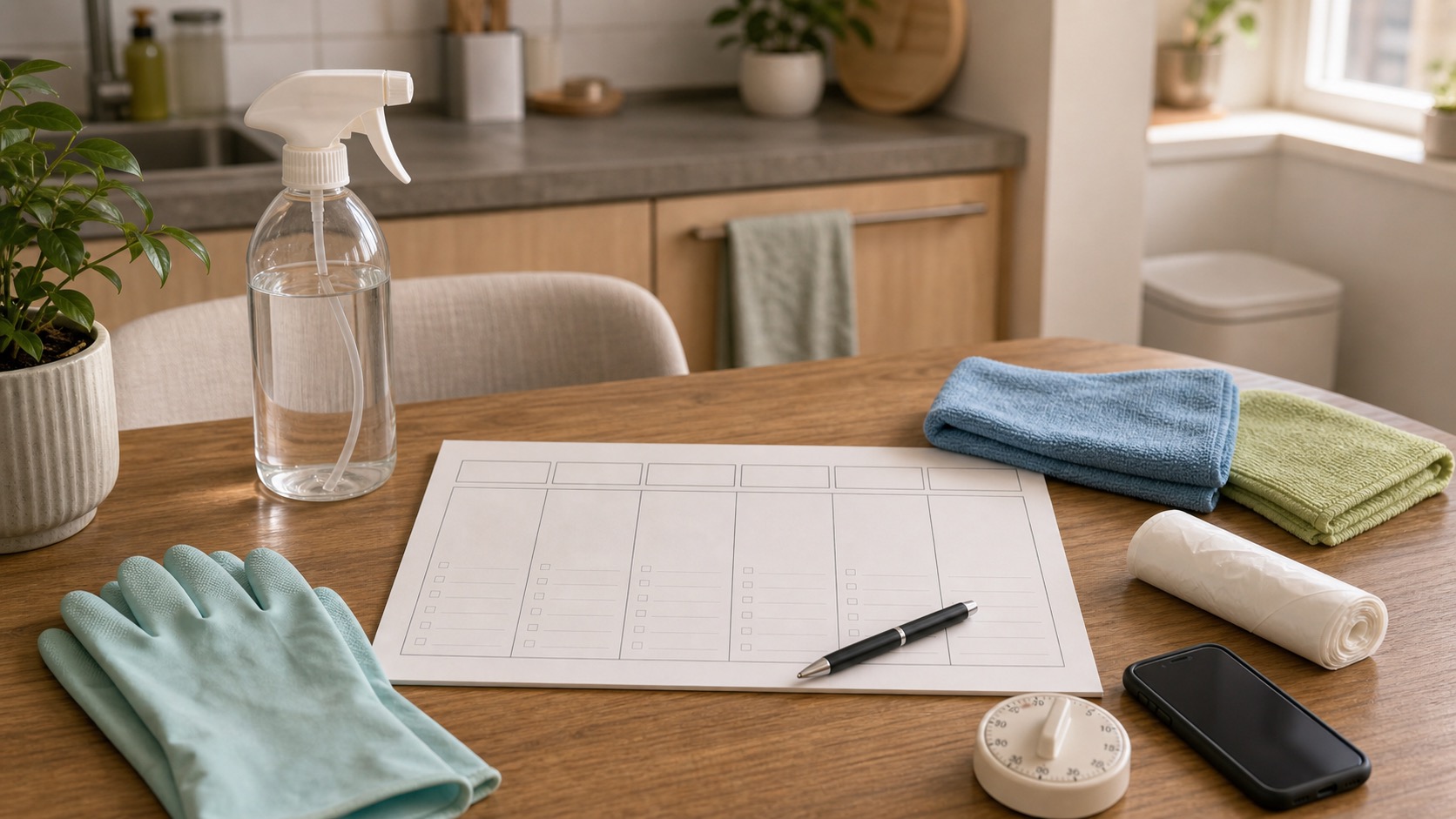
Use this when dishes, laundry, bathroom grime, and floor dust keep piling up because there is no routine yet. The goal is a repeatable weekly reset that works in a small rental and does not require fancy supplies.
By Portia Me'uan Thomas. Updated August 17, 2026. Edited for renter-aware safety.
Time: 60-120 minutes weekly. Difficulty: Easy. Safety: Low.
Quick Answer
Pick one weekly reset time, split cleaning into kitchen, bathroom, floors, laundry, and trash, keep supplies in one bin, and do small daily resets so the weekly clean stays under an hour or two.
Before You Start
- Read cleaner labels and avoid mixing products.
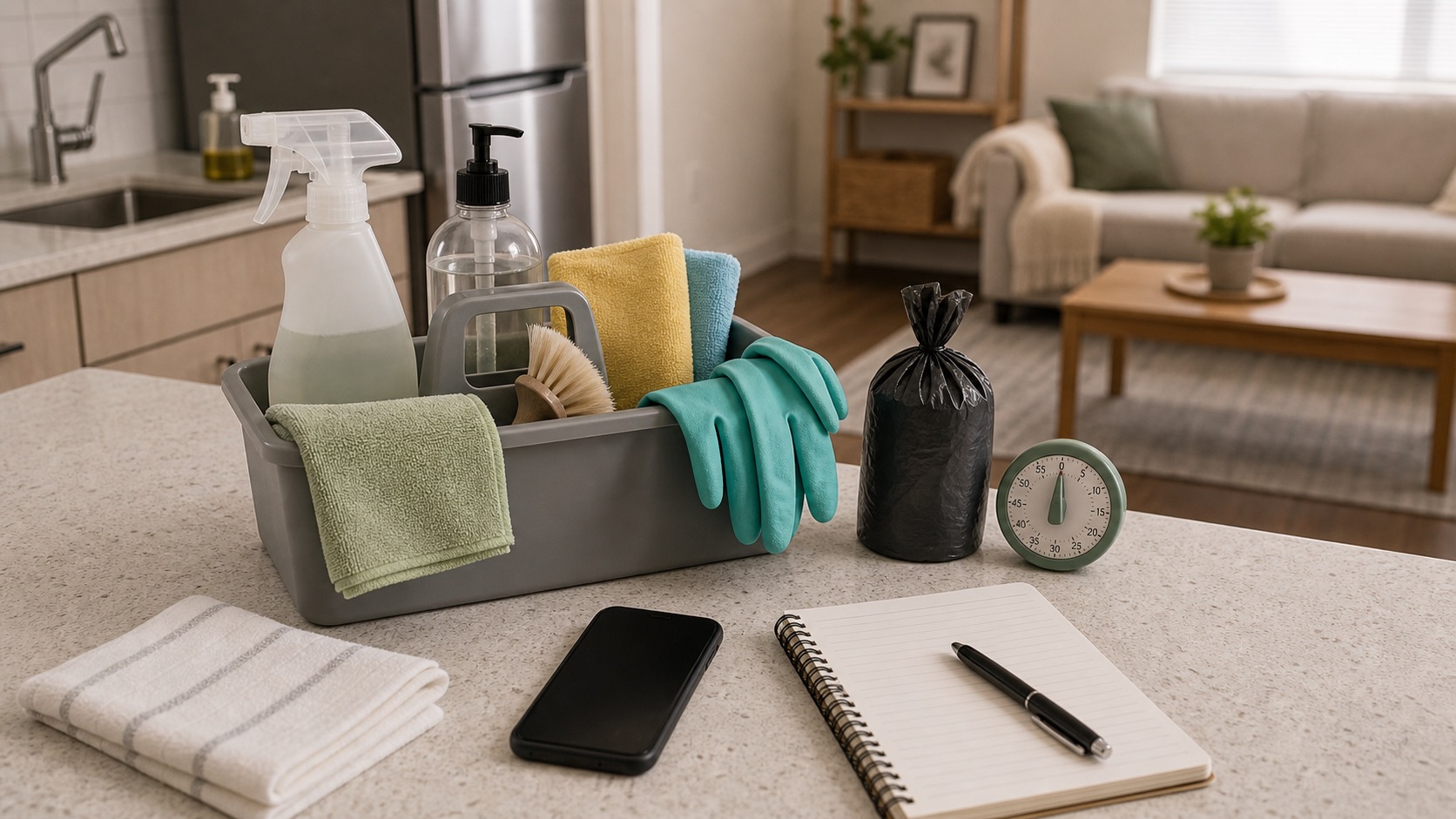
- Keep one small cleaning caddy or bin so supplies are easy to find.
- Start with trash and laundry so surfaces become easier to clean.
Tools Needed
- Trash bags
- Microfiber cloths
- Mild all-purpose cleaner
- Dish soap
- Toilet brush
- Vacuum or broom
- Mop or floor cloth
- Laundry basket
Renter Notes
Routine cleaning helps prevent odors, pests, mildew, and move-out surprises. Report leaks, mold, broken fans, pest evidence, or appliance problems instead of trying to clean around the root cause.
Step-by-Step Guide
- Take out trash, recycling, and old food first.
What I check before the next step: Before continuing, I confirm the step stayed dry, visible, reversible, and within the lease or my comfort level. - Collect laundry, towels, and bedding into one place.
What I check before the next step: Before continuing, I confirm the step stayed dry, visible, reversible, and within the lease or my comfort level. - Clear kitchen counters, wash dishes, wipe counters, and clean the sink area.
What I check before the next step: I check the surface before I add more product: spreading, dull finish, strong odor, or lingering dampness means I stop and let the area dry. - Clean the toilet, bathroom sink, mirror, and shower surfaces that collect soap residue.
What I check before the next step: I keep the mix weak and controlled, then apply it to a cloth rather than pouring it on the surface. - Vacuum, sweep, or mop floors, focusing on entry areas, kitchen, and bathroom.
What I check before the next step: I keep the door or window from trapping me while testing. Entry locks, broken latches, cracked frames, or security uncertainty belong with maintenance or a locksmith. - End by restocking toilet paper, soap, trash bags, and any supplies you used up.
What I check before the next step: I let the area dry before judging the result. A stain that looks better while wet can reappear, so I wait before adding another product.
Safe Next Steps
- If the result improved, do one normal-use test and finish with the checklist item: Trash out.
- If the result is mixed, stop after the listed low-risk checks and decide whether the issue belongs with maintenance, your landlord, or a licensed professional.
- If the result did not improve or got worse, do not add force, stronger chemicals, hidden disassembly, or a new tool. Contact your landlord or maintenance team if any stop sign appears.
- For a rental, send a short maintenance message with where the issue is, when you noticed it, what changed, what safe check you tried, and two photos. Keep the confirmation.
Common Mistakes
- Trying to deep clean the whole apartment every time and burning out.
- Buying too many cleaners and then mixing products accidentally.
- Skipping trash and food cleanup until odors or pests appear.
Weekly cleaning and maintenance scan
a sustainable weekly cleaning routine for a first apartment is treated here as a beginner observation and control problem first, not a chance to prove you can take apart the home. The safe version is visible, reversible, and easy to stop.
For renters, the important line is ownership. You can usually observe, photograph, time, clean lightly, or tighten a visible non-security part, but hidden systems, building-owned fixtures, and lease-controlled hardware belong to maintenance.
What to Check Before You Act
Record the starting condition, perform only one low-risk check at a time, and compare zone time, product list, maintenance clues, routine result. Do not repeat a step that needs more force, chemical, height, access, or disassembly.
| Check | Before | After | Interpretation |
|---|---|---|---|
| Zone time | Record minutes spent in each room and task | After one safe check: time one normal week without rushing | Actual time helps build a repeatable routine Stop if fatigue or unsafe speed changes technique. |
| Product list | Record labels, surfaces, ventilation, and incompatible chemicals | After one safe check: assign one approved product to each surface task | Fewer compatible products reduce mistakes Stop if a label conflicts or products could mix. |
| Maintenance clues | Record drips, odors, loose hardware, pests, failed lights, and blocked vents | After one safe check: photograph and separate them from cleaning | Early clues belong in a maintenance list Stop if the clue involves water, electricity, gas, mold, sewage, or security. |
| Routine result | Record missed zones, recurring mess, and next-week effort | After one safe check: adjust frequency and task order | A maintainable plan is better than an occasional exhaustive one Stop if the routine causes surface damage or physical strain. |
Common Situations and Stop Points
| Symptom | Possible context | Safe first check | Stop point |
|---|---|---|---|
| Zone time | Actual time helps build a repeatable routine | time one normal week without rushing | fatigue or unsafe speed changes technique |
| Product list | Fewer compatible products reduce mistakes | assign one approved product to each surface task | a label conflicts or products could mix |
| Maintenance clues | Early clues belong in a maintenance list | photograph and separate them from cleaning | the clue involves water, electricity, gas, mold, sewage, or security |
| Routine result | A maintainable plan is better than an occasional exhaustive one | adjust frequency and task order | the routine causes surface damage or physical strain |
Try It or Report It?
| Situation | Beginner can try | Do not touch | Contact |
|---|---|---|---|
| Observe and document | Group tasks by zone and contamination level. Read labels and use one compatible product at a time. | Hidden, fixed, energized, pressurized, structural, or lease-controlled parts | Use the record if the baseline is abnormal |
| One reversible first step | Work from cleaner/high areas toward dirtier/low areas. Finish with a five-minute visible maintenance scan. | Anything that needs force, drilling, cutting, panel removal, or mixed chemicals | Maintenance if the first step fails or the condition returns |
| Condition persists | Repeat the observation for zone time and product list, not the repair | Do not escalate tools or improvise a workaround | Landlord, maintenance, manufacturer support, or the responsible professional |
| Warning sign appears | Stop, keep distance, and photograph only if that is safe | Stop before mixing products or using an unlabeled chemical. Stop before climbing on counters or unstable furniture. Stop for sewage, pest waste, broken glass, widespread mold, or unknown contamination. | Urgent maintenance, utility, emergency services, or another appropriate safety channel |
Renter-Safe First Steps
- Group tasks by zone and contamination level.
- Read labels and use one compatible product at a time.
- Work from cleaner/high areas toward dirtier/low areas.
- Finish with a five-minute visible maintenance scan.
Stop Lines
- Stop before mixing products or using an unlabeled chemical.
- Stop before climbing on counters or unstable furniture.
- Stop for sewage, pest waste, broken glass, widespread mold, or unknown contamination.
- Stop cleaning around water near electricity.
- Stop if a surface reacts, discolors, or softens.
Additional FAQ
How long should a weekly clean take?
There is no universal target. Time the real apartment once, then divide tasks so the routine is sustainable.
Should I disinfect everything?
No. Clean according to the surface, situation, label, and public-health guidance; unnecessary chemical use can damage finishes and increase exposure.
What should I include in a maintenance message?
Include the exact location, when it started, photos, the zone time and product list and maintenance clues and routine result, what safe check you performed, and whether the condition improved, stayed the same, or worsened.
Related Next Steps
- First Apartment Maintenance Checklist - Keep cleaning and monthly maintenance as separate rhythms.
- Stop Dirt at the Door: First-Apartment Entry Setup - Reduce the amount of floor cleaning needed.
- Food Spill Inside the Fridge: Clean It Without Spreading Odor - Use a focused process for food contamination.
- Grease on Kitchen Walls: Gentle Cleaning for Painted Surfaces - Use a paint-safe method for the kitchen wall zone.
- Soap Scum in the Shower: A Safer Cleaning Plan - Prevent heavy shower buildup with lighter regular cleaning.
What Not to Do
- Do not mix bleach, ammonia, vinegar, drain cleaner, or other cleaning products.
- Do not scrub painted walls, wood floors, stone counters, or appliance finishes with harsh abrasives.
- Do not ignore mold, sewage smells, water damage, or pest evidence as normal dirt.
When to Pause and Ask for Help
Contact your landlord or maintenance team if cleaning reveals active leaks, recurring mold, broken ventilation, pest evidence, sewage odor, or appliance problems. Use emergency services for chemical exposure, carbon monoxide alarms, fire, or immediate health danger.
FAQ
How often should I clean a first apartment?
A weekly reset plus small daily kitchen and trash habits is realistic for many people living alone.
What should I clean first?
Start with trash and laundry, then kitchen, bathroom, and floors.
Do I need separate cleaners for every room?
No. A mild all-purpose cleaner, dish soap, toilet cleaner, and floor-safe cleaner cover most basics.
What if I fall behind?
Do trash, dishes, bathroom sink, toilet, and floors first. Save deep cleaning for another day.
Final Checklist
- Trash out
- Laundry gathered
- Kitchen wiped
- Bathroom cleaned
- Floors handled
- Supplies restocked
You May Also Like
More beginner-safe guides that connect to this repair, the same room, or the next safety decision a renter may need.
- Pest Evidence in a Rental: Where to Check First - Look for early pest evidence in a rental apartment and report it before the problem spreads.
- Bad Fridge Smell: A Step-by-Step Odor Reset - Track down refrigerator odors with a safe cleanout routine for renters and first apartments.
- Slow Shower Drain: Safe Hair and Soap Buildup Cleanup - Clear hair and soap buildup from a slow shower drain without harsh chemicals or pipe damage.
- First Apartment Maintenance Checklist - A realistic monthly checklist for keeping a first apartment safer and easier to manage.
- Coffee on Carpet: Blot, Test, and Stop Before Damage - Blot a fresh or recent coffee stain from carpet with gentle, renter-safe steps and clear stop points.
- Soap Scum in the Shower: A Safer Cleaning Plan - Learn how to remove soap scum from shower glass, tile, acrylic, or tubs with one compatible cleaner, gentle tools, and a thorough rinse.
- Grease on Kitchen Walls: Gentle Cleaning for Painted Surfaces - Learn how to clean grease off painted kitchen walls with a gentle spot test, minimal moisture, and stop points that protect rental finishes.
- Hard Water Stains on Faucets and Shower Glass - Remove light mineral spots from faucets and shower glass without scratching finishes or mixing chemicals.