Fridge Not Cooling Properly: First Checks Before Repair
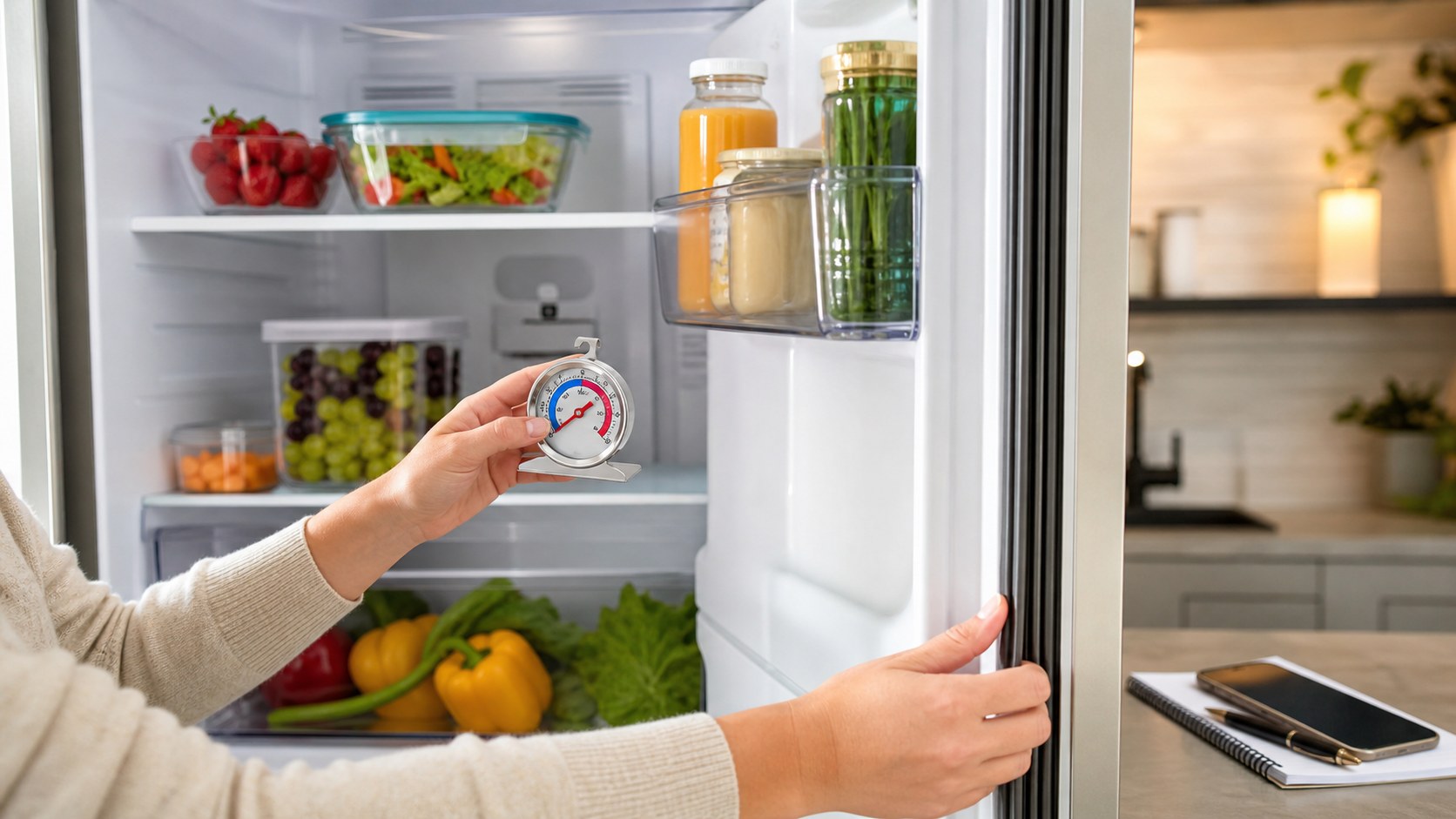
Use this guide if the refrigerator seems warmer than usual, food spoils faster, or the temperature does not feel right. It covers safe observation and simple setup checks only, not compressor, motor, control board, or electrical repair.
By Portia Me'uan Thomas. Updated August 17, 2026. Edited for renter-aware safety.
Time: 10-20 minutes plus monitoring. Difficulty: Easy. Safety: Low if you do not open panels.
Quick Answer
Check the temperature setting, confirm the door closes fully, clear blocked vents, avoid overpacking, verify the outlet is powered if it is safe and dry, and document temperatures. Contact maintenance if the fridge stays above 40 degrees Fahrenheit or you suspect appliance failure.
Material Fit
For appliances, the material table is really an access table: user-facing parts are different from mechanical or electrical parts.
| Material or surface | Safest first method | Conditional next method | Avoid / stop line |
|---|---|---|---|
| Removable plastic bin or shelf | Mild dish soap, warm water, complete drying. | Clean outside the appliance if it lifts out without force. | Stop if the part cracks or resists removal. |
| Rubber gasket or seal | Damp cloth and mild soap; dry the fold gently. | Use only products allowed by the manual. | Avoid sharp tools, bleach mixes, and pulling the gasket loose. |
| Lint screen / removable filter | Clean only if it is meant for user access. | Reinstall exactly as found. | Stop if access needs tools, panel removal, or force. |
| Panel, motor, compressor, hose, wiring, gas line | No beginner DIY. | Document symptoms and call maintenance. | Do not open, move, disconnect, or bypass. |
Before You Start
- Do not eat perishable food if you do not know how long the fridge has been warm.
- Do not remove panels, inspect wiring, or attempt internal appliance repair.
- Keep the area dry before checking plugs or outlets.
- Move urgent perishables to a cooler if needed.
Tools Needed
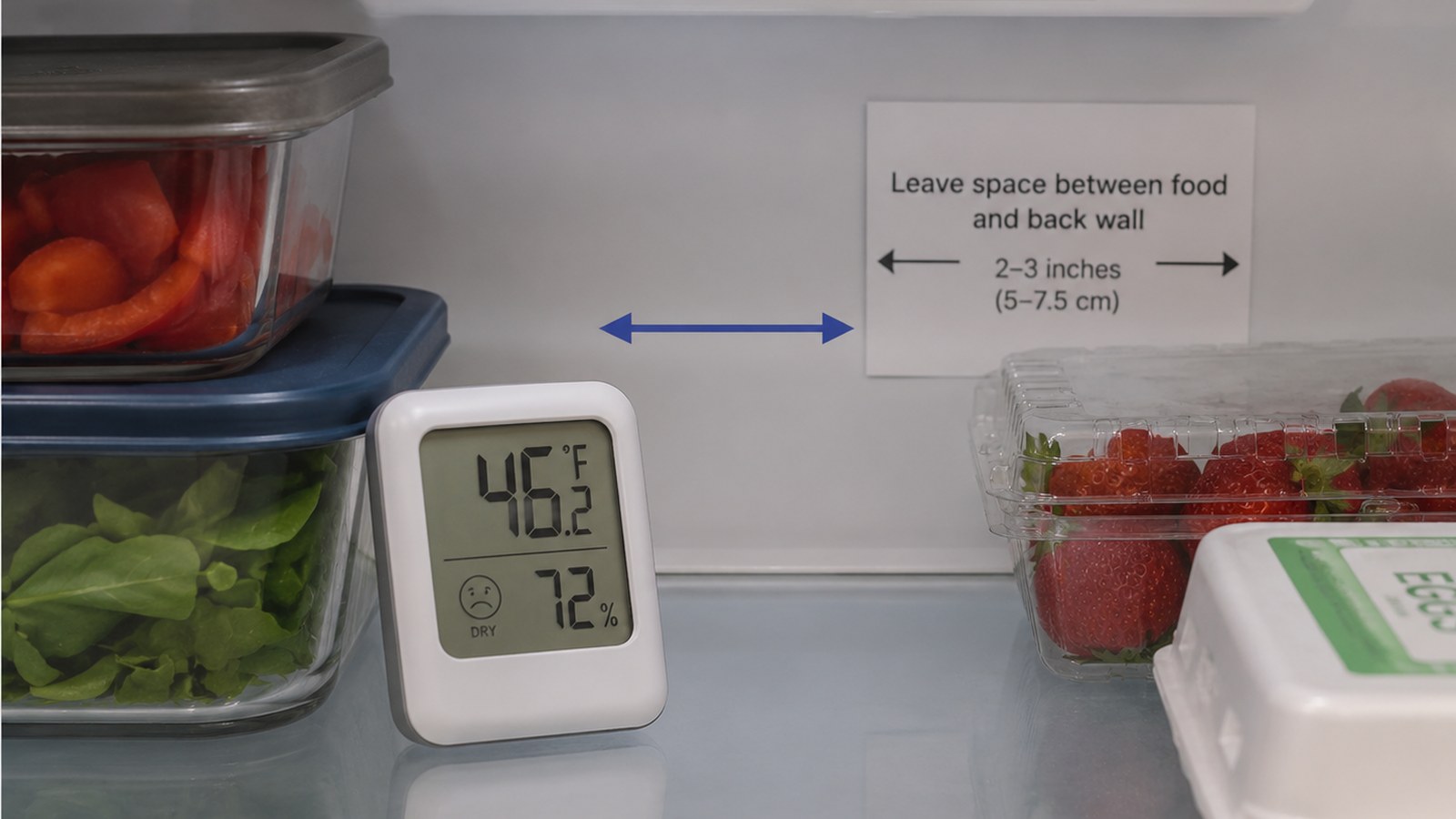
- Appliance thermometer if available
- Phone camera
- Notepad
- Flashlight
- Cooler or insulated bag
Renter Notes
In rentals, the refrigerator is often landlord-owned. Check your lease for appliance responsibility, keep notes and photos, and submit a maintenance request promptly because food safety and property-owned equipment are involved.
Step-by-Step Guide
- Check the temperature control and make sure it was not bumped warmer.
What I check before the next step: I treat the result as information. If the problem improves, I verify once; if it stays the same or worsens, I do not keep repeating the step with more force. - Look for food blocking interior air vents and rearrange items for airflow.
What I check before the next step: I stay with accessible, user-facing checks only. Heat, burning smell, leaks, damaged cords, error codes, or panel access means the next step is maintenance. - Close the door on a piece of paper; if it slips out easily, the seal may not be closing well.
What I check before the next step: I keep the door or window from trapping me while testing. Entry locks, broken latches, cracked frames, or security uncertainty belong with maintenance or a locksmith. - Make sure the fridge has space around it and is not pushed tightly against the wall if the manual requires clearance.
What I check before the next step: I stay with accessible, user-facing checks only. Heat, burning smell, leaks, damaged cords, error codes, or panel access means the next step is maintenance. - If the outlet is dry and accessible, confirm the plug is fully seated without touching damaged cords.
What I check before the next step: I stay dry and hands-off with wiring or panels. Smoke, sparks, heat, burning smell, carbon monoxide alarms, repeated trips, or wet electrical areas mean stop immediately. - Record the temperature and submit a maintenance request if it remains too warm after basic checks.
What I check before the next step: This is where I decide: if the issue is clearly better, I finish with the checklist; if not, I document it and use the stop line instead of improvising.
Safe Next Steps
- If the result improved, do one normal-use test and finish with the checklist item: Temperature checked.
- If the result is mixed, stop after the listed low-risk checks and decide whether the issue belongs with maintenance, your landlord, or a licensed professional.
- If the result did not improve or got worse, do not add force, stronger chemicals, hidden disassembly, or a new tool. Contact maintenance if any stop sign appears.
- For a rental, send a short maintenance message with where the issue is, when you noticed it, what changed, what safe check you tried, and two photos. Keep the confirmation.
Common Mistakes
- Turning the control to the coldest setting and expecting an instant fix.
- Blocking vents with containers.
- Ignoring a weak door seal.
- Keeping questionable food because the fridge seems a little cool.
Refrigerator temperature and airflow check
a refrigerator that is not staying cold is treated here as a beginner observation and control problem first, not a chance to prove you can take apart the home. The safe version is visible, reversible, and easy to stop.
For renters, the important line is ownership. You can usually observe, photograph, time, clean lightly, or tighten a visible non-security part, but hidden systems, building-owned fixtures, and lease-controlled hardware belong to maintenance.
What to Check Before You Act
Use an appliance thermometer and one observation window with the door kept closed as much as possible. Record conditions; do not keep extending the test when food safety or an electrical warning is present.
| Check | Before | After | Interpretation |
|---|---|---|---|
| Center-shelf temperature | Record °F and time | Record again after the observation window | At or below 40°F is the food-safety target; a higher or rising reading needs prompt action. |
| Door-paper check | Paper held or slipped | Repeat at a few easy-to-reach points | Easy slipping may document a weak or uneven seal; do not remove the gasket. |
| Interior airflow | Vents blocked or clear | Record after safe rearranging | Improvement suggests packing affected airflow; no change supports a maintenance request. |
| Visible water or frost | Location and extent | Better, unchanged, or spreading | Spreading water, heavy frost, or recurrence is not a beginner repair. |
Common Situations and Stop Points
| Symptom | Possible context | Safe first check | Stop point |
|---|---|---|---|
| Warm center shelf | Setting, airflow, door seal, outage, or appliance fault | Thermometer, setting, vents, and door closure | Above 40°F persists or warm duration is unknown |
| Door rebounds open | Obstruction, loading, gasket, or alignment | Remove visible obstruction and photograph seal | Door or hinge needs adjustment |
| Uneven cooling | Blocked vents or appliance problem | Create airflow space | Freezing/warm zones continue |
| Water, sparks, or burning odor | Electrical or appliance failure | Keep distance and stop use | Immediate maintenance or emergency response |
Try It or Report It?
| Situation | Beginner can try | Do not touch | Contact |
|---|---|---|---|
| Temperature uncertain | Use an appliance thermometer | Sensors, controls, or panels | Maintenance and food-safety guidance |
| Vents blocked | Rearrange food without overpacking | Fan covers or ducts | Maintenance if no improvement |
| Door does not seal | Clean visible crumbs and document paper check | Gasket, hinge, or door adjustment | Maintenance |
| Electrical or leak warning | Protect distance and document only if safe | Plug, cord, water, or appliance interior | Emergency maintenance or emergency services |
Renter-Safe First Steps
- Measure the refrigerator temperature.
- Clear food from visible vents.
- Check that the door closes without obstruction.
- Record the setting, time, and symptoms.
Stop Lines
- Stop if the refrigerator remains above 40°F.
- Stop if the warm duration is unknown and perishables may be unsafe.
- Stop for water near electricity.
- Stop for a damaged cord, sparks, smoke, or burning smell.
- Stop before moving the appliance or opening panels.
Additional FAQ
Can I judge food safety by smell?
No. Food can be unsafe without an obvious smell or appearance change; use time-and-temperature guidance.
Where should I put the thermometer?
Use the appliance-thermometer instructions and start in a central refrigerator zone rather than against a wall or directly in front of a vent.
Should I keep turning the control colder?
Make only the normal user adjustment allowed by the manual, record it, and allow the stated response time. Repeated changes make the evidence harder to interpret.
Related Next Steps
- Power Outage Alone: A Calm Apartment Safety Plan - Use the outage-specific food and power plan if other devices also lost power.
- Appliance Problem or Repair Risk? A Beginner Troubleshooting Filter - Apply the appliance stop-sign filter before doing more.
- Food Spill Inside the Fridge: Clean It Without Spreading Odor - Clean accessible spills after temperature and food safety are under control.
What Not to Do
- Do not open appliance panels or touch coils, compressor parts, motors, control boards, or wiring.
- Do not use extension cords for a refrigerator.
- Do not chip ice with a knife.
- Do not troubleshoot near water, burning smell, sparks, or a damaged cord.
When to Pause and Ask for Help
Contact maintenance if the fridge stays above 40 degrees Fahrenheit, the freezer is thawing, the door seal is damaged, the appliance leaks, the cord or outlet looks unsafe, there is a burning smell, or cooling problems return.
FAQ
How cold should a fridge be?
At or below 40 degrees Fahrenheit. Around 37 degrees is a common target.
Can overpacking make a fridge warm?
Yes. Blocked airflow can make cooling uneven, especially near vents.
Should I unplug it to reset it?
Do not use reset tricks unless the manual or maintenance instructs you. Report the problem instead.
Who pays for spoiled food?
That depends on your lease, local rules, and insurance. Document temperatures, food loss, and your maintenance request.
Final Checklist
- Temperature checked
- Vents cleared
- Door seal observed
- Plug checked only if dry and safe
- Food safety considered
- Maintenance request submitted if warm
References
Use these official resources as background context. Product manuals, lease rules, local requirements, property maintenance instructions, and qualified professional advice should still come first for your exact home.
- Refrigerator thermometers: cold facts about food safety - U.S. Food and Drug Administration. Use for refrigerator temperature context before deciding whether food or maintenance escalation is needed.
- Food safety during power outage - FoodSafety.gov. Use for food-safety context when cooling problems overlap with outages or unknown refrigerator temperatures.
You May Also Like
More beginner-safe guides that connect to this repair, the same room, or the next safety decision a renter may need.
- Food Spill Inside the Fridge: Clean It Without Spreading Odor - Clean sticky fridge spills and odors without using harsh chemicals where food is stored.
- Bad Fridge Smell: A Step-by-Step Odor Reset - Track down refrigerator odors with a safe cleanout routine for renters and first apartments.
- Appliance Problem or Repair Risk? A Beginner Troubleshooting Filter - Use a beginner safety filter before checking a fridge, washer, dryer, dishwasher, AC, or stove.
- Power Outage Alone: A Calm Apartment Safety Plan - A calm power outage plan for people living alone, with clear electrical safety boundaries.
- Washing Machine Smells Bad: Renter-Safe Odor Checks - Freshen a smelly washer with safe cleaning, ventilation, and renter-aware maintenance steps.
- Dryer Taking Too Long: Lint and Vent Clues to Check - Check lint, load size, airflow, and safe stop points when a dryer runs too long.
- Dishwasher Smells Bad: Safe Cleaning Before You Call Maintenance - Clean common dishwasher odor sources without taking the appliance apart.
- First Apartment Maintenance Checklist - A realistic monthly checklist for keeping a first apartment safer and easier to manage.