Dishwasher Smells Bad: Safe Cleaning Before You Call Maintenance
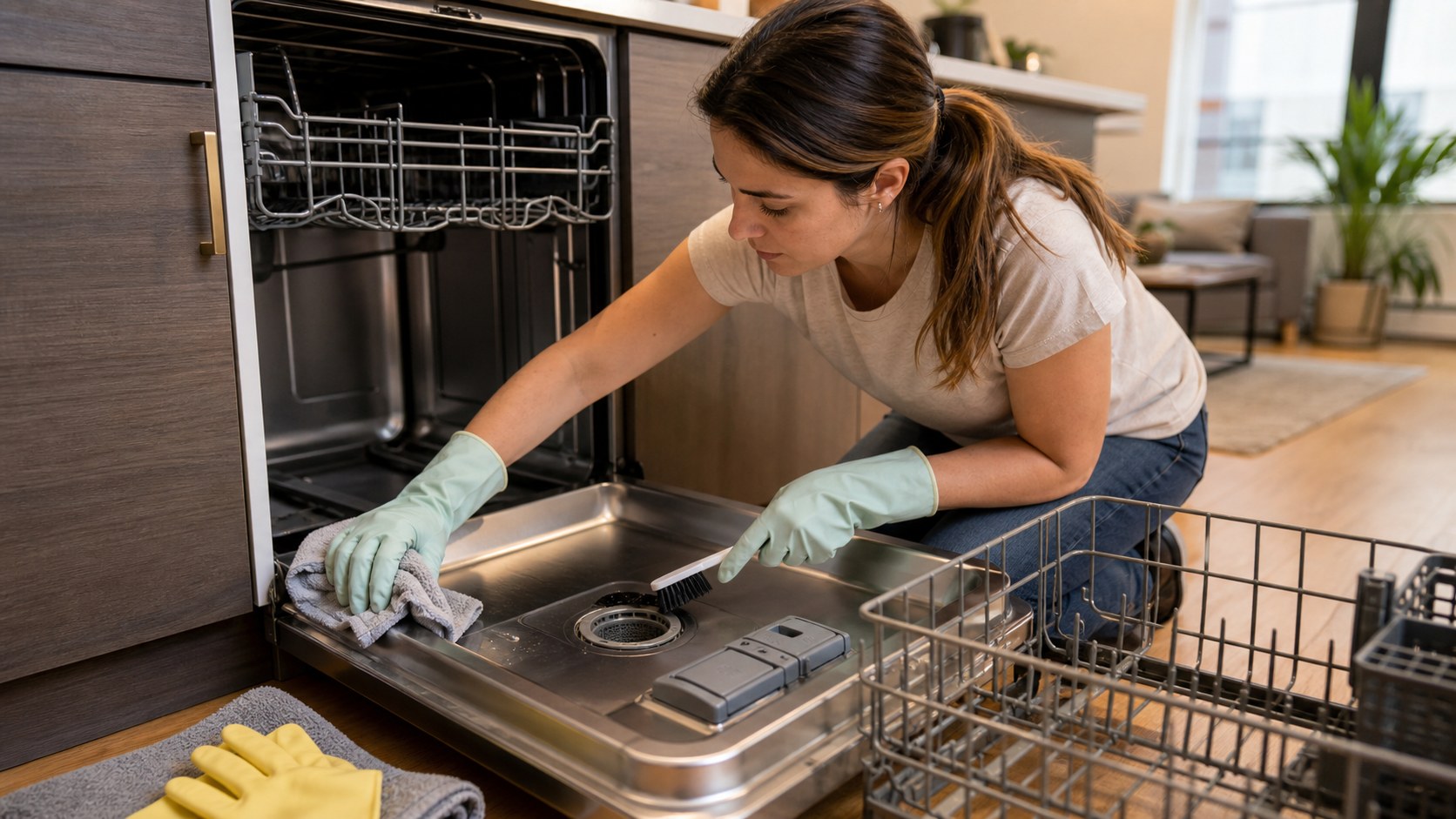
Use this when your dishwasher smells stale, sour, or like old food but still runs and drains normally. This is a basic cleaning guide for accessible parts, not pump, motor, control board, or plumbing repair.
By Portia Me'uan Thomas. Updated August 17, 2026. Edited for renter-aware safety.
Time: 20 minutes plus a cycle. Difficulty: Easy. Safety: Low.
Quick Answer
Remove old food from the bottom, clean the filter only if the manual says it is removable, wipe the door gasket, run a dishwasher-cleaning cycle or hot empty cycle with an approved cleaner, and contact maintenance if odor comes with standing water or drainage problems.
Material Fit
For appliances, the material table is really an access table: user-facing parts are different from mechanical or electrical parts.
| Material or surface | Safest first method | Conditional next method | Avoid / stop line |
|---|---|---|---|
| Removable plastic bin or shelf | Mild dish soap, warm water, complete drying. | Clean outside the appliance if it lifts out without force. | Stop if the part cracks or resists removal. |
| Rubber gasket or seal | Damp cloth and mild soap; dry the fold gently. | Use only products allowed by the manual. | Avoid sharp tools, bleach mixes, and pulling the gasket loose. |
| Lint screen / removable filter | Clean only if it is meant for user access. | Reinstall exactly as found. | Stop if access needs tools, panel removal, or force. |
| Panel, motor, compressor, hose, wiring, gas line | No beginner DIY. | Document symptoms and call maintenance. | Do not open, move, disconnect, or bypass. |
Before You Start
- Let the dishwasher cool before reaching inside.
- Remove dishes and racks only as the manual allows.
- Use one cleaning product at a time.
- Never mix bleach with ammonia or combine dishwasher cleaner with other chemicals.
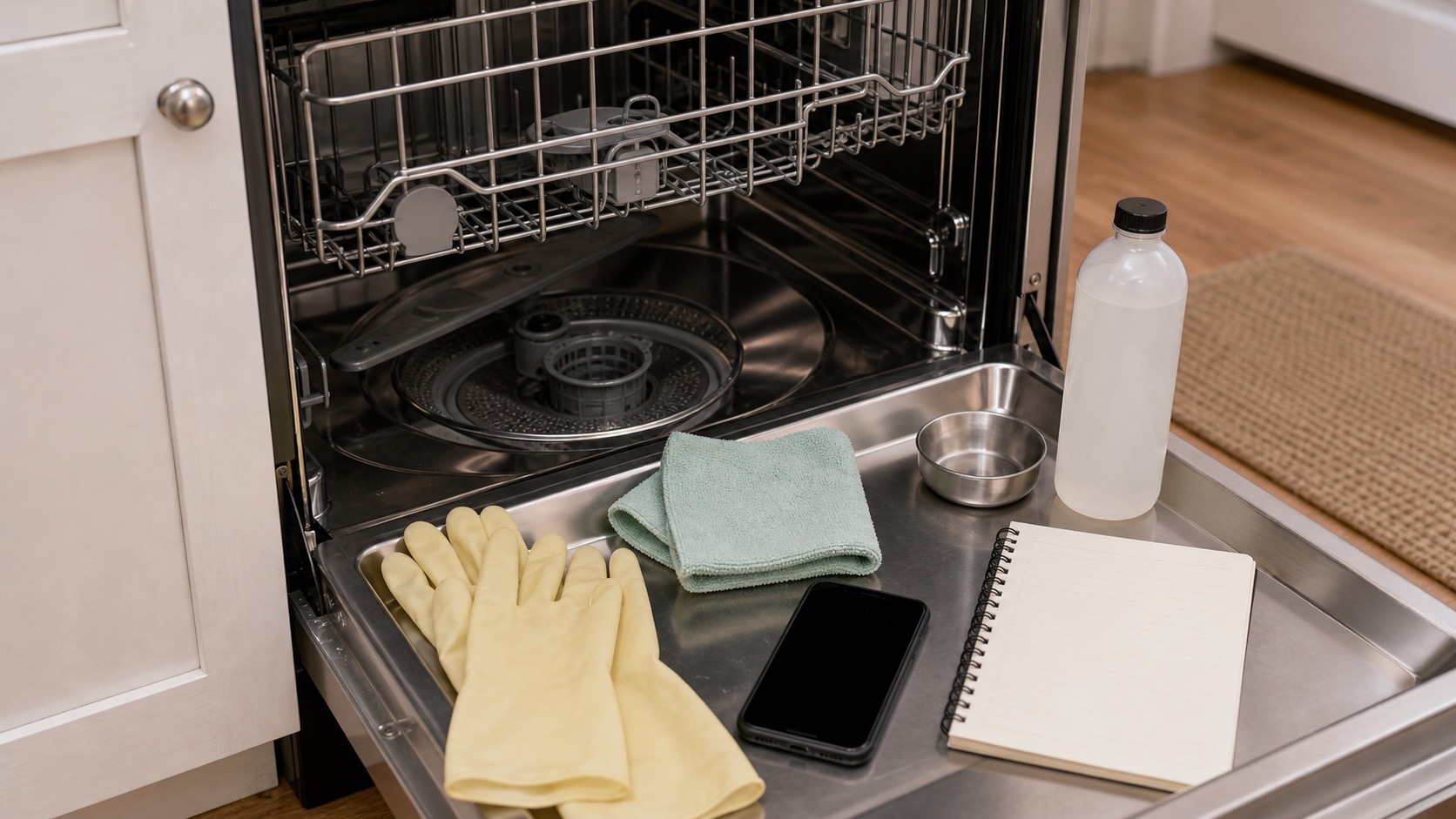
Tools Needed
- Gloves
- Soft cloth
- Paper towels
- Dishwasher cleaner approved by the manual
- Small brush
- Phone camera
Renter Notes
Dishwashers are often landlord-owned. Check your lease or manual before removing filters, and report standing water, leaks, error codes, or repeated odors through the maintenance process.
Step-by-Step Guide
- Pull out the lower rack and remove visible food scraps from the bottom.
What I check before the next step: Before continuing, I confirm the step stayed dry, visible, reversible, and within the lease or my comfort level. - Check the filter area and clean it only if it is designed to lift out easily.
What I check before the next step: I do not mix chemicals or scrub harder if the finish changes. I ventilate, spot-check, and stop for strong odor, spreading stains, mold growth, or damaged surfaces. - Wipe the door gasket, edges, and detergent cup with a damp cloth.
What I check before the next step: I keep the door or window from trapping me while testing. Entry locks, broken latches, cracked frames, or security uncertainty belong with maintenance or a locksmith. - Run a hot empty cycle or dishwasher-cleaning cycle with an approved product.
What I check before the next step: I stay with accessible, user-facing checks only. Heat, burning smell, leaks, damaged cords, error codes, or panel access means the next step is maintenance. - Leave the door slightly open after the cycle if your space allows it so moisture can escape.
What I check before the next step: I keep the door or window from trapping me while testing. Entry locks, broken latches, cracked frames, or security uncertainty belong with maintenance or a locksmith. - Document and report odor that returns with standing water, leaks, or poor draining.
What I check before the next step: I make the note useful: date, location, what changed, one wide photo, and one close-up before I touch anything else.
Safe Next Steps
- If the result improved, do one normal-use test and finish with the checklist item: Visible food removed.
- If the result is mixed, stop after the listed low-risk checks and decide whether the issue belongs with maintenance, your landlord, or a licensed professional.
- If the result did not improve or got worse, do not add force, stronger chemicals, hidden disassembly, or a new tool. Contact maintenance if any stop sign appears.
- For a rental, send a short maintenance message with where the issue is, when you noticed it, what changed, what safe check you tried, and two photos. Keep the confirmation.
Common Mistakes
- Ignoring food trapped under the lower rack.
- Using regular dish soap and creating suds overflow.
- Removing parts that are not meant to be removed.
- Treating standing water as just a smell problem.
Dishwasher odor and drainage observation
a dishwasher with stale, sour, or food-like odor is treated here as a beginner observation and control problem first, not a chance to prove you can take apart the home. The safe version is visible, reversible, and easy to stop.
For renters, the important line is ownership. You can usually observe, photograph, time, clean lightly, or tighten a visible non-security part, but hidden systems, building-owned fixtures, and lease-controlled hardware belong to maintenance.
What to Check Before You Act
After approved accessible cleaning, record one normal empty cleaning cycle result and check whether water remains after the machine cools. Do not repeat cycles to diagnose a drain or electrical fault.
| Check | Before | After | Interpretation |
|---|---|---|---|
| Standing water | None, thin normal sump amount, or visible pool | Record after one completed cycle and cooldown | A visible pool or rising level supports a drainage request; do not remove pumps or hoses. |
| Odor timing | Before, during, or after cycle | Gone, reduced, same, or changed | A changed, burning, sewage, or chemical odor changes the urgency. |
| Accessible debris | Location and amount | Removed without dismantling | Improvement suggests surface residue; quick recurrence points deeper. |
| Nearby floor | Dry or damp | Dry, new moisture, or spreading | Any new moisture outside the tub is a leak stop point. |
Common Situations and Stop Points
| Symptom | Possible context | Safe first check | Stop point |
|---|---|---|---|
| Food-like odor, normal draining | Accessible residue or trapped food | Remove visible scraps and clean only manual-approved parts | Filter is fixed or resists |
| Water remains after cycle | Drainage or appliance fault | Photograph level after cooldown | Do not reach into sump or disconnect hoses |
| Suds or water on floor | Wrong detergent, overfill, seal, or drain issue | Stop use and contain from a dry area | Water near power or continued leaking |
| Burning, gas-like, or sewage odor | Electrical, fuel, drain, or plumbing hazard | Stop use and keep distance | Urgent escalation |
Try It or Report It?
| Situation | Beginner can try | Do not touch | Contact |
|---|---|---|---|
| Visible food debris | Remove it after the appliance cools | Pump opening, blades, or hidden parts | Maintenance if recurring |
| Manual-approved removable filter | Remove, rinse, dry, and reinstall exactly as directed | Fixed filter or resisting fastener | Maintenance |
| Standing water or leak | Photograph and contain only if dry and safe | Hoses, disposal connection, wiring, or panels | Urgent maintenance |
| Heat, smoke, sparks, or dangerous odor | Stop use and leave the area if needed | Appliance, plug, breaker, or source | Emergency maintenance, utility, or emergency services |
Renter-Safe First Steps
- Remove visible food after the machine cools.
- Clean only a filter the manual identifies as removable.
- Wipe the accessible gasket and detergent cup.
- Run one approved cleaning cycle with one product.
Stop Lines
- Stop for standing or rising water.
- Stop for a leak or water near electricity.
- Stop for sewage, burning, gas-like, or strong chemical odor.
- Stop before pumps, hoses, wiring, or panels.
- Stop if a filter or part resists removal.
Additional FAQ
Is a little water under the filter always a clog?
Some models retain a small amount in the sump. Use the manual and compare the actual level; a visible pool, rise, leak, or poor cycle result needs reporting.
Can I use vinegar and bleach in separate steps?
Do not layer or improvise chemical treatments. Use one product allowed by the manual and follow its label.
Can the garbage disposal cause the smell?
The sink and dishwasher may share drainage, but diagnosing or changing the connection is maintenance work. Report whether both fixtures show symptoms.
Related Next Steps
- Garbage Disposal Smell: Safe Cleaning Without Reaching Inside - Compare sink-side odor clues without reaching into the disposal.
- Under-Sink Leak Check: What to Look For Before Touching Plumbing - Document any water near the dishwasher or shared sink cabinet.
- Appliance Problem or Repair Risk? A Beginner Troubleshooting Filter - Use the broader appliance stop-sign filter.
What Not to Do
- Do not use hand dish soap in a dishwasher.
- Do not open appliance panels or remove pumps, hoses, motors, or wiring.
- Do not mix bleach and ammonia or layer cleaners.
- Do not keep running the dishwasher if it leaks or smells like burning.
When to Pause and Ask for Help
Contact maintenance if there is standing water, leaking, burning smell, error codes, poor draining, a damaged gasket, or odor that returns soon after accessible cleaning.
FAQ
Can I clean the filter?
Only if your manual shows a removable filter. Some filters are not meant for renter cleaning.
Is vinegar okay in a dishwasher?
Only if the appliance manual allows it. Use one product at a time and never mix it with bleach.
Why does it smell after clean dishes?
Food residue, a dirty gasket, moisture, or poor draining can leave odor even after a cycle.
What if water sits in the bottom?
Stop treating it as simple odor and contact maintenance because it may be a drain issue.
Final Checklist
- Visible food removed
- Filter checked only if removable
- Gasket wiped
- Approved cleaning cycle run
- No dish soap used
- Standing water reported
You May Also Like
More beginner-safe guides that connect to this repair, the same room, or the next safety decision a renter may need.
- Garbage Disposal Smell: Safe Cleaning Without Reaching Inside - Freshen a garbage disposal with safe cleaning steps and clear stop points for jams or leaks.
- Under-Sink Leak Check: What to Look For Before Touching Plumbing - Check under a kitchen or bathroom sink for early leak signs without taking plumbing apart.
- Appliance Problem or Repair Risk? A Beginner Troubleshooting Filter - Use a beginner safety filter before checking a fridge, washer, dryer, dishwasher, AC, or stove.
- Simple Weekly Cleaning Routine for a First Apartment - Create a realistic weekly cleaning routine for a first apartment without turning it into a full-day project.
- Fridge Not Cooling Properly: First Checks Before Repair - Check safe fridge basics like temperature setting, airflow, door seal, and maintenance reporting.
- Washing Machine Smells Bad: Renter-Safe Odor Checks - Freshen a smelly washer with safe cleaning, ventilation, and renter-aware maintenance steps.
- Dryer Taking Too Long: Lint and Vent Clues to Check - Check lint, load size, airflow, and safe stop points when a dryer runs too long.
- Bad Fridge Smell: A Step-by-Step Odor Reset - Track down refrigerator odors with a safe cleanout routine for renters and first apartments.