Power Outage Alone: A Calm Apartment Safety Plan
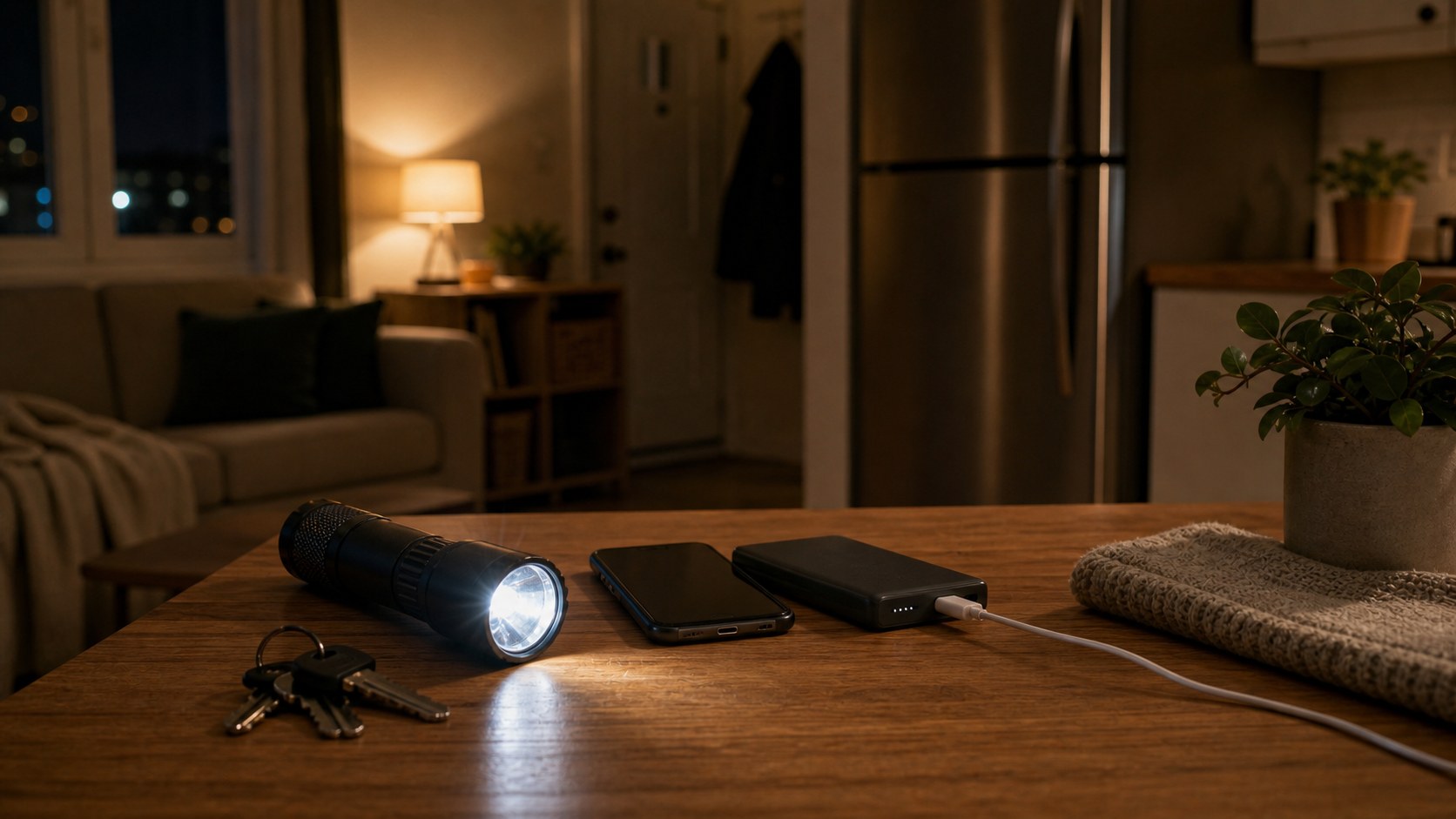
Use this when lights go out in your apartment or first home and you are not sure whether the problem is your unit, the whole building, or the wider neighborhood. Living alone makes the first few minutes feel bigger than they are, so the goal is a calm order of operations: get light safely, preserve phone battery, check the scope from a safe place, report the outage, protect food and electronics, and avoid electrical hazards. This is not a guide to repair wiring, open shared panels, or troubleshoot utility equipment.
By Portia Me'uan Thomas. Updated August 17, 2026. Edited for renter-aware safety.
Time: Immediate plan. Difficulty: Easy. Safety: Medium.
Quick Answer
Use a flashlight instead of candles, check whether hallway lights, neighbors, or streetlights are also out, report the outage to the utility or building contact, keep refrigerator and freezer doors closed, and unplug sensitive electronics only if outlets are dry and safe to reach. Avoid breaker panels that are wet, hot, buzzing, smoking, sparking, unlabeled, locked, or unfamiliar.
Before You Start
- Keep a flashlight in the same place all the time, ideally near your bed or entry area.
- Save utility, landlord, maintenance, and emergency numbers before storm season.
- Know whether any medical device, refrigerated medication, pet equipment, or work equipment in your home depends on power.
- Charge a power bank before severe weather when you have advance warning.
- Know the difference between your own unit panel and locked or shared building equipment.
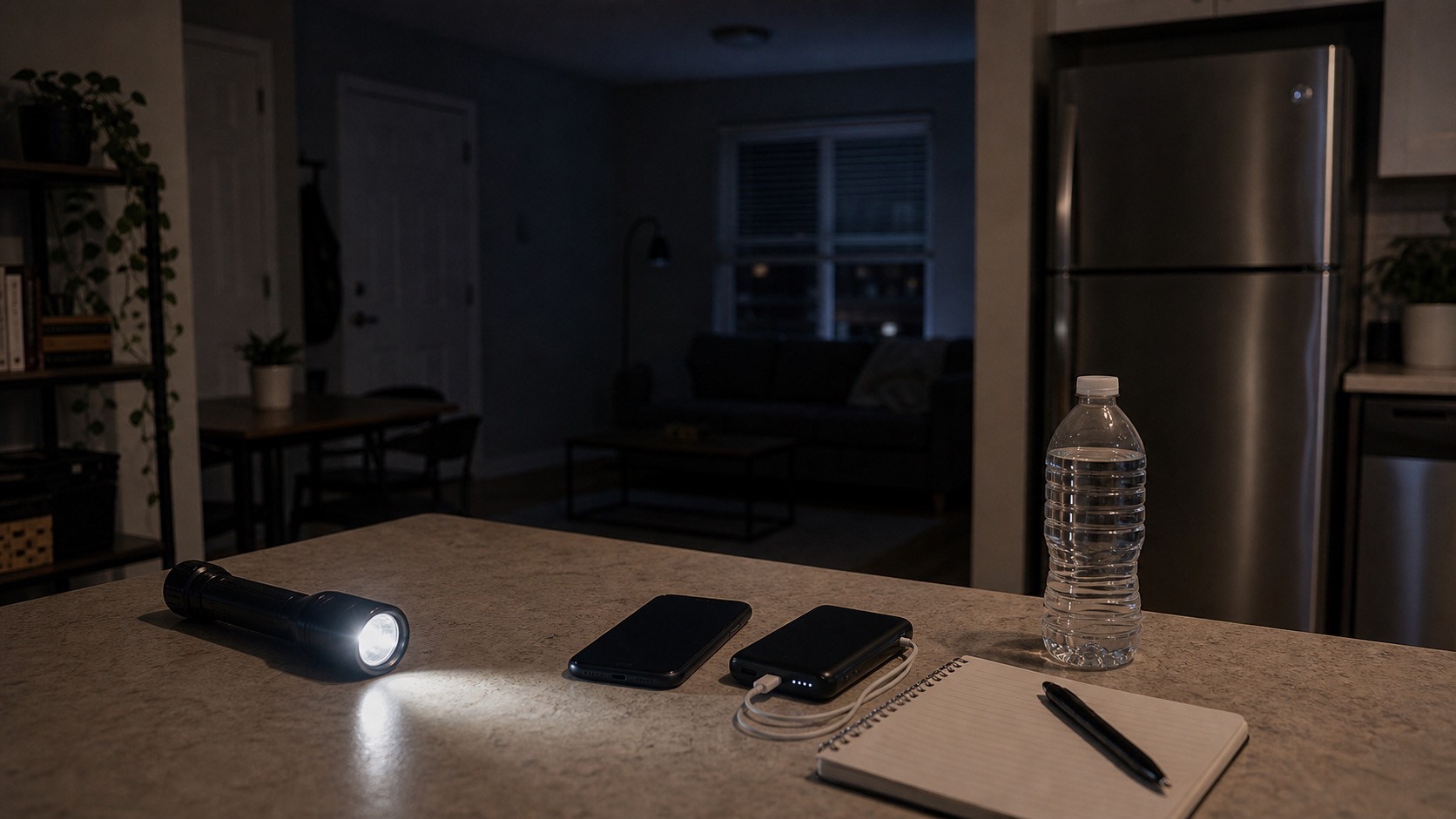
Tools Needed
- Flashlight
- Charged phone
- Power bank
- Charging cable
- Battery radio if available
- Written emergency contacts
- Small cooler if you already have one
Renter Notes
In an apartment, report building electrical issues to maintenance, the property manager, or the landlord. Do not open locked utility rooms, tamper with shared panels, reset building equipment, or assume a hallway panel belongs to your unit. If only your apartment is out, maintenance may ask whether a labeled breaker tripped; if the panel is wet, damaged, hot, buzzing, or confusing, stop and ask them to handle it. If outages repeat, keep a simple log of dates, rooms affected, breaker behavior, smells, sounds, weather, and any appliances that were running.
Step-by-Step Guide
- Use a flashlight instead of candles so you are not managing open flame in the dark.
What I check before the next step: Before continuing, I confirm the step stayed dry, visible, reversible, and within the lease or my comfort level. - Check from a safe place whether hallway lights, neighboring units, lobby lights, or streetlights are also out.
What I check before the next step: I treat the result as information. If the problem improves, I verify once; if it stays the same or worsens, I do not keep repeating the step with more force. - If you can safely do so, look for obvious hazards such as smoke, burning smells, water near outlets, or sparking equipment.
What I check before the next step: I look for spreading water, wet electrical areas, sewage odor, swelling, or moisture below the fixture. Any of those turns this into a stop-and-report issue. - Report the outage to the utility for neighborhood issues or to the landlord/maintenance line for building-only problems.
What I check before the next step: Before continuing, I confirm the step stayed dry, visible, reversible, and within the lease or my comfort level. - Send one calm update to a trusted person if you live alone and the outage may affect access, elevators, medical needs, pets, or your route home after dark.
What I check before the next step: Before continuing, I confirm the step stayed dry, visible, reversible, and within the lease or my comfort level. - Unplug sensitive electronics if outlets are dry, reachable, and there is no burning smell or visible damage.
What I check before the next step: I stay dry and hands-off with wiring or panels. Smoke, sparks, heat, burning smell, carbon monoxide alarms, repeated trips, or wet electrical areas mean stop immediately. - Keep refrigerator and freezer doors closed; group cold items only if the outage becomes long and you can do it quickly.
What I check before the next step: I stay with accessible, user-facing checks only. Heat, burning smell, leaks, damaged cords, error codes, or panel access means the next step is maintenance. - Use phone battery carefully: lower brightness, turn on low-power mode, and text updates instead of making repeated long calls.
What I check before the next step: I stay dry and hands-off with wiring or panels. Smoke, sparks, heat, burning smell, carbon monoxide alarms, repeated trips, or wet electrical areas mean stop immediately. - If power returns, wait a few minutes before plugging electronics back in and watch for flickering, burning smells, or tripping breakers.
What I check before the next step: I stay dry and hands-off with wiring or panels. Smoke, sparks, heat, burning smell, carbon monoxide alarms, repeated trips, or wet electrical areas mean stop immediately.
Safe Next Steps
- If the result improved, do one normal-use test and finish with the checklist item: Flashlight used.
- If the result is mixed, stop after the listed low-risk checks and decide whether the issue belongs with maintenance, your landlord, or a licensed professional.
- If the result did not improve or got worse, do not add force, stronger chemicals, hidden disassembly, or a new tool. Call emergency services for the stop signs listed below.
- For a rental, send a short maintenance message with where the issue is, when you noticed it, what changed, what safe check you tried, and two photos. Keep the confirmation.
Common Mistakes
- Using a grill, camping stove, generator, charcoal, or outdoor heater indoors.
- Opening the refrigerator repeatedly to check food.
- Touching a wet, sparking, buzzing, hot, or unlabeled breaker panel.
- Walking through dark stairwells or parking areas alone before checking whether it is necessary and safe.
- Letting your phone battery drain on entertainment before you know how long the outage may last.
Outage response
power outage when living alone is treated here as a beginner observation and control problem first, not a chance to prove you can take apart the home. The safe version is visible, reversible, and easy to stop.
For renters, the important line is ownership. You can usually observe, photograph, time, clean lightly, or tighten a visible non-security part, but hidden systems, building-owned fixtures, and lease-controlled hardware belong to maintenance.
What to Check Before You Act
This is a readiness test. Time how long it takes to find light, contacts, and power backup before the next outage.
| Check | Before | After | Interpretation |
|---|---|---|---|
| Flashlight access | Lights on | Record seconds to locate flashlight in dark | A real kit must be reachable. |
| Outage scope | Unknown | Record unit/building/area | Scope determines utility vs maintenance contact. |
| Phone battery | Record percent at outage | Record percent after 30 minutes | Low power mode matters. |
| Fridge door openings | 0 | Record count during first hour | Fewer openings protect food longer. |
Common Situations and Stop Points
| Symptom | Possible context | Safe first check | Stop point |
|---|---|---|---|
| Whole area dark | Utility outage | Report/check outage map | No panel work needed |
| Only one room out | Tripped breaker or circuit issue | Unplug likely overload | Panel unsafe or trip repeats |
| Burning smell | Electrical fault | Leave/avoid area | Emergency help |
| CO alarm during outage | Fuel-burning hazard | Leave if safe | Emergency services |
Try It or Report It?
| Situation | Beginner can try | Do not touch | Contact |
|---|---|---|---|
| Area outage | Flashlight, utility report, conserve phone | Utility equipment | Utility or property updates |
| Unit-only outage | Safe scope check | Wet/hot/unlabeled panel | Maintenance |
| Single breaker clearly tripped | One reset if dry, labeled, allowed | Panel cover or repeated resets | Maintenance if repeat |
| Electrical hazard | Avoid area | Cords, outlets, panels | Emergency services |
Renter-Safe First Steps
- Use flashlights.
- Check scope from a safe place.
- Unplug sensitive electronics if dry and safe.
- Reset one clearly labeled dry breaker only if allowed.
Stop Lines
- Stop for smoke or burning smell.
- Stop for wet electrical areas.
- Stop for sparks or buzzing.
- Stop after one breaker reset.
- Stop for CO alarm or fuel-burning equipment indoors.
Additional FAQ
Are candles okay?
Flashlights are safer, especially when you live alone or may fall asleep.
Should I open the fridge?
Keep it closed as much as possible and track outage time.
Can I use a generator on a balcony?
No. Generators and fuel-burning equipment belong outdoors and away from openings, following official safety guidance.
Related Next Steps
- Basic Emergency Kit for Living Alone - Build the supplies before an outage.
- Tripped Circuit Breaker: A Safe Reset Checklist - Only for a safe labeled breaker situation.
- Apartment Smoke Detector Test: A Safe Monthly Check - Alarms and outage planning belong together.
What Not to Do
- Do not use gas stoves or ovens for heat.
- Do not approach downed power lines.
- Do not reset breakers if the panel is wet, hot, buzzing, smoking, sparking, locked, shared, or unlabeled.
- Do not run extension cords through wet areas, hallways, windows, or shared spaces.
- Do not use elevators during an outage or immediately after unstable power returns.
When to Pause and Ask for Help
Call emergency services for downed lines, smoke, burning electrical smells, carbon monoxide alarms, fire, flooding near electrical equipment, or urgent medical equipment needs. Contact maintenance for building-only outages, repeated tripping breakers, damaged outlets, shared electrical areas, locked utility rooms, or power that returns with flickering, buzzing, heat, or burning smells.
FAQ
Should I flip breakers?
Only reset a clearly labeled, dry, accessible breaker if your lease allows it and there is no sign of heat, smoke, water, buzzing, or damage.
How long is refrigerator food safe?
Follow USDA food safety guidance. Keep doors closed, track the outage time, and discard food if you are unsure after a long outage.
Are candles okay?
A flashlight is safer, especially when you live alone, have pets, or may fall asleep.
What if only my unit is out?
Check whether a clearly labeled breaker has tripped only if safe and allowed, then contact maintenance if power does not return or the panel is unclear.
Should I go outside to check the building?
Only if the area is safe and well lit enough. You can often check outage maps, hallway lights, or messages from neighbors without leaving your unit.
Can I charge my phone from a laptop?
Yes, if the laptop has battery remaining. Use low-power mode and save some charge for calls or alerts.
What should I do when power comes back?
Wait briefly, plug electronics back in gradually, and report flickering, hot outlets, buzzing, burning smells, or breakers that trip again.
Final Checklist
- Flashlight used
- Outage scope checked safely
- Hazards checked from a safe distance
- Outage reported
- Fridge kept closed
- Phone battery preserved
- No unsafe panel work
- Emergency help called if needed
References
Use these official resources as background context. Product manuals, lease rules, local requirements, property maintenance instructions, and qualified professional advice should still come first for your exact home.
- Power outages - Ready.gov. Use for broader outage planning, phone charging, food, and carbon monoxide safety reminders.
- Carbon monoxide safety - U.S. Consumer Product Safety Commission. Fuel-burning equipment belongs outside; never use grills, generators, or similar equipment indoors.
- Non-Fire Carbon Monoxide Deaths Associated with the Use of Consumer Products: 2020 Annual Estimates - U.S. Consumer Product Safety Commission. Use as report-level background for generator and fuel-burning equipment risks during outages.
- Generator Safety Fact Sheet - Centers for Disease Control and Prevention. Use for plain-language carbon monoxide prevention when the power is out.
You May Also Like
More beginner-safe guides that connect to this repair, the same room, or the next safety decision a renter may need.
- Apartment Smoke Detector Test: A Safe Monthly Check - Learn how to test an apartment smoke detector with its test button, what a failed test or chirp means, and when renters should call maintenance.
- Starter Tools for Living Alone: What Actually Earns Space - Build a compact toolkit for apartment living with renter-safe basics, a buy-first order, and clear limits on tools you do not need yet.
- First Apartment Maintenance Checklist - A realistic monthly checklist for keeping a first apartment safer and easier to manage.
- When Not to DIY a Home Repair - Clear stop signs for repairs that are unsafe, lease-sensitive, or require licensed help.
- Rental Light Bulb Replacement: The Safe Version - Replace a standard apartment light bulb safely, with clear stop points for fixtures and wiring.
- Tripped Circuit Breaker: A Safe Reset Checklist - Reset a clearly labeled tripped breaker only when conditions are dry, safe, and renter-appropriate.
- Basic Emergency Kit for Living Alone - Build a practical emergency kit for outages, storms, minor injuries, and apartment disruptions.
- Safe to DIY? A Renter's Home Repair Filter - Use a simple safety filter before deciding whether to DIY a repair in your first place.