Starter Tools for Living Alone: What Actually Earns Space
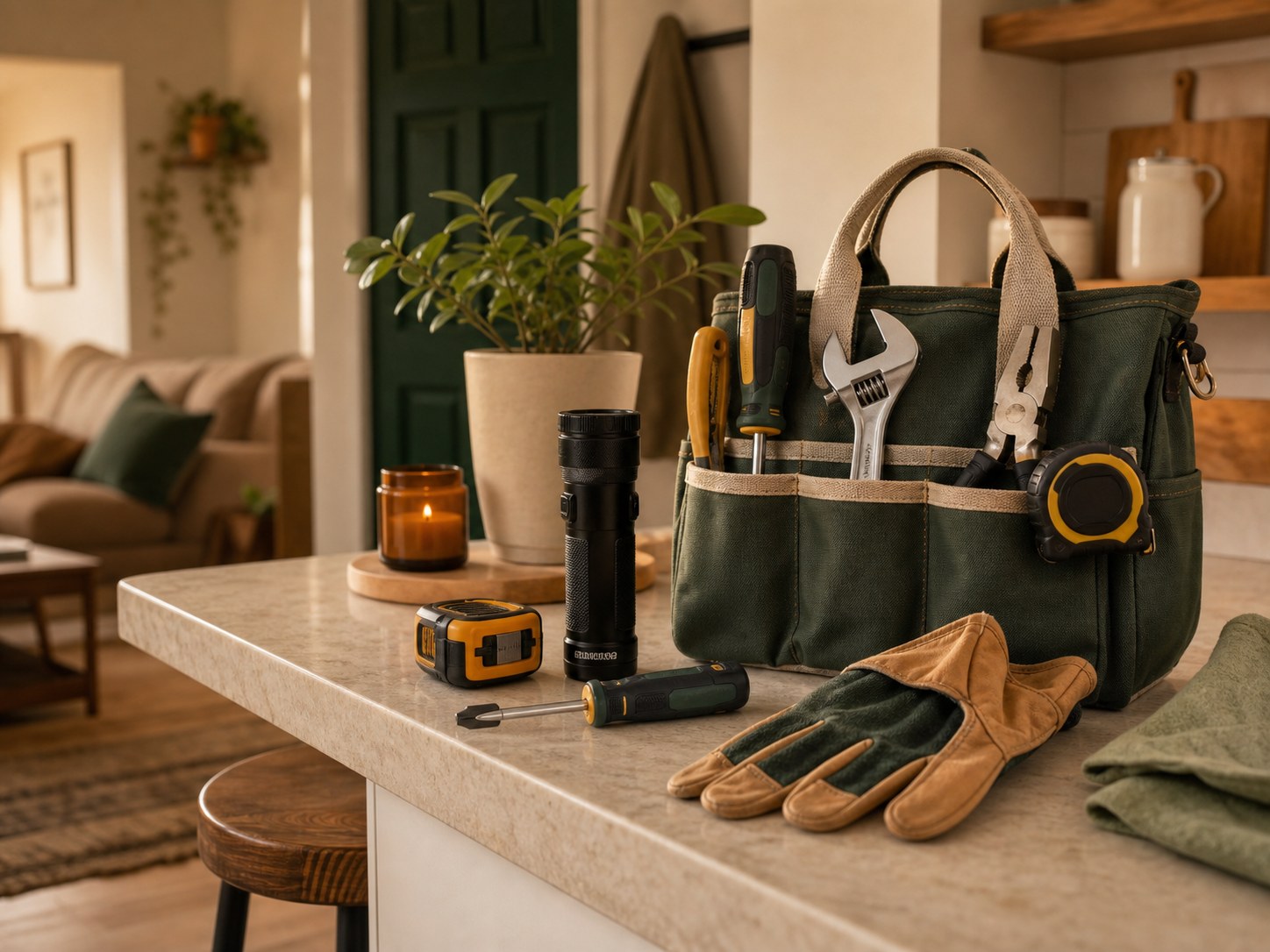
The best tools for apartment living are compact, familiar, and useful for reversible tasks. This starter kit covers everyday measuring, tightening, cleanup, outage preparation, and minor furniture work without turning a closet into a workshop or encouraging repairs that belong to maintenance.
By Portia Me'uan Thomas. Updated August 17, 2026. Edited for renter-aware safety.
Time: 30-45 minutes to assemble. Difficulty: Easy. Safety: Low.
Quick Answer
Buy a multi-bit screwdriver, tape measure, flashlight, pliers, gloves, and a sink plunger first. Add an adjustable wrench, utility knife, small level, painter's tape, spare batteries, and a basic first aid kit as space and budget allow. Skip electrical testers, plumbing specialty tools, and heavy power tools until you have a specific permitted task and know how to use them safely.
Before You Start
- Check what your lease says about drilling, mounting, and fixture changes.
- Choose a small bin or tool bag you can keep in one reliable place.
- Buy tools you understand how to use safely.
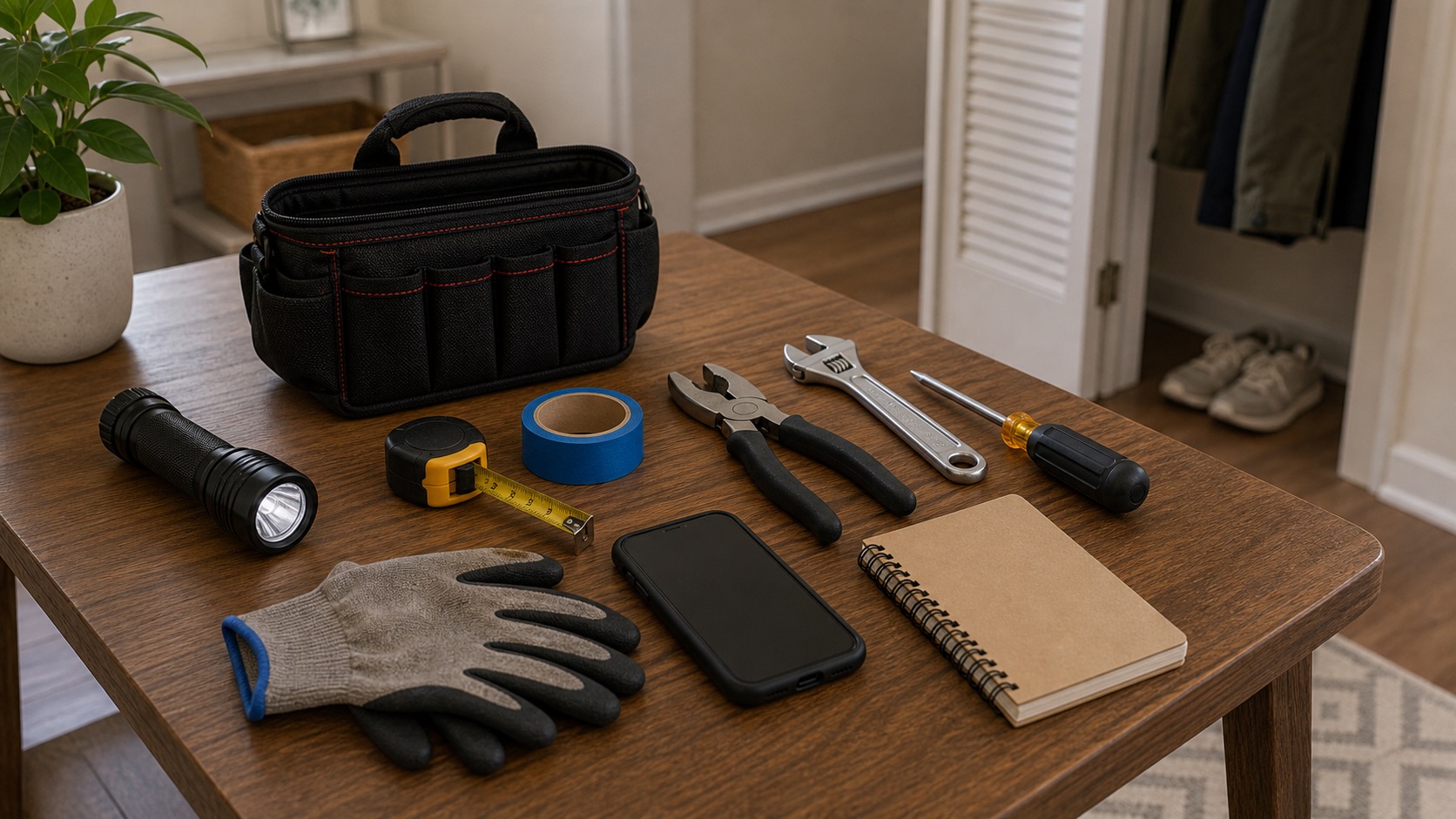
Tools Needed
- Multi-bit screwdriver
- Tape measure
- Flashlight
- Adjustable wrench
- Needle-nose and slip-joint pliers
- Work gloves
- Sink plunger
- Utility knife
- Small level
- Basic first aid kit
Renter Notes
A toolkit should help with reversible tasks. Avoid buying tools for drilling, electrical repair, plumbing replacement, or fixture changes unless your lease allows the work and you know the safety requirements.
Step-by-Step Guide
- Start with tools that solve common small problems: screwdriver, tape measure, flashlight, pliers, and gloves.
What I check before the next step: I treat the result as information. If the problem improves, I verify once; if it stays the same or worsens, I do not keep repeating the step with more force. - Add water-related basics: a sink plunger, paper towels, and a small bucket.
What I check before the next step: I look for spreading water, wet electrical areas, sewage odor, swelling, or moisture below the fixture. Any of those turns this into a stop-and-report issue. - Add setup helpers: small level, painter's tape, pencil, and utility knife.
What I check before the next step: I match the tool to the job and stop if the tool starts slipping, damaging material, or hiding the real problem. - Keep spare batteries near flashlights and detectors if your lease makes you responsible for them.
What I check before the next step: I match the tool to the job and stop if the tool starts slipping, damaging material, or hiding the real problem. - Store everything together and label the bin if you share storage space.
What I check before the next step: This is where I decide: if the issue is clearly better, I finish with the checklist; if not, I document it and use the stop line instead of improvising.
Safe Next Steps
- If the result improved, do one normal-use test and finish with the checklist item: Starter tools stored together.
- Clean and store the tool before deciding whether to buy or use something stronger. If the job requires a tool you do not understand, pause and ask maintenance or a qualified person.
- If the result did not improve or got worse, do not add force, stronger chemicals, hidden disassembly, or a new tool. Use maintenance or licensed professionals for the stop signs listed below.
- For a rental, send a short maintenance message with where the issue is, when you noticed it, what changed, what safe check you tried, and two photos. Keep the confirmation.
Common Mistakes
- Buying a large cheap kit full of tools you do not recognize.
- Forgetting a flashlight until the first outage.
- Buying a drill before knowing whether your rental allows holes.
Tools That Earn Space in an Apartment
starter toolkit for living alone is treated here as a beginner observation and control problem first, not a chance to prove you can take apart the home. The safe version is visible, reversible, and easy to stop.
For renters, the important line is ownership. You can usually observe, photograph, time, clean lightly, or tighten a visible non-security part, but hidden systems, building-owned fixtures, and lease-controlled hardware belong to maintenance.
What to Check Before You Act
Score each tool by usefulness, safety value, cost, storage, and risk of misuse after you have used it on ordinary first-apartment tasks.
| Check | Before | After | Interpretation |
|---|---|---|---|
| Multi-bit screwdriver | Usefulness score to record (1-5) | Risk score to record (1-5) | High usefulness for visible screws; stop at electrical/locks. |
| Flashlight | Usefulness score to record (1-5) | Safety score to record (1-5) | Essential for leaks, outages, and inspections. |
| Sink plunger | Usefulness score to record (1-5) | Risk score to record (1-5) | Useful if chemicals are avoided and stop lines are clear. |
| Drill | Usefulness score to record (1-5) | Lease risk to record (1-5) | Not a first purchase for most renters. |
Common Situations and Stop Points
| Symptom | Possible context | Safe first check | Stop point |
|---|---|---|---|
| Loose screw | Normal vibration | Correct bit by hand | Screw strips or spins |
| Dark cabinet leak check | Poor visibility | Flashlight and photos | Water near electricity |
| Slow sink | Surface clog | Sink plunger | Backup or leak |
| Need hole in wall | Mounting project | Check lease | No approval or unknown wall type |
Try It or Report It?
| Situation | Beginner can try | Do not touch | Contact |
|---|---|---|---|
| Observation tools | Flashlight, camera, tape measure | Nothing invasive | Use evidence in maintenance request |
| Hand tightening | Screwdriver, pliers carefully | Security, electrical, plumbing systems | Maintenance if damaged |
| Water cleanup | Bucket, towels, plunger | Pipe repair | Maintenance for leaks |
| Power tools | Wait for approved project | Walls, tile, doors, cabinets without approval | Landlord |
Renter-Safe First Steps
- Use a screwdriver on visible non-security screws.
- Measure and photograph.
- Use a flashlight before touching anything.
- Use a sink plunger within drain stop lines.
Stop Lines
- Stop before wiring tools.
- Stop before gas or HVAC tools.
- Stop before lock-picking or lock-change tools.
- Stop before drilling rental surfaces without approval.
- Stop when a tool slips or needs force.
Additional FAQ
Where should apartment tools be stored?
Keep them together in a dry labeled bin or small tool bag that is easy to reach but secured from children, pets, and loose sharp edges.
Do I need a drill?
Not first. A drill is useful later only for approved tasks you understand.
What is the most underrated tool?
A flashlight. It improves leaks, outages, appliance checks, move-in inspections, and safety decisions.
Should I buy the cheapest kit?
Buy fewer decent basics instead of many weak tools you do not recognize.
Related Next Steps
- Safe to DIY? A Renter's Home Repair Filter - Decide before using a tool.
- Stripped Screw Rescue: Stop Before It Gets Worse - Avoid making screws worse.
- Wobbly Bookshelf: Secure the Risk Without Wall Damage - Use the toolkit within renter-safe furniture and wall boundaries.
- First Apartment Maintenance Checklist - Use tools in a monthly routine.
What Not to Do
- Do not buy electrical testing tools as a substitute for an electrician.
- Do not use power tools on walls, tile, doors, or cabinets without permission.
- Do not store sharp tools loose in a kitchen drawer.
When to Pause and Ask for Help
Use maintenance or licensed professionals for wiring, gas appliances, structural work, major plumbing, HVAC, hot water heaters, appliance repair, roof access, or anything your lease assigns to the property owner.
FAQ
Do I need a drill?
Not at first. Wait until you have an approved project that truly needs one.
Which apartment living tools should I buy first on a tight budget?
A screwdriver, flashlight, tape measure, pliers, gloves, and a sink plunger cover many common first-apartment needs.
Where should I store tools?
Use one bin or bag in a closet or utility area so you can find tools quickly.
Are cheap tools okay?
For light tasks, modest tools are fine. Avoid flimsy screwdrivers, weak flashlights, and plungers that do not seal.
Final Checklist
- Starter tools stored together
- Flashlight works
- Plunger fits sinks
- Sharp tools protected
- Lease checked before drilling
You May Also Like
More beginner-safe guides that connect to this repair, the same room, or the next safety decision a renter may need.
- First Apartment Maintenance Checklist - A realistic monthly checklist for keeping a first apartment safer and easier to manage.
- Loose Interior Door Handle: A Safe One-Person Tightening Check - Tighten a loose interior door handle safely, with renter-aware stop points for locks and entry doors.
- Power Outage Alone: A Calm Apartment Safety Plan - A calm power outage plan for people living alone, with clear electrical safety boundaries.
- When Not to DIY a Home Repair - Clear stop signs for repairs that are unsafe, lease-sensitive, or require licensed help.
- Stripped Screw Rescue: Stop Before It Gets Worse - Try low-risk stripped screw removal steps before damaging hardware, cabinets, or rental fixtures.
- Assemble Furniture Alone Without Cracking Boards - Assemble flat-pack furniture by yourself with safer staging, sorting, and stop points.
- Wobbly Bookshelf: Secure the Risk Without Wall Damage - Stabilize a wobbly bookshelf with safer loading, leveling, and landlord-approved anchoring choices.
- Loose Cabinet Handles and Drawer Pulls: A 10-Minute Check - Tighten loose cabinet knobs and drawer pulls without stripping screws or damaging rental cabinets.