Coffee on Carpet: Blot, Test, and Stop Before Damage
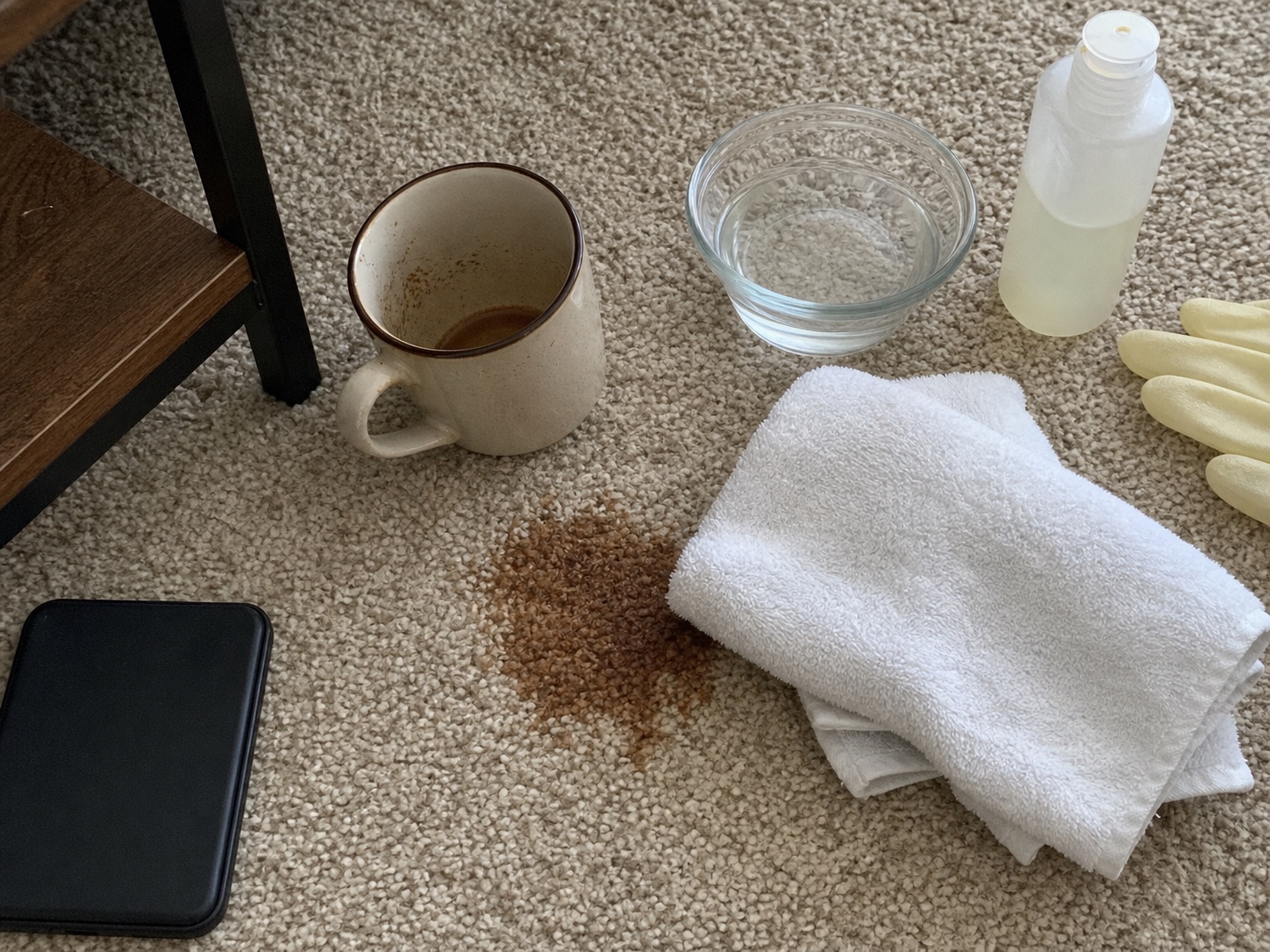
Use this when coffee spills on carpet or a rug and you want to act quickly without bleaching, scrubbing, or damaging rental flooring. Carpet fibers, dyes, and padding vary, so the goal is to lift what you can safely and stop before you spread the stain or create a bigger spot.
By Portia Me'uan Thomas. Updated August 17, 2026. Edited for renter-aware safety.
Time: 15-30 minutes plus drying time. Difficulty: Easy. Safety: Low with a spot test.
Quick Answer
Blot up as much coffee as possible, spot test a mild dish-soap solution in a hidden area, dab from the outside of the stain inward, rinse lightly with clean water, and press dry with towels. Do not scrub, soak the carpet, use bleach, or mix cleaners.
Material Fit
Carpet material changes how aggressive the next method can be. If I cannot identify the fiber, I treat it like the most delicate option until a hidden test proves otherwise.
| Material or surface | Safest first method | Conditional next method | Avoid / stop line |
|---|---|---|---|
| Wool carpet or rug | Dry blot only, then a tiny hidden test with mild cleaner if the label allows it. | Use professional cleaning or landlord guidance for old, large, milky, or dyed stains. | Avoid vinegar, alkaline cleaners, bleach, heat, soaking, and scrubbing. |
| Nylon carpet | Dry blot, mild detergent pass, plain-water rinse, then dry towel weight. | Diluted vinegar can be considered after a hidden colorfastness test. | Stop for dye transfer, fuzzing, spreading stain, or wet backing. |
| Polyester / olefin synthetic carpet | Dry blot and mild soap usually stay within the safer beginner range. | Weighted towel wicking helps when the stain reappears as it dries. | Avoid oily residue, too much water, and strong solvents. |
| Unknown rental carpet | Treat as delicate: dry blot, mild soap on a cloth, and photos before products. | Ask maintenance or a cleaner before stronger stain removers. | Do not assume a carpet-safe product is safe for every fiber. |
Before You Start
- Blot fresh coffee immediately; rubbing can push it deeper.
- Spot test any cleaner in a closet corner or hidden carpet edge first.
- Use white cloths so you can see transfer and avoid adding dye to the carpet.
- Never mix bleach with ammonia or any cleaner that may contain ammonia.
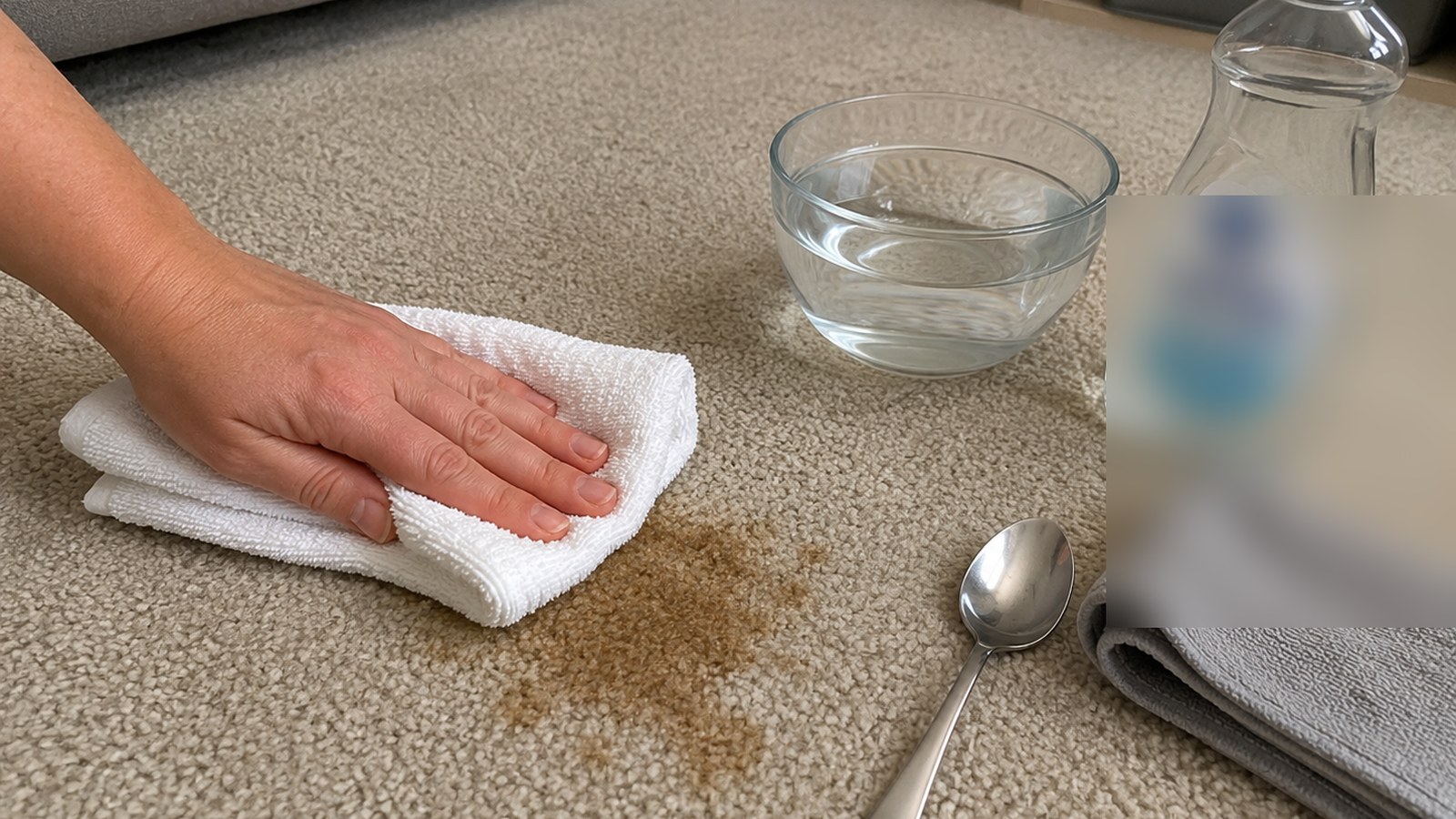
Tools Needed
- White cloths or paper towels
- Bowl
- Cool water
- Mild dish soap
- Clean towel
- Spoon or dull edge for lifting solids
Renter Notes
Rental carpet can affect your deposit. Always spot test first, keep moisture light, and document the spill if it was already present at move-in or if carpet dye transfers to your cloth.
Step-by-Step Guide
- Press a dry white cloth onto the spill and lift straight up until no more coffee transfers easily.
What I check before the next step: I watch what transfers onto the white cloth. If the cloth stops picking up color, I stop pressing instead of starting to scrub. - Mix a few drops of mild dish soap into a cup of cool water.
What I check before the next step: I keep the mix weak and controlled, then apply it to a cloth rather than pouring it on the surface. - Spot test the solution in a hidden area and wait a few minutes for color change or fiber damage.
What I check before the next step: I treat the hidden test as the real decision point. Color transfer, texture change, or fuzzing means I stop before working on the visible area. - Dab the stain from the outer edge toward the center with a lightly damp cloth.
What I check before the next step: I use as little water as possible and check that the surface is not staying wet underneath. - Blot with a second cloth dampened with plain water to remove soap residue.
What I check before the next step: I watch what transfers onto the white cloth. If the cloth stops picking up color, I stop pressing instead of starting to scrub. - Press dry towels over the area and let the carpet air dry fully before judging the result.
What I check before the next step: I let the area dry before judging the result. A stain that looks better while wet can reappear, so I wait before adding another product.
Safe Next Steps
- If the result improved, do one normal-use test and finish with the checklist item: Spill blotted.
- If the result is mixed, stop after the listed low-risk checks and decide whether the issue belongs with maintenance, your landlord, or a licensed professional.
- If the result did not improve or got worse, do not add force, stronger chemicals, hidden disassembly, or a new tool. Contact your landlord, maintenance team, or a carpet-cleaning professional if any stop sign appears.
- For a rental, send a short maintenance message with where the issue is, when you noticed it, what changed, what safe check you tried, and two photos. Keep the confirmation.
Common Mistakes
- Scrubbing in circles and spreading the stain.
- Soaking the carpet so moisture reaches the pad underneath.
- Using colored towels that transfer dye.
- Adding multiple cleaners when the first pass does not remove everything.
Carpet spill blotting and transfer test
a fresh or dried coffee stain on rental carpet is treated here as a beginner observation and control problem first, not a chance to prove you can take apart the home. The safe version is visible, reversible, and easy to stop.
For renters, the important line is ownership. You can usually observe, photograph, time, clean lightly, or tighten a visible non-security part, but hidden systems, building-owned fixtures, and lease-controlled hardware belong to maintenance.
What to Check Before You Act
Record the starting condition, perform only one low-risk check at a time, and compare spill extent, color transfer, towel transfer, drying result. Do not repeat a step that needs more force, chemical, height, access, or disassembly.
| Check | Before | After | Interpretation |
|---|---|---|---|
| Spill extent | Record length, width, freshness, additives, and whether liquid pooled | After one safe check: photograph and blot free liquid with white towels | Fresh surface liquid is easier to control than a soaked or dried stain Stop if the spill is large, contaminated, or reached seams and padding. |
| Color transfer | Record carpet dye or coffee color on a damp white test cloth | After one safe check: test the approved solution in an inconspicuous area | Carpet dye transfer means the method is unsafe Stop if carpet color transfers or texture changes. |
| Towel transfer | Record amount and color transferred per blot | After one safe check: blot edge to center with a clean towel section | Decreasing transfer shows progress without abrasion Stop if the stain spreads or fibers fuzz. |
| Drying result | Record dampness, odor, ring, stiffness, and return after drying | After one safe check: press with a dry towel and allow ventilation | A dry soft area without a growing ring is the target Stop if dampness persists, odor develops, or the stain wicks back. |
Common Situations and Stop Points
| Symptom | Possible context | Safe first check | Stop point |
|---|---|---|---|
| Spill extent | Fresh surface liquid is easier to control than a soaked or dried stain | photograph and blot free liquid with white towels | the spill is large, contaminated, or reached seams and padding |
| Color transfer | Carpet dye transfer means the method is unsafe | test the approved solution in an inconspicuous area | carpet color transfers or texture changes |
| Towel transfer | Decreasing transfer shows progress without abrasion | blot edge to center with a clean towel section | the stain spreads or fibers fuzz |
| Drying result | A dry soft area without a growing ring is the target | press with a dry towel and allow ventilation | dampness persists, odor develops, or the stain wicks back |
Try It or Report It?
| Situation | Beginner can try | Do not touch | Contact |
|---|---|---|---|
| Observe and document | Photograph and blot free liquid immediately. Use white towels and work from edge to center. | Hidden, fixed, energized, pressurized, structural, or lease-controlled parts | Use the record if the baseline is abnormal |
| One reversible first step | Test one carpet-approved solution in a hidden area. Use minimal moisture, blot out residue, and monitor drying. | Anything that needs force, drilling, cutting, panel removal, or mixed chemicals | Maintenance if the first step fails or the condition returns |
| Condition persists | Repeat the observation for spill extent and color transfer, not the repair | Do not escalate tools or improvise a workaround | Landlord, maintenance, manufacturer support, or the responsible professional |
| Warning sign appears | Stop, keep distance, and photograph only if that is safe | Stop if carpet dye transfers or fibers change. Stop for a large, contaminated, unknown, or padding-deep spill. Stop before scrubbing, soaking, steaming, heating, or mixing cleaners. | Urgent maintenance, utility, emergency services, or another appropriate safety channel |
Renter-Safe First Steps
- Photograph and blot free liquid immediately.
- Use white towels and work from edge to center.
- Test one carpet-approved solution in a hidden area.
- Use minimal moisture, blot out residue, and monitor drying.
Stop Lines
- Stop if carpet dye transfers or fibers change.
- Stop for a large, contaminated, unknown, or padding-deep spill.
- Stop before scrubbing, soaking, steaming, heating, or mixing cleaners.
- Stop if the stain spreads, wicks back, or develops odor.
- Stop if prior chemicals may still be present.
Additional FAQ
Why did the stain come back after drying?
Liquid remaining lower in the pile or padding can wick upward. Stop adding moisture and report a recurring or deep stain.
Can I rub it with a brush?
Rubbing can spread the stain and distort fibers. Use controlled blotting and the carpet manufacturer's method.
What should I include in a maintenance message?
Include the exact location, when it started, photos, the spill extent and color transfer and towel transfer and drying result, what safe check you performed, and whether the condition improved, stayed the same, or worsened.
Related Next Steps
- Sticky Residue on Rental Surfaces: Gentle Removal Tests - Use the same hidden-area compatibility test.
- Simple Weekly Cleaning Routine for a First Apartment - Keep a small spill kit ready.
- Move-In Inspection Before You Unpack - Compare with pre-existing carpet condition.
What Not to Do
- Do not use bleach on carpet.
- Do not mix bleach and ammonia or combine unknown stain products.
- Do not use a steam cleaner on a fresh stain unless the carpet manufacturer or landlord allows it.
- Do not hide a large stain under furniture without reporting it if your lease requires damage notice.
When to Pause and Ask for Help
Contact your landlord, maintenance team, or a carpet-cleaning professional if the stain is large, old, spreading, smells sour, has reached the pad, or if carpet color transfers during the spot test.
FAQ
Is vinegar safe on carpet?
A mild vinegar solution may work on some carpets, but always spot test first and do not combine it with bleach or other cleaners.
What if the coffee had milk or sugar?
Blot well and rinse lightly because milk and sugar can leave odor or sticky residue if soap is left behind.
Why is the stain still visible after drying?
Some coffee dye remains after a safe first cleaning. Avoid aggressive chemicals and ask maintenance about approved carpet cleaning.
Can I use laundry detergent?
Avoid it. It can leave sticky residue that attracts dirt and is harder to rinse from carpet.
Final Checklist
- Spill blotted
- Cleaner spot tested
- Worked outside to center
- Soap residue rinsed lightly
- Carpet dried
- Landlord contacted for large or set stains
You May Also Like
More beginner-safe guides that connect to this repair, the same room, or the next safety decision a renter may need.
- Stop Dirt at the Door: First-Apartment Entry Setup - Reduce entryway dirt with renter-safe mats, shoe habits, and simple cleaning routines.
- Sticky Residue on Rental Surfaces: Gentle Removal Tests - Lift tape, label, and mystery sticky residue with spot tests that protect rental finishes.
- Simple Weekly Cleaning Routine for a First Apartment - Create a realistic weekly cleaning routine for a first apartment without turning it into a full-day project.
- Safe to DIY? A Renter's Home Repair Filter - Use a simple safety filter before deciding whether to DIY a repair in your first place.
- Soap Scum in the Shower: A Safer Cleaning Plan - Learn how to remove soap scum from shower glass, tile, acrylic, or tubs with one compatible cleaner, gentle tools, and a thorough rinse.
- Grease on Kitchen Walls: Gentle Cleaning for Painted Surfaces - Learn how to clean grease off painted kitchen walls with a gentle spot test, minimal moisture, and stop points that protect rental finishes.
- Hard Water Stains on Faucets and Shower Glass - Remove light mineral spots from faucets and shower glass without scratching finishes or mixing chemicals.
- Bathroom Mold Spots: Clean, Document, or Report? - Handle small bathroom mold spots with ventilation, protective gear, and clear renter stop points.