Stop Dirt at the Door: First-Apartment Entry Setup
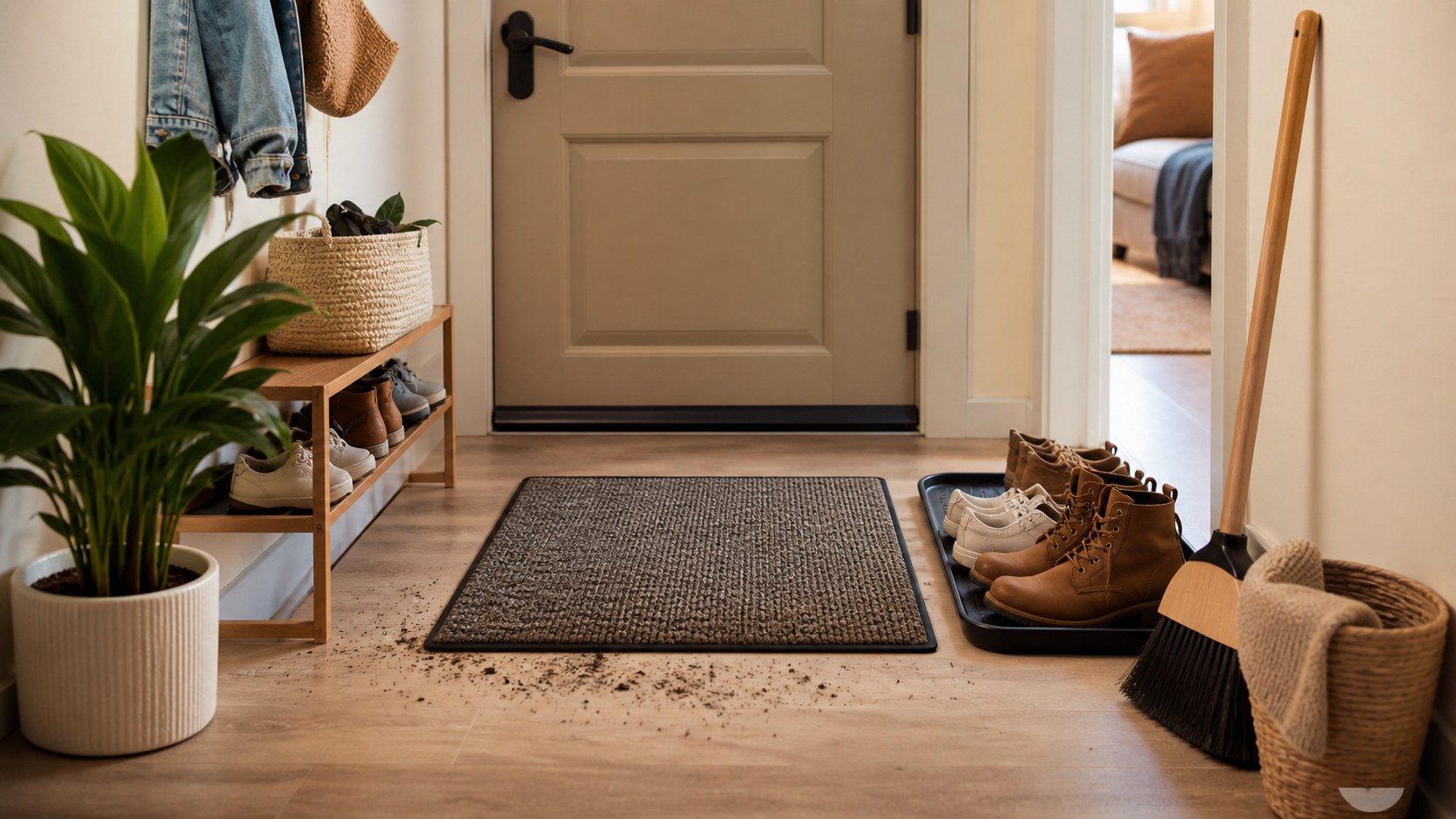
Use this when your entryway, hallway, or carpet gets dirty fast from shoes, pets, weather, or shared building floors. This is a routine and setup guide, not flooring repair or pest treatment.
By Portia Me'uan Thomas. Updated August 17, 2026. Edited for renter-aware safety.
Time: 10-20 minutes to set up. Difficulty: Easy. Safety: Low.
Quick Answer
Use a lease-approved doormat, keep a small shoe zone by the door, shake or vacuum mats often, spot clean entry stains quickly, and avoid sticky or rubber-backed products that can damage flooring. Report water intrusion, damaged thresholds, or pest debris.
Material Fit
Hardware and setup tasks depend on what the screw or load is biting into. When the material is unknown, I stop before drilling or anchoring.
| Material or surface | Safest first method | Conditional next method | Avoid / stop line |
|---|---|---|---|
| Solid wood or sturdy cabinet face | Hand-tighten visible screws a quarter-turn at a time. | Use normal-use testing before adding load. | Stop for splitting, spinning screws, or shifting alignment. |
| Particleboard / MDF furniture | Gentle cam-lock or screw adjustment only. | Unload shelves before testing. | Avoid over-tightening; it can crumble the material. |
| Drywall or plaster wall | Use removable or approved methods first. | Anchors only with landlord approval and correct hardware. | Stop if the wall crumbles, flexes, or hides utilities. |
| Tile, brick, metal frame, entry door | Document and request approval or maintenance. | Professional installation may be needed. | Do not drill or modify without written permission. |
Before You Start
- Check whether hallway mats or shoe racks are allowed outside your door.
- Spot test cleaners on carpet, floor, or baseboards before cleaning entry stains.
- Avoid rubber-backed mats on floors if the label warns about staining or discoloration.
- Keep the entry path clear so it is not a trip hazard.
Tools Needed
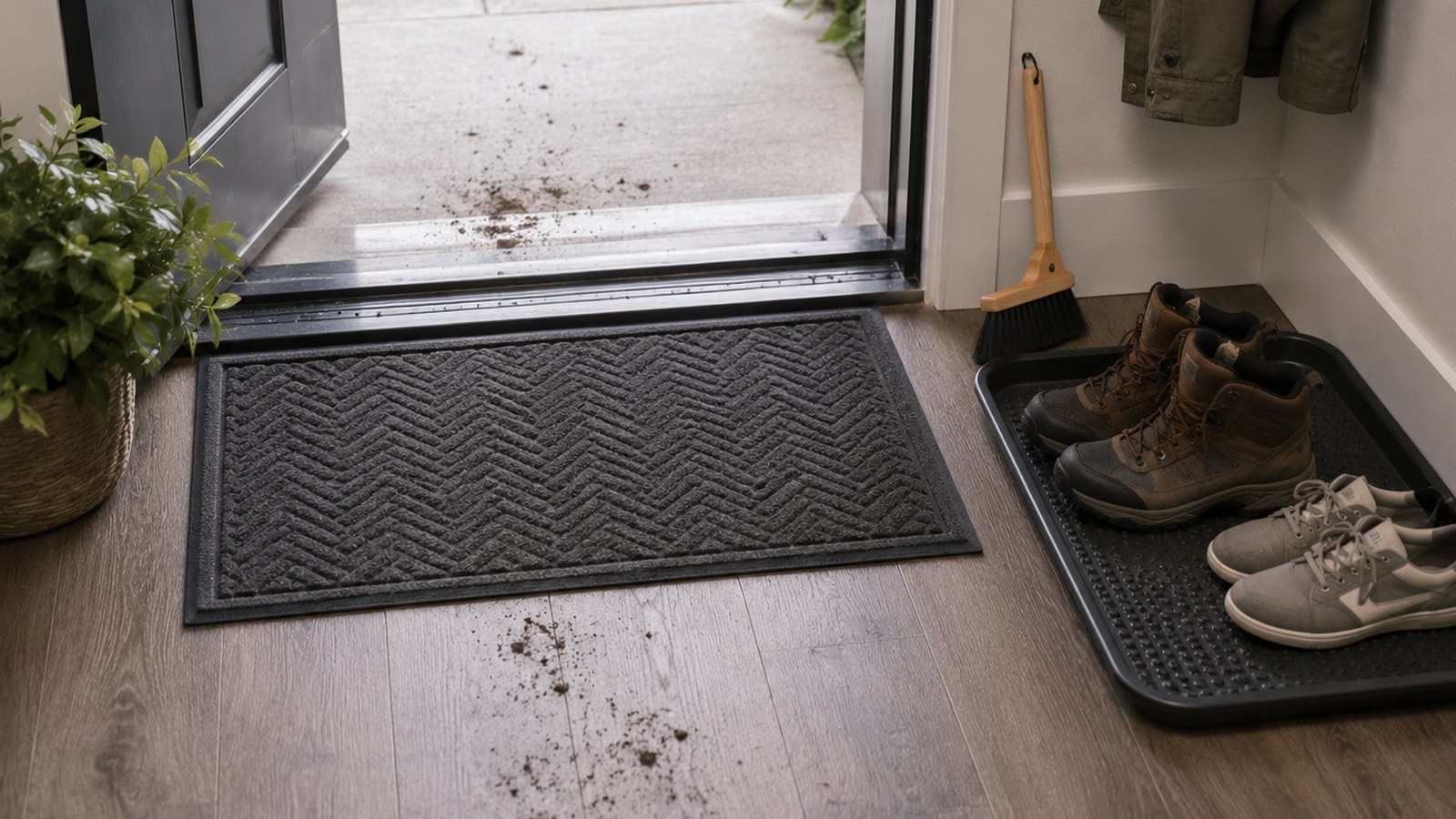
- Doormat approved by building rules
- Small washable rug or tray
- Vacuum or broom
- Microfiber cloth
- Mild cleaner
- Laundry bag for washable mats
Renter Notes
Some buildings restrict hallway mats or items outside doors for fire safety and cleaning access. Check rules before placing anything in shared corridors.
Step-by-Step Guide
- Place a doormat only where building rules allow it.
What I check before the next step: I treat this as a safety check, not a repair. I do not disable, bypass, cover, or alter safety equipment. - Create a small indoor shoe zone with a tray or washable rug.
What I check before the next step: I treat this as a safety check, not a repair. I do not disable, bypass, cover, or alter safety equipment. - Shake, vacuum, or wash mats regularly so they do not become dirt sources.
What I check before the next step: I treat this as a safety check, not a repair. I do not disable, bypass, cover, or alter safety equipment. - Keep a small cloth near the door for wet paw prints, wheels, or muddy soles.
What I check before the next step: I keep the door or window from trapping me while testing. Entry locks, broken latches, cracked frames, or security uncertainty belong with maintenance or a locksmith. - Spot clean entry stains gently and dry the area so flooring is not left damp.
What I check before the next step: I keep the door or window from trapping me while testing. Entry locks, broken latches, cracked frames, or security uncertainty belong with maintenance or a locksmith. - Report water coming under the door, damaged thresholds, recurring pests, or floor swelling.
What I check before the next step: I document evidence before cleaning it away, then avoid sprays, foggers, or sealing large gaps until maintenance or pest control can review the pattern.
Safe Next Steps
- If the result improved, do one normal-use test and finish with the checklist item: Building rules checked.
- Put safety equipment back exactly as it was, keep exits clear, and record the test date. Failed alarms, entry-security problems, outages with hazards, or immediate danger should escalate quickly.
- If the result did not improve or got worse, do not add force, stronger chemicals, hidden disassembly, or a new tool. Contact your landlord or maintenance team if any stop sign appears.
- For a rental, send a short maintenance message with where the issue is, when you noticed it, what changed, what safe check you tried, and two photos. Keep the confirmation.
Common Mistakes
- Putting items in shared hallways where they violate fire rules.
- Using mats that stain vinyl, wood, or laminate.
- Letting wet shoes sit directly on flooring.
- Scrubbing carpet stains without a spot test.
Entryway dirt-control setup
dirt, grit, and moisture being tracked into a first apartment is treated here as a beginner observation and control problem first, not a chance to prove you can take apart the home. The safe version is visible, reversible, and easy to stop.
For renters, the important line is ownership. You can usually observe, photograph, time, clean lightly, or tighten a visible non-security part, but hidden systems, building-owned fixtures, and lease-controlled hardware belong to maintenance.
What to Check Before You Act
Record the starting condition, perform only one low-risk check at a time, and compare door and exit clearance, floor compatibility, dirt capture, moisture control. Do not repeat a step that needs more force, chemical, height, access, or disassembly.
| Check | Before | After | Interpretation |
|---|---|---|---|
| Door and exit clearance | Record door swing, threshold, lock, walking width, and emergency path | After one safe check: measure with the door fully opened and closed | The setup must preserve normal and emergency use Stop if the mat catches the door or narrows required access. |
| Floor compatibility | Record wood, vinyl, tile, carpet, finish, and mat-backing instructions | After one safe check: test the clean dry mat in a small area and inspect frequently | Backing and trapped moisture can discolor floors Stop if finish changes, moisture collects, or backing transfers. |
| Dirt capture | Record grit location before and after one week | After one safe check: compare a two-step wipe and shoe-removal routine | Less grit beyond the entry shows the zone is working Stop if the mat curls, slides, sheds, or creates a trip. |
| Moisture control | Record wet shoes, mat dampness, odor, and drying time | After one safe check: hang or dry removable items in an approved location | Fast drying prevents odor and floor damage Stop if moisture reaches flooring, wall, outlet, or shared hallway. |
Common Situations and Stop Points
| Symptom | Possible context | Safe first check | Stop point |
|---|---|---|---|
| Door and exit clearance | The setup must preserve normal and emergency use | measure with the door fully opened and closed | the mat catches the door or narrows required access |
| Floor compatibility | Backing and trapped moisture can discolor floors | test the clean dry mat in a small area and inspect frequently | finish changes, moisture collects, or backing transfers |
| Dirt capture | Less grit beyond the entry shows the zone is working | compare a two-step wipe and shoe-removal routine | the mat curls, slides, sheds, or creates a trip |
| Moisture control | Fast drying prevents odor and floor damage | hang or dry removable items in an approved location | moisture reaches flooring, wall, outlet, or shared hallway |
Try It or Report It?
| Situation | Beginner can try | Do not touch | Contact |
|---|---|---|---|
| Observe and document | Measure the full door swing and clear exit path. Choose a low-profile stable mat compatible with the floor. | Hidden, fixed, energized, pressurized, structural, or lease-controlled parts | Use the record if the baseline is abnormal |
| One reversible first step | Create a small shoe and wet-item zone inside lease rules. Vacuum grit and dry the mat and floor on a schedule. | Anything that needs force, drilling, cutting, panel removal, or mixed chemicals | Maintenance if the first step fails or the condition returns |
| Condition persists | Repeat the observation for door and exit clearance and floor compatibility, not the repair | Do not escalate tools or improvise a workaround | Landlord, maintenance, manufacturer support, or the responsible professional |
| Warning sign appears | Stop, keep distance, and photograph only if that is safe | Stop if the mat blocks door movement, locking, accessibility, or egress. Stop if backing transfers, floor finish changes, or moisture is trapped. Stop for curling, sliding, or another trip hazard. | Urgent maintenance, utility, emergency services, or another appropriate safety channel |
Renter-Safe First Steps
- Measure the full door swing and clear exit path.
- Choose a low-profile stable mat compatible with the floor.
- Create a small shoe and wet-item zone inside lease rules.
- Vacuum grit and dry the mat and floor on a schedule.
Stop Lines
- Stop if the mat blocks door movement, locking, accessibility, or egress.
- Stop if backing transfers, floor finish changes, or moisture is trapped.
- Stop for curling, sliding, or another trip hazard.
- Stop before adhesives or permanent shoe storage without approval.
- Stop if water reaches outlets, walls, or shared corridors.
Additional FAQ
Should the mat go outside the apartment?
Follow building rules and fire/egress requirements. Shared corridors often restrict personal items.
Can rubber-backed mats damage floors?
Some backings react with floor finishes or trap moisture. Check both product and flooring guidance and inspect the hidden area regularly.
What should I include in a maintenance message?
Include the exact location, when it started, photos, the door and exit clearance and floor compatibility and dirt capture and moisture control, what safe check you performed, and whether the condition improved, stayed the same, or worsened.
Related Next Steps
- Simple Weekly Cleaning Routine for a First Apartment - Add quick grit removal and mat drying to the weekly plan.
- Patio Door Track Cleaning Without Removing the Door - Keep tracked grit out of sliding-door tracks.
- Move-In Inspection Before You Unpack - Document the original entry floor and threshold.
What Not to Do
- Do not tape mats to floors or walls with strong adhesive.
- Do not block doors, hallways, sprinklers, or emergency paths.
- Do not use harsh cleaners on rental flooring without testing.
- Do not ignore water intrusion at the entry door.
When to Pause and Ask for Help
Contact your landlord or maintenance team if dirt is coming from a damaged threshold, water leak, pest activity, crumbling exterior surface, or shared-area problem that routine cleaning cannot solve.
FAQ
Can I keep shoes outside my apartment door?
Only if building rules allow it. Many apartments prohibit hallway storage for fire safety.
What kind of mat is safest?
Use a washable, low-profile mat labeled safe for your floor type, and check underneath for staining.
How do I protect carpet?
Use a small washable entry rug if allowed, spot test cleaners, and avoid soaking carpet.
What if dirt appears even when I remove shoes?
Check windows, door gaps, HVAC vents, pets, and shared hallway dust, then report building issues if needed.
Final Checklist
- Building rules checked
- Entry path clear
- Mat safe for floor
- Shoe zone set
- Mats cleaned regularly
- Stains spot tested
- Water or pest issues reported
You May Also Like
More beginner-safe guides that connect to this repair, the same room, or the next safety decision a renter may need.
- Coffee on Carpet: Blot, Test, and Stop Before Damage - Blot a fresh or recent coffee stain from carpet with gentle, renter-safe steps and clear stop points.
- Patio Door Track Cleaning Without Removing the Door - Clean dirt from a sliding patio door track without removing the door or damaging rental hardware.
- Apartment Balcony Cleaning and Safety Check - Keep an apartment balcony clean and safe with dry sweeping, secured loose items, visible drainage, and no-ladder renter-friendly checks.
- Simple Weekly Cleaning Routine for a First Apartment - Create a realistic weekly cleaning routine for a first apartment without turning it into a full-day project.
- What I Do Differently Now When Something Breaks at Night (Living Alone Edition) - Use a calm nighttime decision plan when something breaks while you live alone: screen for immediate danger, contact the right help, document safely, and decide whether the home is safe for rest.
- Apartment Smoke Detector Test: A Safe Monthly Check - Learn how to test an apartment smoke detector with its test button, what a failed test or chirp means, and when renters should call maintenance.
- Power Outage Alone: A Calm Apartment Safety Plan - A calm power outage plan for people living alone, with clear electrical safety boundaries.
- Basic Emergency Kit for Living Alone - Build a practical emergency kit for outages, storms, minor injuries, and apartment disruptions.