Bathroom Mold Spots: Clean, Document, or Report?
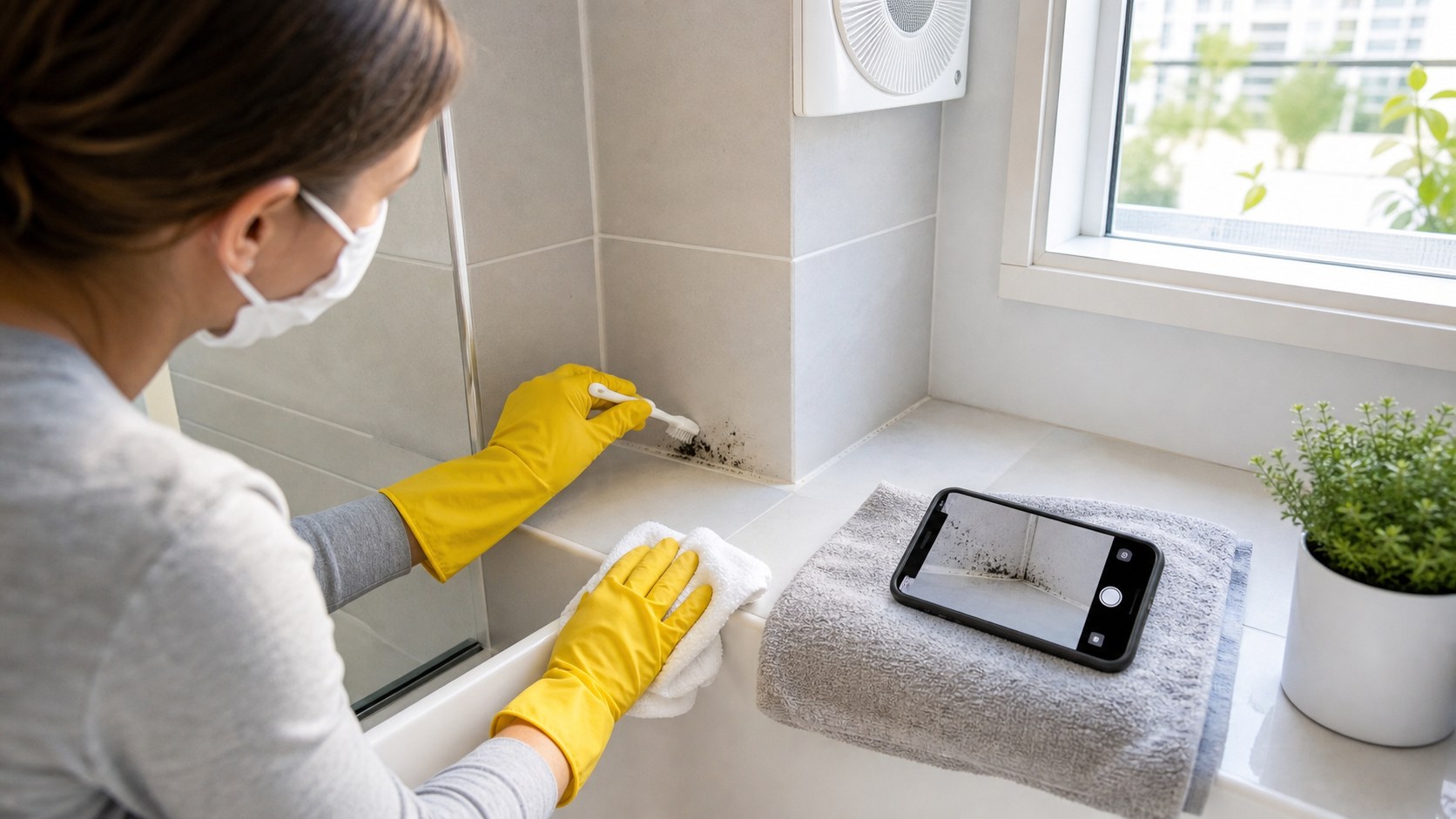
Use this only for a small patch of surface spots on hard bathroom surfaces, such as a few marks on tile or a small area near a shower edge. Mold can point to leaks, failed ventilation, or water damage, so renters should document it and stop if it is more than a small surface issue.
By Portia Me'uan Thomas. Updated August 17, 2026. Edited for renter-aware safety.
Time: 20-40 minutes. Difficulty: Easy for tiny hard-surface spots only. Safety: Medium.
Quick Answer
Ventilate, wear gloves and a mask, photograph the area, clean only a small hard-surface patch with one labeled bathroom cleaner, rinse if the label says to, dry completely, and report recurring, spreading, or soft-surface mold to your landlord. Never mix bleach and ammonia.
Material Fit
For mold-like spots, material decides whether this is a small surface clean or a maintenance/remediation issue.
| Material or surface | Safest first method | Conditional next method | Avoid / stop line |
|---|---|---|---|
| Glazed tile or glass | Small labeled-cleaner wipe with gloves and ventilation. | Dry fully and watch for return. | Stop if the area spreads or odor remains. |
| Caulk or grout | Gentle wipe only if intact. | Report recurring staining or failed caulk. | Avoid scraping, cutting, or removing caulk as beginner DIY. |
| Painted drywall or ceiling | Photograph and report; do not scrub into the surface. | Ventilate and reduce moisture if safe. | Stop for softness, stains, bubbling, or leak history. |
| Wood, insulation, fabric, or porous material | Document and isolate the area if possible. | Use maintenance or qualified remediation. | Do not sand, scrape, or dry-brush. |
Before You Start
- Open the bathroom door or window and run the fan if it works.
- Take photos before cleaning so you can document the condition.
- Only continue if the area is small, on a hard non-porous surface, and not caused by an active leak.
- Never mix bleach with ammonia, vinegar, toilet cleaner, or any other cleaner.
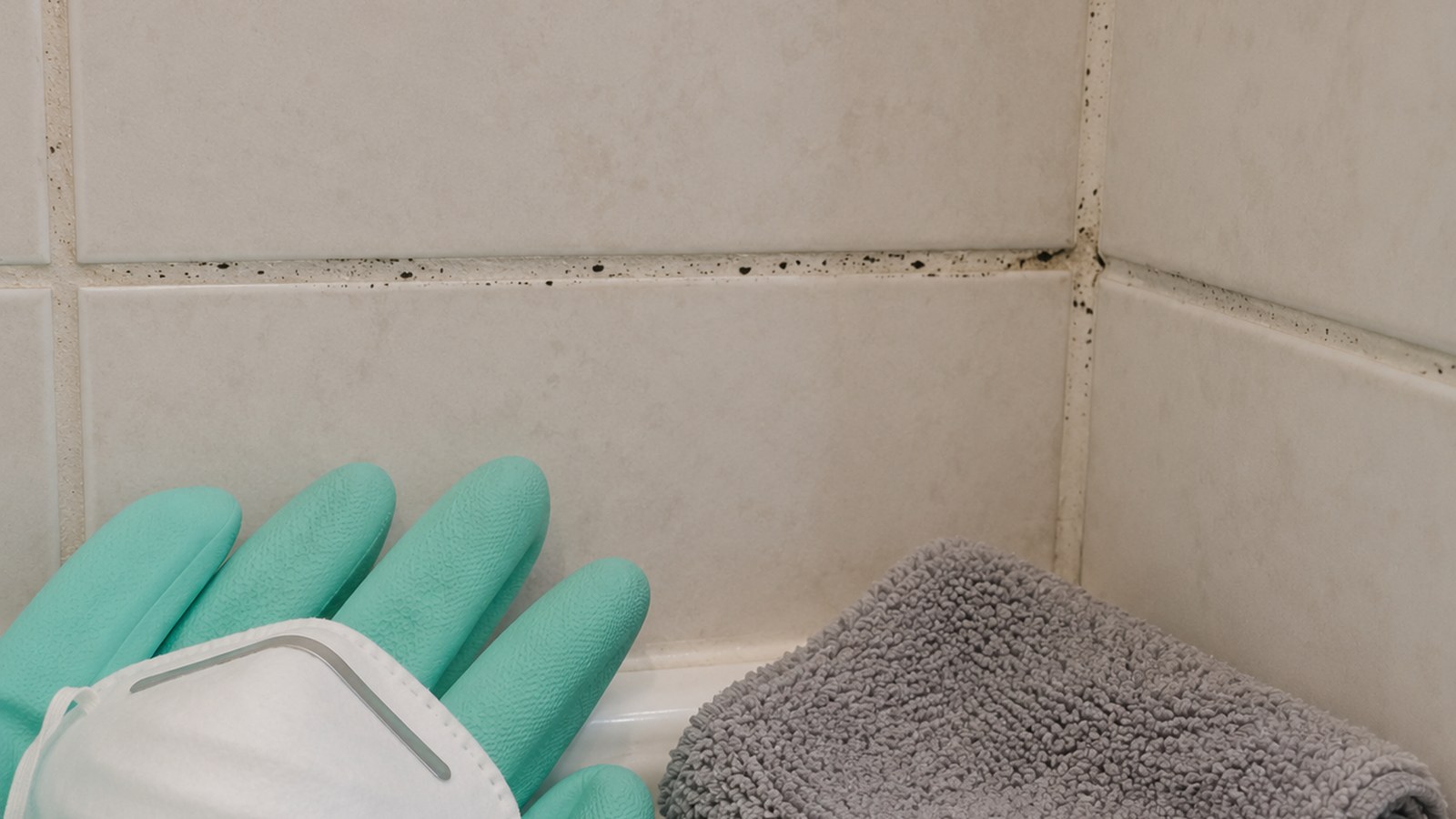
Tools Needed
- Gloves
- Protective mask
- Eye protection if available
- Phone camera
- Soft brush or sponge
- Labeled bathroom cleaner
- Disposable towels
- Trash bag
Renter Notes
Mold concerns in rentals should be documented. Contact your landlord or maintenance team for mold on drywall, ceiling, wood, carpet, HVAC areas, large areas, recurring spots, leaks, or musty odors that return.
Step-by-Step Guide
- Put on gloves and a mask before touching the area.
What I check before the next step: Before continuing, I confirm the step stayed dry, visible, reversible, and within the lease or my comfort level. - Remove nearby towels, bathmats, and personal items so they do not contact cleaner or spores.
What I check before the next step: Before continuing, I confirm the step stayed dry, visible, reversible, and within the lease or my comfort level. - Apply one labeled bathroom cleaner according to its directions; do not layer products.
What I check before the next step: Before continuing, I confirm the step stayed dry, visible, reversible, and within the lease or my comfort level. - Gently wipe or brush the small spot without dry-scrubbing it into the air.
What I check before the next step: I check the surface before I add more product: spreading, dull finish, strong odor, or lingering dampness means I stop and let the area dry. - Rinse if the label instructs you to, then dry the area completely.
What I check before the next step: I use as little water as possible and check that the surface is not staying wet underneath. - Run ventilation and send photos to maintenance if spots return, spread, or sit near damaged caulk, grout, drywall, or ceiling paint.
What I check before the next step: I make the note useful: date, location, what changed, one wide photo, and one close-up before I touch anything else.
Safe Next Steps
- If the result improved, do one normal-use test and finish with the checklist item: Area photographed.
- If the result is mixed, stop after the listed low-risk checks and decide whether the issue belongs with maintenance, your landlord, or a licensed professional.
- If the result did not improve or got worse, do not add force, stronger chemicals, hidden disassembly, or a new tool. Contact your landlord, maintenance team, or a qualified mold remediation professional if any stop sign appears.
- For a rental, send a short maintenance message with where the issue is, when you noticed it, what changed, what safe check you tried, and two photos. Keep the confirmation.
Common Mistakes
- Dry-scrubbing mold spots and spreading particles.
- Mixing bleach with ammonia or other cleaners.
- Cleaning visible spots while ignoring a leak or failed fan.
- Treating mold on drywall, wood, or carpet as a simple wipe-down.
Bathroom moisture and visible mold assessment
visible mold-like spots or recurring musty moisture in a bathroom is treated here as a beginner observation and control problem first, not a chance to prove you can take apart the home. The safe version is visible, reversible, and easy to stop.
For renters, the important line is ownership. You can usually observe, photograph, time, clean lightly, or tighten a visible non-security part, but hidden systems, building-owned fixtures, and lease-controlled hardware belong to maintenance.
What to Check Before You Act
Measure and photograph without disturbing the surface. Track whether the area is dry or damp and whether spots recur; do not perform air sampling or destructive investigation as a beginner.
| Check | Before | After | Interpretation |
|---|---|---|---|
| Visible area | Approximate length × width | Same, smaller, larger, or new locations | Growth approaching or exceeding about 10 sq ft, or spreading, needs professional guidance. |
| Surface type | Tile/glass or porous wall/ceiling/caulk | Dry, stained, soft, peeling, or damaged | Porous or damaged material is harder to clean fully and belongs in the report. |
| Moisture clue | Dry, condensation, drip, leak stain, or standing water | Resolved, recurring, or unknown | Cleanup will not hold if the moisture source remains. |
| Recurrence | First seen date | Days until return or no return | Fast recurrence points to unresolved moisture or ventilation. |
Common Situations and Stop Points
| Symptom | Possible context | Safe first check | Stop point |
|---|---|---|---|
| Small marks on a hard shower surface | Persistent surface moisture | Document, ventilate, and follow approved hard-surface guidance | Marks spread or return |
| Ceiling or wall patch | Condensation, leak, or hidden moisture | Photograph without touching | Softness, bubbling, staining, or active water |
| Strong musty odor without visible source | Possible hidden moisture | Record rooms and timing | Do not open walls or lift flooring |
| Symptoms or sensitive occupant | Possible exposure concern | Avoid the area and seek health guidance | Do not begin cleanup |
Try It or Report It?
| Situation | Beginner can try | Do not touch | Contact |
|---|---|---|---|
| Small hard-surface spot | Document and use only lease/manual-approved mild cleaning | Porous backing, caulk removal, or hidden area | Maintenance if recurring |
| Porous wall, ceiling, carpet, or soft material | Photograph from a distance | Scraping, cutting, sanding, painting, or caulking over it | Maintenance or remediation professional |
| Leak or water damage | Contain only if safe and report | Plumbing, ceiling, wall, or wet electrical area | Emergency maintenance when active |
| Large, hidden, contaminated, or health-sensitive case | Keep distance and document if safe | Cleanup or sampling | Qualified professional and health guidance |
Renter-Safe First Steps
- Photograph and measure the visible area.
- Record surface type and moisture clues.
- Use normal bathroom ventilation.
- Clean only a small hard surface when lease, label, and health conditions allow.
Stop Lines
- Stop for an area larger than about 10 square feet.
- Stop for sewage or contaminated water.
- Stop for HVAC involvement or a hidden source.
- Stop for porous, soft, crumbling, or water-damaged material.
- Stop if anyone has health concerns or symptoms.
Additional FAQ
Should I test the mold type?
Visible growth usually does not need beginner sampling. Professional sampling requires a clear purpose and qualified interpretation.
Can I paint over the spots?
No. EPA guidance says to clean and dry moldy surfaces before painting; covering an unresolved moisture problem can hide continuing damage.
Is bleach always required?
No. EPA does not recommend biocides such as chlorine bleach as a routine mold-cleanup practice. Never mix bleach with ammonia or other cleaners.
Related Next Steps
- Under-Sink Leak Check: What to Look For Before Touching Plumbing - Use the moisture-documentation method if the bathroom issue includes a vanity leak.
- Small Water Leak: What to Do While Waiting for Maintenance - Use the containment guide for active water while waiting.
- Soap Scum in the Shower: A Safer Cleaning Plan - Separate ordinary soap residue from a recurring moisture problem.
What Not to Do
- Do not clean large mold areas yourself.
- Do not mix bleach and ammonia under any circumstances.
- Do not sand, scrape, or remove moldy drywall, caulk, or grout as beginner DIY.
- Do not ignore symptoms, strong odors, or mold near HVAC vents.
When to Pause and Ask for Help
Contact your landlord, maintenance team, or a qualified mold remediation professional if the area is larger than a small surface patch, keeps returning, is on porous material, follows a leak, smells musty, affects HVAC, or if anyone in the home feels unwell.
FAQ
How small is small enough to clean?
Think a few surface spots on hard tile or glass. Anything larger, recurring, or on porous material should be reported.
Is bleach always the right mold cleaner?
Use only one labeled cleaner and follow the label. Bleach can be hazardous if mixed and is not appropriate for every surface.
Why does mold come back?
Moisture, poor ventilation, failed caulk, leaks, and damp materials can all make spots return.
Do I need to tell my landlord?
Yes if it returns, spreads, smells musty, or appears near leaks, ceilings, walls, wood, carpet, or vents.
Final Checklist
- Area photographed
- Ventilation running
- Gloves and mask worn
- Small hard-surface area only
- One cleaner used
- Area dried
- Recurring or large mold reported
References
Use these official resources as background context. Product manuals, lease rules, local requirements, property maintenance instructions, and qualified professional advice should still come first for your exact home.
- A brief guide to mold, moisture and your home - U.S. Environmental Protection Agency. Recurring, widespread, porous-surface, or leak-related mold concerns should be escalated.
- Mold - Centers for Disease Control and Prevention. Use for health and moisture context, especially when mold is recurring, tied to leaks, or affecting sensitive people.
You May Also Like
More beginner-safe guides that connect to this repair, the same room, or the next safety decision a renter may need.
- Soap Scum in the Shower: A Safer Cleaning Plan - Learn how to remove soap scum from shower glass, tile, acrylic, or tubs with one compatible cleaner, gentle tools, and a thorough rinse.
- Under-Sink Leak Check: What to Look For Before Touching Plumbing - Check under a kitchen or bathroom sink for early leak signs without taking plumbing apart.
- When Not to DIY a Home Repair - Clear stop signs for repairs that are unsafe, lease-sensitive, or require licensed help.
- Safe to DIY? A Renter's Home Repair Filter - Use a simple safety filter before deciding whether to DIY a repair in your first place.
- Coffee on Carpet: Blot, Test, and Stop Before Damage - Blot a fresh or recent coffee stain from carpet with gentle, renter-safe steps and clear stop points.
- Simple Weekly Cleaning Routine for a First Apartment - Create a realistic weekly cleaning routine for a first apartment without turning it into a full-day project.
- Grease on Kitchen Walls: Gentle Cleaning for Painted Surfaces - Learn how to clean grease off painted kitchen walls with a gentle spot test, minimal moisture, and stop points that protect rental finishes.
- Hard Water Stains on Faucets and Shower Glass - Remove light mineral spots from faucets and shower glass without scratching finishes or mixing chemicals.