Basic Emergency Kit for Living Alone
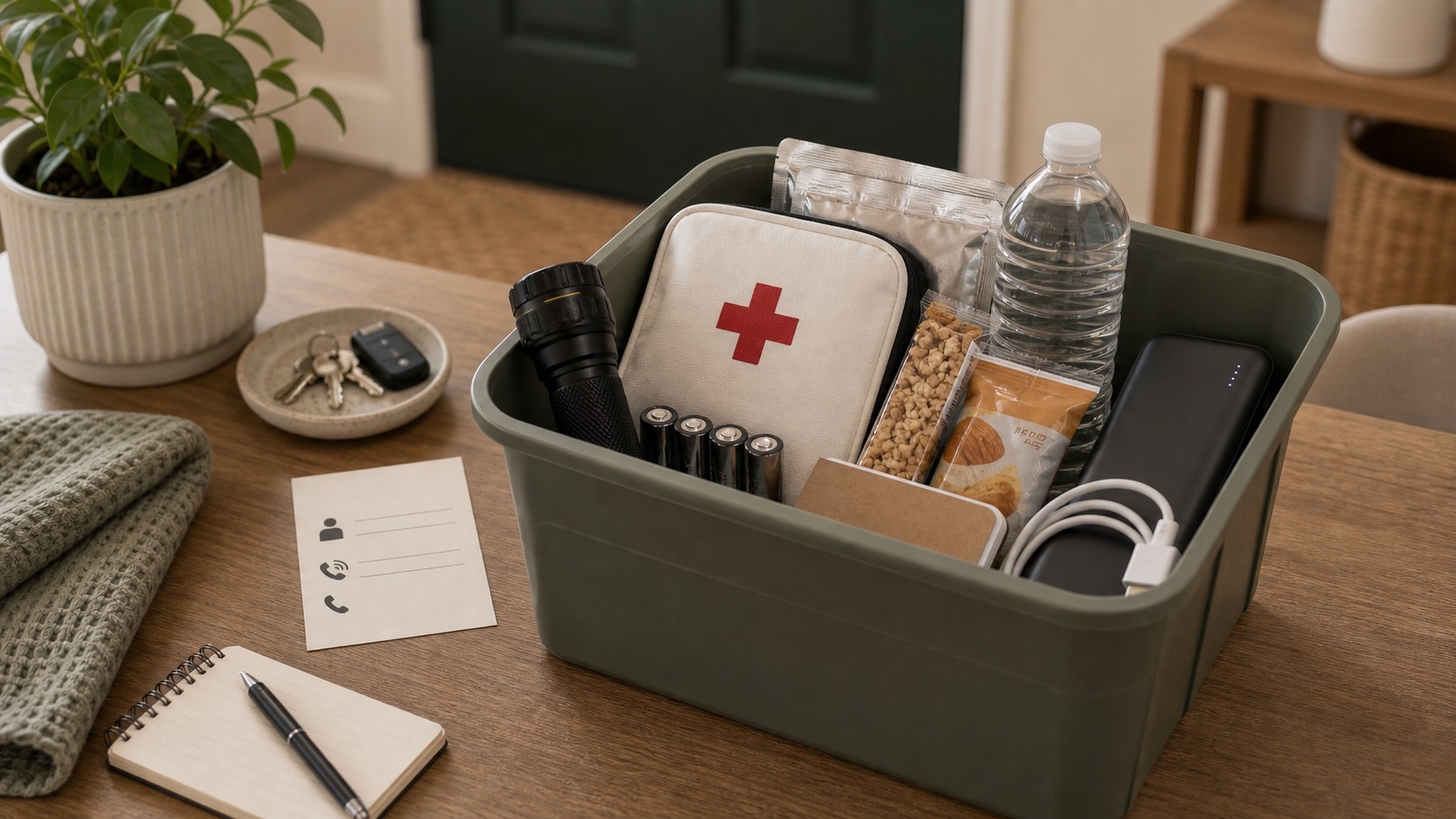
Build this kit when a power outage, storm warning, boil-water notice, or late-night injury would be harder because you live alone. The goal is a basic kit you can actually maintain in a small apartment.
By Portia Me'uan Thomas. Updated August 17, 2026. Edited for renter-aware safety.
Time: 45-90 minutes to assemble. Difficulty: Easy. Safety: High importance.
Quick Answer
Pack water, shelf-stable food, flashlight, batteries, power bank, first aid basics, medications, important contacts, hygiene items, cash, and copies of key documents in one easy-to-reach container. Review it every few months and replace expired items.
Before You Start
- Choose one storage spot you can reach in the dark.
- Write down landlord, maintenance, utility, urgent care, and emergency contacts.
- Consider your own needs: medications, pets, mobility, dietary restrictions, and climate.
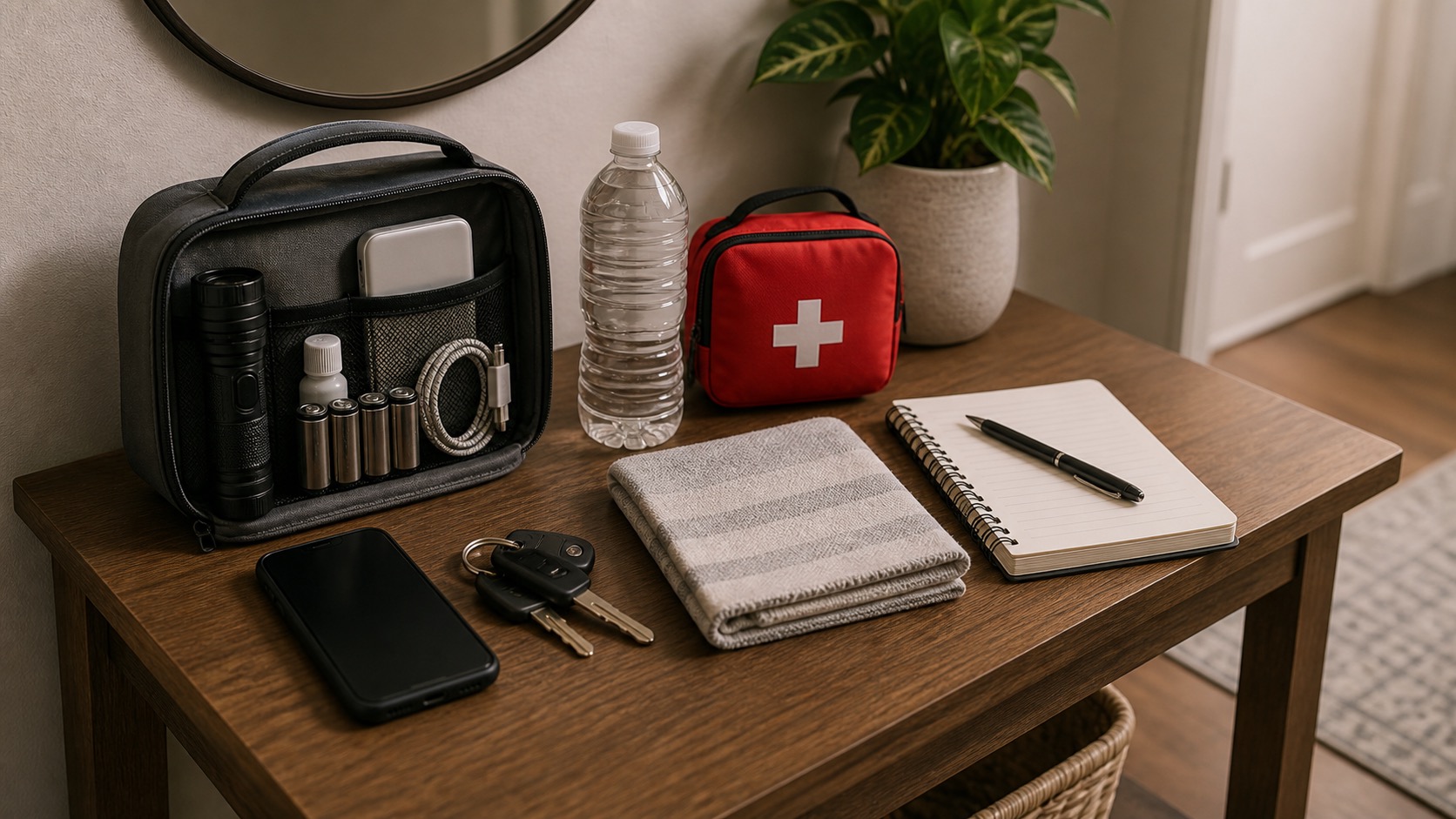
Tools Needed
- Plastic bin or backpack
- Flashlight
- Batteries
- Power bank
- First aid supplies
- Bottled water
- Shelf-stable food
- Medication list
- Printed emergency contacts
Renter Notes
Apartment emergency prep should include building-specific contacts, maintenance numbers, utility outage links, and any access instructions. Do not store fuel, generators, or unsafe heating devices indoors.
Step-by-Step Guide
- Pick a bin or backpack that is easy to carry and not buried behind storage.
What I check before the next step: I treat this as a safety check, not a repair. I do not disable, bypass, cover, or alter safety equipment. - Add light and power basics: flashlight, spare batteries, charging cable, and power bank.
What I check before the next step: I stay dry and hands-off with wiring or panels. Smoke, sparks, heat, burning smell, carbon monoxide alarms, repeated trips, or wet electrical areas mean stop immediately. - Add water and shelf-stable food you can eat without cooking.
What I check before the next step: I look for spreading water, wet electrical areas, sewage odor, swelling, or moisture below the fixture. Any of those turns this into a stop-and-report issue. - Add first aid basics, necessary medication information, hygiene items, and a small amount of cash.
What I check before the next step: I treat this as a safety check, not a repair. I do not disable, bypass, cover, or alter safety equipment. - Add printed emergency contacts, building information, insurance contacts, and copies of essential documents if appropriate.
What I check before the next step: I make the note useful: date, location, what changed, one wide photo, and one close-up before I touch anything else. - Set a calendar reminder to check batteries, food, water, and medications every three to six months.
What I check before the next step: I look for spreading water, wet electrical areas, sewage odor, swelling, or moisture below the fixture. Any of those turns this into a stop-and-report issue.
Safe Next Steps
- If the result improved, do one normal-use test and finish with the checklist item: One reachable container chosen.
- Put safety equipment back exactly as it was, keep exits clear, and record the test date. Failed alarms, entry-security problems, outages with hazards, or immediate danger should escalate quickly.
- If the result did not improve or got worse, do not add force, stronger chemicals, hidden disassembly, or a new tool. Call emergency services for the stop signs listed below.
- For a rental, send a short maintenance message with where the issue is, when you noticed it, what changed, what safe check you tried, and two photos. Keep the confirmation.
Common Mistakes
- Buying a kit and never checking expiration dates.
- Storing everything so deep in a closet that it is useless during an outage.
- Relying on candles instead of flashlights.
Personal emergency kit planning
building a practical emergency kit for one person living alone is treated here as a beginner observation and control problem first, not a chance to prove you can take apart the home. The safe version is visible, reversible, and easy to stop.
For renters, the important line is ownership. You can usually observe, photograph, time, clean lightly, or tighten a visible non-security part, but hidden systems, building-owned fixtures, and lease-controlled hardware belong to maintenance.
What to Check Before You Act
Record the starting condition, perform only one low-risk check at a time, and compare personal needs, core supplies, access, maintenance cycle. Do not repeat a step that needs more force, chemical, height, access, or disassembly.
| Check | Before | After | Interpretation |
|---|---|---|---|
| Personal needs | Record medications, mobility, communication, dietary, pet, and medical-device needs | After one safe check: write a 72-hour and evacuation-specific list | The useful kit reflects the person, not a generic product bundle Stop if critical medication or powered-device planning needs professional guidance. |
| Core supplies | Record water, food, light, radio, charging, first aid, hygiene, cash, and documents | After one safe check: compare quantities and expiration dates with official local guidance | Gaps become a prioritized shopping list Stop if food, water, batteries, or medicines are damaged or expired. |
| Access | Record storage height, darkness, exit path, weight, and duplicate locations | After one safe check: retrieve the kit without normal lighting | A kit that cannot be reached or carried will not help Stop if storage blocks an exit or requires unsafe lifting. |
| Maintenance cycle | Record last battery, charger, food, water, and contact check | After one safe check: set a recurring calendar review | Regular rotation keeps the kit usable Stop if a critical item cannot be tested or replaced in time. |
Common Situations and Stop Points
| Symptom | Possible context | Safe first check | Stop point |
|---|---|---|---|
| Personal needs | The useful kit reflects the person, not a generic product bundle | write a 72-hour and evacuation-specific list | critical medication or powered-device planning needs professional guidance |
| Core supplies | Gaps become a prioritized shopping list | compare quantities and expiration dates with official local guidance | food, water, batteries, or medicines are damaged or expired |
| Access | A kit that cannot be reached or carried will not help | retrieve the kit without normal lighting | storage blocks an exit or requires unsafe lifting |
| Maintenance cycle | Regular rotation keeps the kit usable | set a recurring calendar review | a critical item cannot be tested or replaced in time |
Try It or Report It?
| Situation | Beginner can try | Do not touch | Contact |
|---|---|---|---|
| Observe and document | List personal and local hazard needs before shopping. Build core light, water, food, communication, first-aid, and document supplies. | Hidden, fixed, energized, pressurized, structural, or lease-controlled parts | Use the record if the baseline is abnormal |
| One reversible first step | Store the kit near a safe exit without blocking it. Test lights, charging, dates, and carry weight on a schedule. | Anything that needs force, drilling, cutting, panel removal, or mixed chemicals | Maintenance if the first step fails or the condition returns |
| Condition persists | Repeat the observation for personal needs and core supplies, not the repair | Do not escalate tools or improvise a workaround | Landlord, maintenance, manufacturer support, or the responsible professional |
| Warning sign appears | Stop, keep distance, and photograph only if that is safe | Stop using candles, indoor generators, grills, or unapproved heaters as kit substitutes. Stop storing fuel, leaking batteries, or incompatible chemicals together. Stop if the kit blocks an exit or is too heavy to carry. | Urgent maintenance, utility, emergency services, or another appropriate safety channel |
Renter-Safe First Steps
- List personal and local hazard needs before shopping.
- Build core light, water, food, communication, first-aid, and document supplies.
- Store the kit near a safe exit without blocking it.
- Test lights, charging, dates, and carry weight on a schedule.
Stop Lines
- Stop using candles, indoor generators, grills, or unapproved heaters as kit substitutes.
- Stop storing fuel, leaking batteries, or incompatible chemicals together.
- Stop if the kit blocks an exit or is too heavy to carry.
- Stop relying on expired food, water, medication, or first-aid items.
- Seek qualified planning for essential medical devices or medications.
Additional FAQ
Do I need to buy a premade kit?
No. A personalized kit assembled in stages is often easier to verify and rotate than a sealed bundle of unfamiliar items.
Where should I keep it?
Use a dry, accessible location near a safe route out, and keep immediate items such as a flashlight and contacts reachable from where you sleep.
What should I include in a maintenance message?
Include the exact location, when it started, photos, the personal needs and core supplies and access and maintenance cycle, what safe check you performed, and whether the condition improved, stayed the same, or worsened.
Related Next Steps
- Power Outage Alone: A Calm Apartment Safety Plan - Test the kit against a realistic outage plan.
- Apartment Smoke Detector Test: A Safe Monthly Check - Pair supplies with working warning equipment.
- First Apartment Maintenance Checklist - Add kit rotation to a recurring home check.
What Not to Do
- Do not use grills, camp stoves, charcoal, or generators indoors.
- Do not store gasoline, propane, or unsafe fuel containers in an apartment.
- Do not keep critical medication only in a hard-to-reach emergency bin.
When to Pause and Ask for Help
Call emergency services for immediate danger, medical emergencies, carbon monoxide alarms, fire, or evacuation orders. Contact your landlord or maintenance team for building safety issues, lockouts, leaks, heat loss, or outage-related building problems.
FAQ
How much water should I store?
A common baseline is one gallon per person per day for several days, adjusted for your space, climate, pets, and local guidance.
Where should I keep the kit?
Use a closet, entry area, or under-bed bin you can reach quickly without moving heavy items.
Do I need cash?
Small bills can help during outages when card readers or ATMs are unavailable.
What about pets?
Add pet food, medication, leash or carrier supplies, and your vet contact if you have pets.
Final Checklist
- One reachable container chosen
- Light and power added
- Water and food added
- First aid and hygiene included
- Contacts printed
- Review reminder set
References
Use these official resources as background context. Product manuals, lease rules, local requirements, property maintenance instructions, and qualified professional advice should still come first for your exact home.
- Build a kit - Ready.gov. Use as a baseline for water, light, communication, documents, and basic supplies.
You May Also Like
More beginner-safe guides that connect to this repair, the same room, or the next safety decision a renter may need.
- Power Outage Alone: A Calm Apartment Safety Plan - A calm power outage plan for people living alone, with clear electrical safety boundaries.
- Apartment Smoke Detector Test: A Safe Monthly Check - Learn how to test an apartment smoke detector with its test button, what a failed test or chirp means, and when renters should call maintenance.
- Small Water Leak: What to Do While Waiting for Maintenance - Contain a small apartment water leak while waiting for maintenance, document the damage, avoid electrical danger, and know when to escalate.
- First Apartment Maintenance Checklist - A realistic monthly checklist for keeping a first apartment safer and easier to manage.
- What I Do Differently Now When Something Breaks at Night (Living Alone Edition) - Use a calm nighttime decision plan when something breaks while you live alone: screen for immediate danger, contact the right help, document safely, and decide whether the home is safe for rest.
- Front Door Security Check for Renters - Improve front-door confidence with renter-safe checks, habits, and clear lock repair boundaries.
- Lost Keys or Locked Out: What to Do First - Handle lost keys or an apartment lockout without damaging the door, lock, or lease relationship.
- Safer Mail and Package Habits for Apartment Living - Use apartment mailroom best practices to reduce missing packages, protect delivery details, and report broken locks or repeated security problems.