Tripped Circuit Breaker: A Safe Reset Checklist
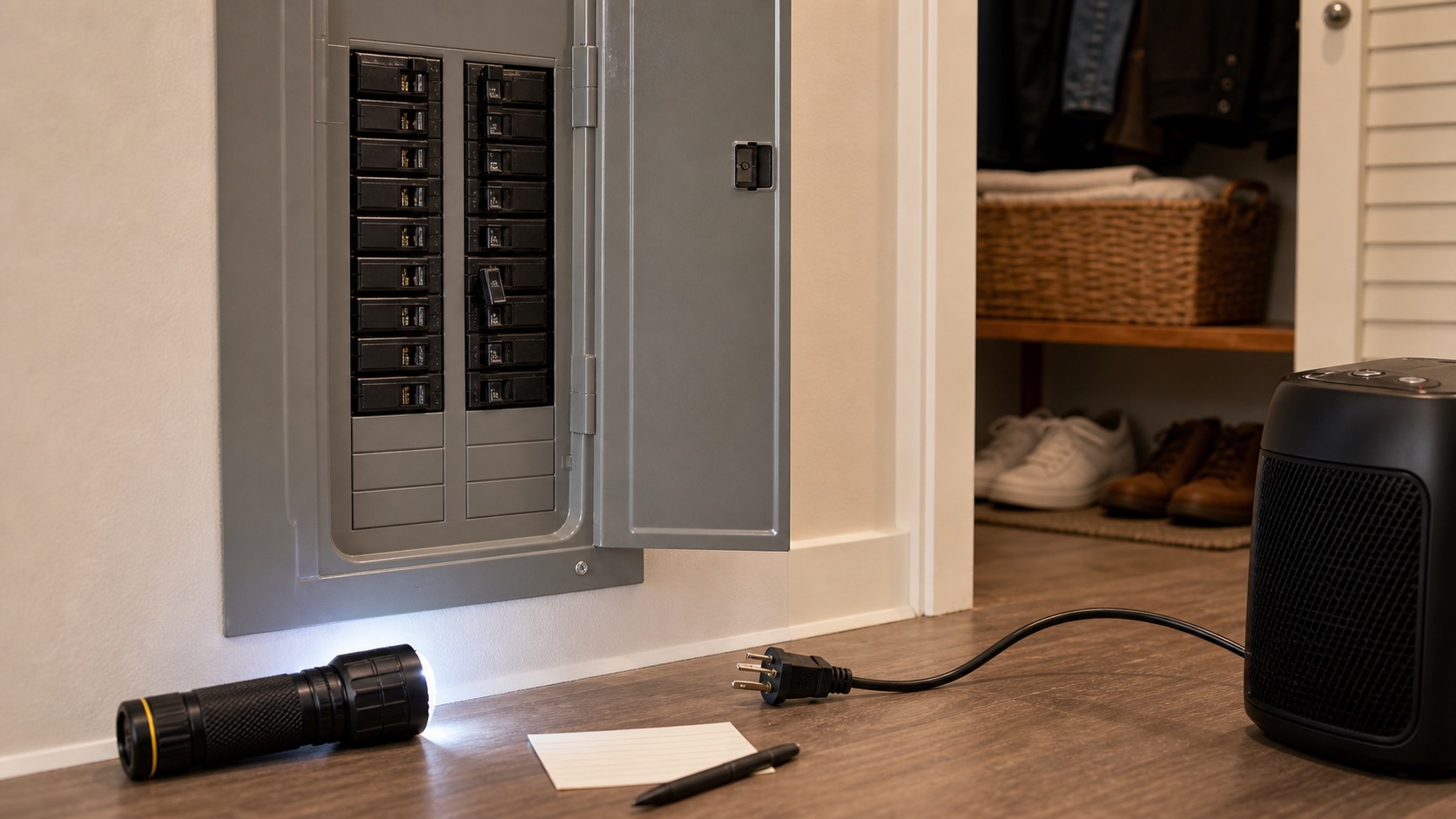
Use this when one room or outlet group loses power after a small overload, like a space heater and microwave running at the same time. This is not for wet panels, burning smells, sparking, repeated trips, shared utility rooms, or any panel you are not allowed to access.
By Portia Me'uan Thomas. Updated August 17, 2026. Edited for renter-aware safety.
Time: 5-10 minutes. Difficulty: Easy if the panel is accessible and labeled. Safety: Medium to high.
Quick Answer
Unplug the likely overload, make sure the panel is dry and safe, find the breaker sitting between on and off, switch it fully off, then back on once. If it trips again, smells hot, buzzes, sparks, or is not clearly labeled, stop and call maintenance or a licensed electrician.
Before You Start
- Do not touch a breaker panel if the floor, wall, panel, or your hands are wet.
- Unplug or turn off the appliance that may have caused the overload.
- Leave the area and call emergency services if you see smoke, fire, sparks, or smell burning.
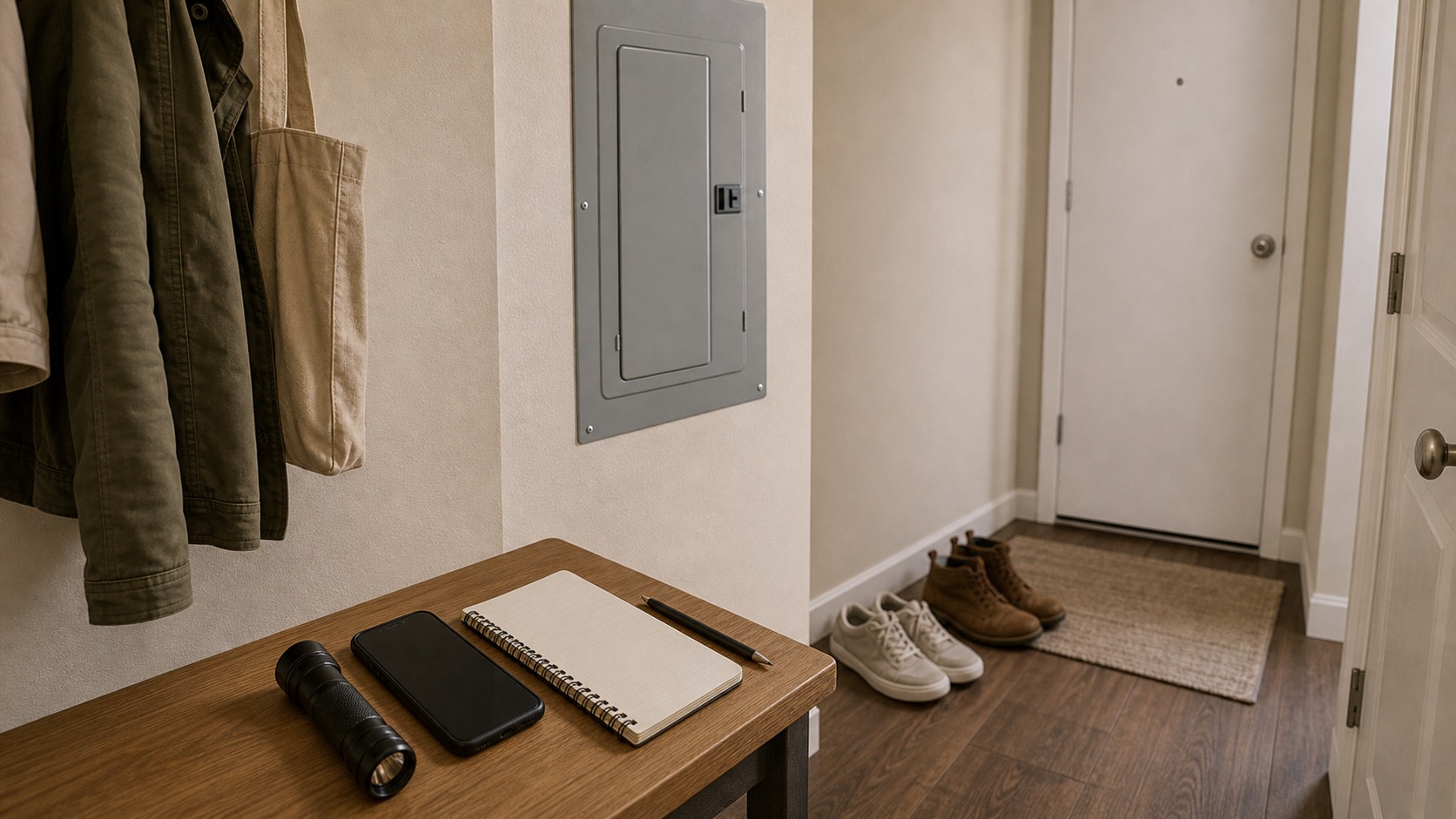
Tools Needed
- Flashlight
- Dry hands
- Phone for maintenance contact
- Notes app for what was plugged in
Renter Notes
Many apartments allow tenants to reset an accessible in-unit breaker once, but shared panels, locked utility rooms, damaged panels, and repeated trips are maintenance issues. Follow your lease and building rules.
Step-by-Step Guide
- Check whether the outage is limited to part of your unit rather than the whole building.
What I check before the next step: I treat the result as information. If the problem improves, I verify once; if it stays the same or worsens, I do not keep repeating the step with more force. - Unplug high-draw items such as heaters, microwaves, hair dryers, or portable AC units from the affected area.
What I check before the next step: Before continuing, I confirm the step stayed dry, visible, reversible, and within the lease or my comfort level. - Open the breaker panel only if it is accessible, dry, and allowed by your lease.
What I check before the next step: I stay dry and hands-off with wiring or panels. Smoke, sparks, heat, burning smell, carbon monoxide alarms, repeated trips, or wet electrical areas mean stop immediately. - Look for a breaker handle sitting between on and off or showing a trip indicator.
What I check before the next step: I stay dry and hands-off with wiring or panels. Smoke, sparks, heat, burning smell, carbon monoxide alarms, repeated trips, or wet electrical areas mean stop immediately. - Move that breaker firmly to off, then back to on one time.
What I check before the next step: I stay dry and hands-off with wiring or panels. Smoke, sparks, heat, burning smell, carbon monoxide alarms, repeated trips, or wet electrical areas mean stop immediately. - If power returns, plug items back in slowly and avoid using the same high-draw combination again.
What I check before the next step: I stay dry and hands-off with wiring or panels. Smoke, sparks, heat, burning smell, carbon monoxide alarms, repeated trips, or wet electrical areas mean stop immediately.
Safe Next Steps
- If the result improved, do one normal-use test and finish with the checklist item: Likely overload unplugged.
- If the result is mixed, stop after the listed low-risk checks and decide whether the issue belongs with maintenance, your landlord, or a licensed professional.
- If the result did not improve or got worse, do not add force, stronger chemicals, hidden disassembly, or a new tool. Call maintenance or a licensed electrician if any stop sign appears.
- For a rental, send a short maintenance message with where the issue is, when you noticed it, what changed, what safe check you tried, and two photos. Keep the confirmation.
Common Mistakes
- Resetting the same breaker over and over without finding the cause.
- Touching a panel in a damp basement, laundry room, or utility closet.
- Assuming an unlabeled breaker controls only your apartment.
Single breaker reset decision
a labeled circuit breaker that appears tripped is treated here as a beginner observation and control problem first, not a chance to prove you can take apart the home. The safe version is visible, reversible, and easy to stop.
For renters, the important line is ownership. You can usually observe, photograph, time, clean lightly, or tighten a visible non-security part, but hidden systems, building-owned fixtures, and lease-controlled hardware belong to maintenance.
What to Check Before You Act
Record the starting condition, perform only one low-risk check at a time, and compare outage scope, panel condition, connected load, one reset result. Do not repeat a step that needs more force, chemical, height, access, or disassembly.
| Check | Before | After | Interpretation |
|---|---|---|---|
| Outage scope | Record which lights, outlets, rooms, neighbors, and building areas lost power | After one safe check: compare without opening equipment | Scope separates a branch-circuit symptom from a wider outage Stop if the panel room or building condition is unsafe. |
| Panel condition | Record dryness, heat, odor, sound, scorch marks, damage, and labeling | After one safe check: inspect visually without touching | Only a dry intact quiet labeled panel is eligible for the building-approved procedure Stop if water, heat, buzzing, smoke, sparks, odor, damage, or missing label is present. |
| Connected load | Record devices running before the trip | After one safe check: unplug ordinary portable loads in the affected dry room | Reducing load helps avoid an immediate repeat Stop if a fixed appliance, damaged cord, or wet device is involved. |
| One reset result | Record breaker position and whether power returns | After one safe check: follow the panel or property instruction once | A stable one-time reset can be monitored Stop if the breaker resists, trips again, or symptoms return. |
Common Situations and Stop Points
| Symptom | Possible context | Safe first check | Stop point |
|---|---|---|---|
| Outage scope | Scope separates a branch-circuit symptom from a wider outage | compare without opening equipment | the panel room or building condition is unsafe |
| Panel condition | Only a dry intact quiet labeled panel is eligible for the building-approved procedure | inspect visually without touching | water, heat, buzzing, smoke, sparks, odor, damage, or missing label is present |
| Connected load | Reducing load helps avoid an immediate repeat | unplug ordinary portable loads in the affected dry room | a fixed appliance, damaged cord, or wet device is involved |
| One reset result | A stable one-time reset can be monitored | follow the panel or property instruction once | the breaker resists, trips again, or symptoms return |
Try It or Report It?
| Situation | Beginner can try | Do not touch | Contact |
|---|---|---|---|
| Observe and document | Confirm the outage scope and property rules. Inspect the panel from a distance for warning signs. | Hidden, fixed, energized, pressurized, structural, or lease-controlled parts | Use the record if the baseline is abnormal |
| One reversible first step | Unplug ordinary portable loads in the affected dry area. Perform no more than one approved reset and document the result. | Anything that needs force, drilling, cutting, panel removal, or mixed chemicals | Maintenance if the first step fails or the condition returns |
| Condition persists | Repeat the observation for outage scope and panel condition, not the repair | Do not escalate tools or improvise a workaround | Landlord, maintenance, manufacturer support, or the responsible professional |
| Warning sign appears | Stop, keep distance, and photograph only if that is safe | Stop for water, heat, buzzing, smoke, sparks, burning odor, or panel damage. Stop if the panel or breaker is unlabeled. Stop before removing covers or touching wiring. | Urgent maintenance, utility, emergency services, or another appropriate safety channel |
Renter-Safe First Steps
- Confirm the outage scope and property rules.
- Inspect the panel from a distance for warning signs.
- Unplug ordinary portable loads in the affected dry area.
- Perform no more than one approved reset and document the result.
Stop Lines
- Stop for water, heat, buzzing, smoke, sparks, burning odor, or panel damage.
- Stop if the panel or breaker is unlabeled.
- Stop before removing covers or touching wiring.
- Stop if the breaker resists or trips again.
- Stop when a fixed appliance or damaged cord may be involved.
Additional FAQ
How many times can I reset a breaker?
For a beginner renter, at most one attempt when the panel is safe, labeled, and property guidance allows it. A repeat trip needs maintenance or an electrician.
What if the breaker feels warm?
Do not touch or reset it. Heat, odor, buzzing, discoloration, or damage requires urgent qualified assessment.
What should I include in a maintenance message?
Include the exact location, when it started, photos, the outage scope and panel condition and connected load and one reset result, what safe check you performed, and whether the condition improved, stayed the same, or worsened.
Related Next Steps
- Power Outage Alone: A Calm Apartment Safety Plan - Use the wider outage plan before assuming one breaker is responsible.
- Safe to DIY? A Renter's Home Repair Filter - Review electrical stop signs before approaching a panel.
- Appliance Problem or Repair Risk? A Beginner Troubleshooting Filter - Check whether a connected appliance created the symptom.
What Not to Do
- Do not remove the panel cover or touch wires.
- Do not reset a breaker that is hot, buzzing, sparking, wet, or smells like burning.
- Do not use extension cords or power strips to work around repeated breaker trips.
When to Pause and Ask for Help
Call maintenance or a licensed electrician if the breaker trips again, the panel is unlabeled or shared, outlets feel warm, lights flicker, you smell burning, a breaker will not stay on, or the issue involves a major appliance. Use emergency services for smoke, fire, or immediate electrical danger.
FAQ
Is it safe to reset a breaker once?
It can be safe if the panel is dry, accessible, clearly labeled, and there are no warning signs. Reset it once, not repeatedly.
Why did the breaker trip?
Common causes include too many high-draw devices on one circuit, a faulty appliance, moisture, or an electrical fault.
What if I cannot find the tripped breaker?
Do not guess through a shared or confusing panel. Contact maintenance.
Can I replace a breaker myself?
No. Breaker replacement is electrical work for a licensed professional or authorized maintenance.
Final Checklist
- Likely overload unplugged
- Panel dry and accessible
- Breaker reset once
- No repeated trips
- No heat, buzz, smoke, or sparks
- Maintenance contacted if unsafe
References
Use these official resources as background context. Product manuals, lease rules, local requirements, property maintenance instructions, and qualified professional advice should still come first for your exact home.
- Electrical safety - U.S. Consumer Product Safety Commission. Stop for heat, sparks, burning smells, moisture, damaged cords, or repeated breaker trips.
You May Also Like
More beginner-safe guides that connect to this repair, the same room, or the next safety decision a renter may need.
- Power Outage Alone: A Calm Apartment Safety Plan - A calm power outage plan for people living alone, with clear electrical safety boundaries.
- Rental Light Bulb Replacement: The Safe Version - Replace a standard apartment light bulb safely, with clear stop points for fixtures and wiring.
- Safe to DIY? A Renter's Home Repair Filter - Use a simple safety filter before deciding whether to DIY a repair in your first place.
- When Not to DIY a Home Repair - Clear stop signs for repairs that are unsafe, lease-sensitive, or require licensed help.
- Apartment Smoke Detector Test: A Safe Monthly Check - Learn how to test an apartment smoke detector with its test button, what a failed test or chirp means, and when renters should call maintenance.
- Basic Emergency Kit for Living Alone - Build a practical emergency kit for outages, storms, minor injuries, and apartment disruptions.
- First Apartment Maintenance Checklist - A realistic monthly checklist for keeping a first apartment safer and easier to manage.
- Small Water Leak: What to Do While Waiting for Maintenance - Contain a small apartment water leak while waiting for maintenance, document the damage, avoid electrical danger, and know when to escalate.