What I Do Differently Now When Something Breaks at Night (Living Alone Edition)
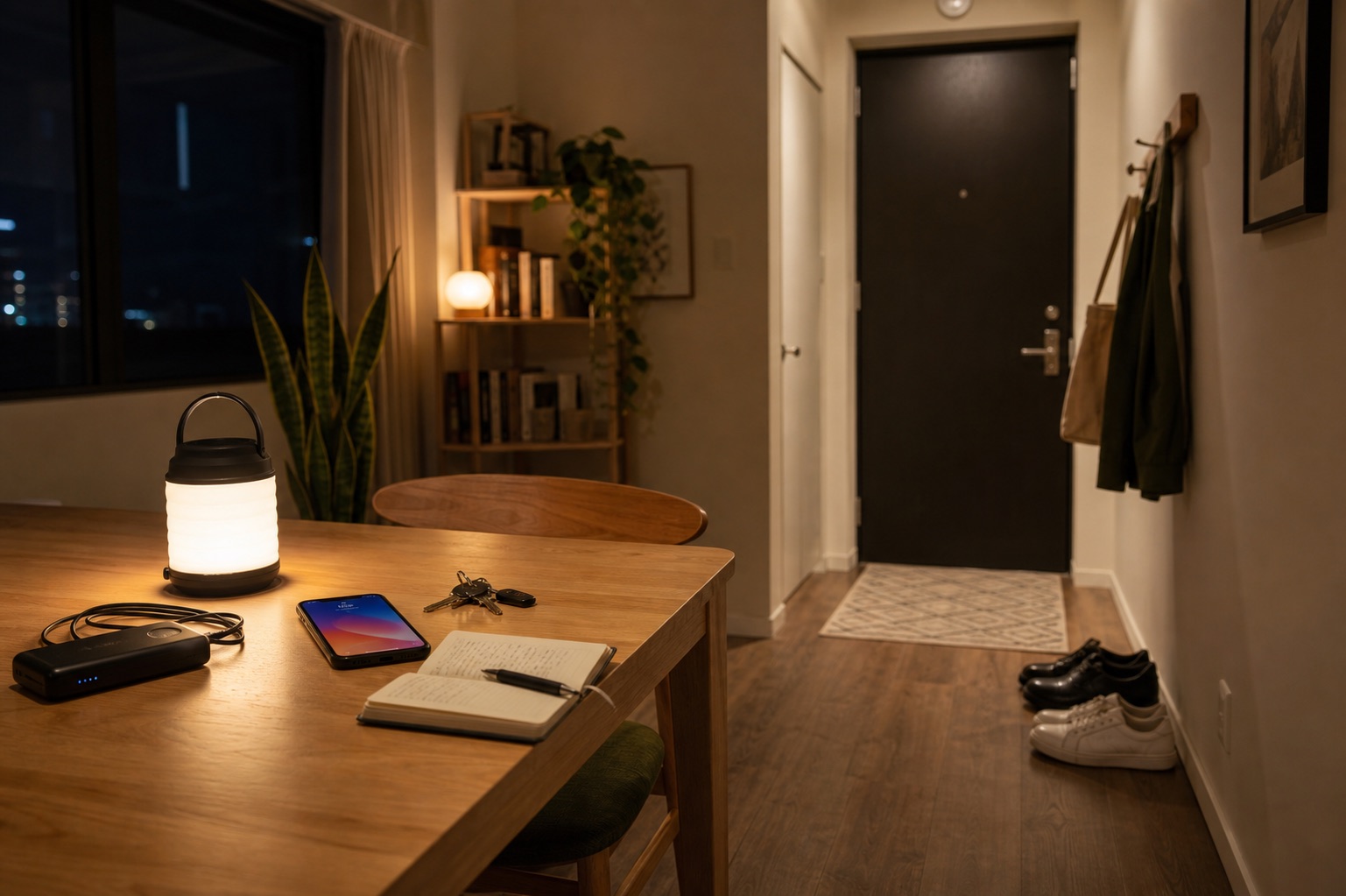
When something breaks at night, tiredness and the urge to solve it quickly can make a small problem harder to judge. I now treat the first few minutes as a decision problem: get to a safe position, identify any reason to leave or call immediately, document only if that is safe, submit the official request, and stop before nighttime improvisation becomes a repair attempt.
By Portia Me'uan Thomas. Updated August 17, 2026. Edited for renter-aware safety.
Time: 5-15 minutes to decide and act. Difficulty: Easy. Safety: High importance — nighttime fatigue changes the safe boundary.
Quick Answer
Do not automatically turn on a light or approach the problem. From a safe position, check first for smoke, fire, a carbon monoxide alarm, suspected gas, active sparking, fast flooding, an unsafe exit, structural movement, violence, or medical danger. Leave and call from safety when any immediate danger is present. Otherwise use battery light if needed, stop using the affected area, submit the official request now, tell a trusted person if useful, and rest only after the condition is stable, alarms and exits work, no heater or active hazard needs monitoring, and you have a clear escalation plan.
Before You Start
- Prepare before an emergency: keep a battery light, charged phone, keys, shoes, and emergency contacts in a consistent reachable place.
- Know two usable exit options when the building layout provides them, and never block the normal path with storage or temporary containment.
- Save the property's routine and emergency maintenance channels under clear names in your phone.
- Choose one trusted person you may contact at night and decide what information is useful without sending access codes or unnecessary private details.
- Know where the electrical panel and main fixtures are for identification, but do not make a plan to operate unfamiliar switches, valves, or equipment during a nighttime problem.
Tools Needed
- Battery flashlight or charged lantern
- Charged phone and power bank
- Saved emergency-maintenance number
- Notes app or small notebook
- Keys and shoes placed near the normal exit
- Trusted-contact plan
Renter Notes
This is a nighttime decision framework, not an emergency-service or repair substitute. Property procedures, emergency definitions, temperature requirements, entry rules, and tenant options vary by lease, housing program, and location. Use official emergency and maintenance channels for the actual home.
Step-by-Step Guide
- Pause only from a safe position. If a smoke or carbon monoxide alarm is sounding, you see smoke or fire, smell suspected gas, hear active sparking, or face another immediate danger, leave instead of spending thirty seconds observing.
What I check before the next step: I stay dry and hands-off with wiring or panels. Smoke, sparks, heat, burning smell, carbon monoxide alarms, repeated trips, or wet electrical areas mean stop immediately. - Choose light without creating a new hazard. Use a battery flashlight or lantern from the safe side when practical. Do not operate a wall switch, plug, appliance, breaker, phone, or other electrical device inside an area where gas may be present or where water is near electricity.
What I check before the next step: I stay with accessible, user-facing checks only. Heat, burning smell, leaks, damaged cords, error codes, or panel access means the next step is maintenance. - Run the emergency filter before taking photos: fire or smoke, carbon monoxide alarm, suspected gas, active sparking or burning odor, fast flooding, sewage, structural movement, an unusable exit, inability to secure the sole entry, violence or suspected intrusion, medical danger, or a condition that makes the home unsafe to remain in.
What I check before the next step: I make the note useful: date, location, what changed, one wide photo, and one close-up before I touch anything else. - If the filter shows immediate danger, move to the safest available location and call the appropriate emergency service, utility, security contact, and property emergency line from safety. Do not remain for photographs, ventilation, cleanup, or a closer look.
What I check before the next step: I make the note useful: date, location, what changed, one wide photo, and one close-up before I touch anything else. - For a stable non-emergency condition, stop using the affected fixture, appliance, or area without approaching the hazard. Do not test, reset, unplug, open, force, clean, or turn an unfamiliar valve to see whether the symptom changes.
What I check before the next step: I stay with accessible, user-facing checks only. Heat, burning smell, leaks, damaged cords, error codes, or panel access means the next step is maintenance. - Take one wide photo and one useful detail photo only when both can be taken from a dry, stable, safe position. Skip either photo when it requires moving closer, operating a light switch, standing under damaged material, or exposing private information.
What I check before the next step: I make the note useful: date, location, what changed, one wide photo, and one close-up before I touch anything else. - Submit the request through the official channel during the night rather than waiting for morning when the system accepts reports at any time. Record the exact time, location, observable condition, current safety effect, what you stopped using, and what you did not touch.
What I check before the next step: I treat the result as information. If the problem improves, I verify once; if it stays the same or worsens, I do not keep repeating the step with more force. - Send a short update to a trusted person if that makes the situation safer or less isolating. State that you are safe, the general issue, whether help was contacted, and the next check-in time. Treat this as personal support, not a substitute for the official maintenance or emergency record.
What I check before the next step: I treat the result as information. If the problem improves, I verify once; if it stays the same or worsens, I do not keep repeating the step with more force. - Decide whether it is safe to rest. Do not sleep in the affected area or while water, odor, heat, smoke, sparking, security, temperature, structural movement, an alarm, a portable heater, or any uncertain condition still needs observation. Relocate or ask for help when you cannot confidently meet every rest condition.
What I check before the next step: I look for spreading water, wet electrical areas, sewage odor, swelling, or moisture below the fixture. Any of those turns this into a stop-and-report issue. - In the morning, compare the condition only from the same safe observation point, add any meaningful change to the original request number, and use the normal escalation path. Do not restart the affected equipment just because daylight has returned.
What I check before the next step: I treat the result as information. If the problem improves, I verify once; if it stays the same or worsens, I do not keep repeating the step with more force.
Safe Next Steps
- If the result improved, do one normal-use test and finish with the checklist item: Safe position chosen before observing.
- Put safety equipment back exactly as it was, keep exits clear, and record the test date. Failed alarms, entry-security problems, outages with hazards, or immediate danger should escalate quickly.
- If the result did not improve or got worse, do not add force, stronger chemicals, hidden disassembly, or a new tool. Leave and contact the appropriate public emergency service for the stop signs listed below.
- For a rental, send a short maintenance message with where the issue is, when you noticed it, what changed, what safe check you tried, and two photos. Keep the confirmation.
Common Mistakes
- Turning on the nearest light before checking for suspected gas or water near electricity.
- Treating two photos as mandatory even when a closer angle is unsafe.
- Calling every non-emergency issue a morning problem instead of submitting the official timestamped request at night.
- Turning a valve, resetting a breaker, unplugging equipment, or forcing a lock while tired and alone.
- Using a personal text as the only maintenance record.
- Going to sleep because the symptom looks small even though it is still changing or involves a safety system.
Nighttime living-alone decision protocol
A nighttime living-alone protocol is a pre-decided order of actions for moments when tiredness, darkness, and isolation can make a home problem feel more urgent—or less dangerous—than it really is. The protocol replaces improvisation with a safety screen, official contact, and a clear stop line.
It is not a nighttime repair checklist. The practical skills are recognizing when to leave, choosing light without creating ignition or shock risk, documenting from a safe position, contacting the correct channel, and deciding honestly whether the condition is stable enough for rest.
What to Check Before You Act
Use this as a decision rehearsal before anything breaks. At night, record only what you can confirm from safety; do not create a closer test, repeated reset, or new exposure merely to complete the table.
| Check | Before | After | Interpretation |
|---|---|---|---|
| First minute | No plan or automatic reaction | Safe position, danger screen, battery light only if appropriate | The first useful result is the correct path, not a diagnosis. |
| Condition trend | Exact time and first safe observation | Stable, changed, or actively worsening | Any meaningful worsening triggers a new urgency decision. |
| Exit and alarms | Normal path, secure entry, functioning alarms | Still usable without force or obstruction | A failed exit, sole-entry security problem, or alarm issue is not a sleep-and-wait condition. |
| Communication | No record or personal text only | Official request or emergency contact plus confirmation | A personal check-in supports you but does not replace the system of record. |
| Rest readiness | Uncertain or active condition | Every applicable rest criterion answered yes | One unknown or active hazard means relocate or ask for help rather than sleep nearby. |
Common Situations and Stop Points
| Symptom | Possible context | Safe first check | Stop point |
|---|---|---|---|
| Smoke, fire, smoke/CO alarm, or active sparking | Immediate fire, combustion, or electrical danger | Leave by the safe exit and call from outside or another safe location | No photos, investigation, reset, silencing, or re-entry |
| Suspected natural gas | Possible fuel leak | Leave without operating switches or using a phone inside; call from well away | Do not open windows, unplug devices, operate valves, or create any ignition source |
| Water near electricity or fast flooding | Shock, damage, or flooding hazard | Keep away, move to safety, and use the urgent or emergency channel | Do not approach plugs, switches, appliances, breakers, panels, or wet flooring |
| Sole entry will not secure or exit will not open | Security, hardware, frame, or obstruction problem | Use the safe side and contact emergency maintenance, security, or emergency services as appropriate | Do not force hardware, remove a lock, brace the exit, or investigate a possible intruder |
| Stable drip, appliance symptom, or partial outage | Unknown maintenance condition | Stop use, document from safety, submit officially, and follow the linked specialist guide | Any spread, odor, heat, spark, repeated trip, ceiling change, or electrical involvement |
| Condition appears stable but sleep feels uncertain | An unresolved rest criterion or incomplete information | Recheck the rest list from a safe position and contact a trusted person or official channel | Do not sleep in the affected area while any applicable answer remains no or unknown |
Try It or Report It?
| Situation | Beginner can try | Do not touch | Contact |
|---|---|---|---|
| Immediate danger | Leave, warn others when safe, and call from safety | Source, switches, phone inside gas area, alarms, wet electricity, or damaged structure | Emergency service, utility, security, and property emergency line as appropriate |
| Urgent property condition | Stop use, keep distance, submit an exact update, and relocate if needed | Building systems, security hardware, active water, sewage, HVAC, or electrical equipment | Emergency maintenance or building security |
| Stable non-emergency | Use battery light, document safely, submit now, and follow the normal response process | Do not test, reset, unplug, open, force, or chemically treat the issue | Official routine maintenance channel |
| Uncertain whether safe to rest | Choose a safer room or location and make a check-in plan | Do not use sleep as the test of whether the problem is stable | Trusted person plus the appropriate official channel |
Renter-Safe First Steps
- Prepare a battery light, charged phone, keys, shoes, saved contacts, and clear exit during daylight.
- Observe only from a dry, stable, safe position.
- Stop using the affected area without approaching or altering it.
- Submit the official request and record what you did not touch.
- Contact a trusted person for support and relocate when the rest conditions are not all satisfied.
Stop Lines
- Leave immediately for smoke, fire, a smoke or CO alarm, suspected gas, active sparking, fast flooding, violence, medical danger, or structural movement.
- Do not operate switches or use a phone inside a suspected gas area; call from a safe location.
- Do not approach water near electricity or touch electrical products while wet or standing on a wet surface.
- Do not investigate an intruder, force a lock, block an exit, disable an alarm, or return for photos.
- Do not sleep while the condition is active, changing, uncertain, security-sensitive, temperature-sensitive, connected to a safety system, or being managed with a portable heater.
Additional FAQ
Is taking thirty seconds to calm down always the first step?
No. The pause happens only after you are in a safe position and no immediate danger requires escape. An alarm, smoke, fire, suspected gas, active sparking, fast flooding, or security threat skips the pause.
Can a friend decide whether the apartment is safe?
A trusted person can help you think, arrange a place to stay, or confirm a check-in. They cannot inspect the condition remotely or replace emergency services, the utility, security, maintenance, or a qualified professional.
Should I leave my keys beside the bed?
Keep keys, shoes, phone, and a battery light consistently reachable without blocking the exit. Choose a location that does not expose access information through a window or shared area.
What if I feel embarrassed after making an emergency call?
Report the observable condition honestly and let the responder classify it. Do not delay a call because the problem might later prove smaller than feared, and do not exaggerate a stable condition to speed routine service.
Related Next Steps
- What to Do While Waiting for Maintenance: A Calm Renter's Temporary Safety Plan - Use the broader temporary safety and damage-control plan after the nighttime decision is made.
- How to Write a Clear Maintenance Request (Renter Templates + Photo Checklist) - Turn the nighttime facts into a clear official request and confirmation record.
- Power Outage Alone: A Calm Apartment Safety Plan - Follow the dedicated lighting, charging, food, and carbon-monoxide plan for an outage.
- Basic Emergency Kit for Living Alone - Prepare the battery light, power bank, contacts, water, and documents before they are needed.
- Front Door Security Check for Renters - Check entry security without forcing or changing lock hardware.
- Small Water Leak: What to Do While Waiting for Maintenance - Use the narrow leak-containment guide only after electrical and ceiling stop lines are cleared.
- Safe to DIY? A Renter's Home Repair Filter - Use the broader repair boundary again in daylight before touching anything.
What Not to Do
- Do not operate lights, switches, phones, plugs, appliances, or other possible ignition sources inside an area where natural gas may be present.
- Do not approach water near electricity or touch electrical products while wet or standing on a wet surface.
- Do not open appliance, electrical, HVAC, wall, ceiling, plumbing, or lock components at night.
- Do not use chemical drain products, pest foggers, open flames, candles, generators, grills, or fuel-burning equipment indoors.
- Do not disable smoke or carbon monoxide alarms, block exits, force security hardware, or investigate a suspected intruder alone.
- Do not sleep while a portable heater is running or while the condition remains active, uncertain, or capable of worsening without warning.
When to Pause and Ask for Help
Leave and contact the appropriate public emergency service for fire, smoke, a carbon monoxide alarm, suspected gas, active sparking, fast flooding, violence or suspected intrusion, medical danger, structural movement, or any condition that makes remaining unsafe. Use the property emergency line for active damage, sewage, failed life-safety equipment, an unusable exit, a sole entry that cannot secure, or dangerous indoor temperature. Contact the utility when its emergency process applies. Call from a safe location and follow responder instructions rather than returning for evidence.
FAQ
Should I turn on the lights so I can see what broke?
Not automatically. Use a battery light from a safe position when practical. If you suspect gas, do not operate lights, switches, phones, or other electrical devices inside the area. If water is near electricity, stay away rather than approaching a switch or plug.
Can a non-emergency maintenance request wait until morning?
A stable condition may wait for normal staff response, but submit it through the official channel during the night when that channel accepts reports. The timestamp and current condition are useful, and the property may provide different instructions.
How do I know whether it is safe to go back to sleep?
Every condition must be stable: no active spread or worsening odor, no electrical or gas concern, working alarms, usable exits, secure entry, safe temperature, no structural change, no portable heater running, and a clear contact plan. If you are uncertain, do not sleep in the affected area; relocate or ask for help.
Should I reset a tripped breaker at night?
This guide does not use breaker resetting as a default nighttime step. Keep away if the panel is wet, hot, damaged, unfamiliar, buzzing, sparking, or connected with a burning odor or repeated trip. Use the dedicated breaker guide only when all of its narrow conditions are met.
What should I tell a trusted person?
Keep it short: that you are currently safe, the general issue, which official channel you contacted, where you plan to rest, and when you will check in again. Do not send access codes, identity documents, or unrelated private details.
What if my phone battery is low?
Prioritize emergency or property calls, enable low-power mode from a safe location, use a charged power bank if available, and avoid spending battery on repeated photos or searches. Do not charge a phone from a wet, hot, damaged, or questionable outlet.
Final Checklist
- Safe position chosen before observing
- Battery light used instead of a questionable switch
- Immediate-danger filter completed
- Exit, entry security, alarms, and temperature checked from safety
- Affected fixture, appliance, or area no longer being used
- Photos taken only if safe
- Official request submitted with exact nighttime timestamp
- What was not touched recorded
- Trusted person updated if useful
- Rest conditions all satisfied or safer location chosen
- Morning follow-up tied to the original request number
References
Use these official resources as background context. Product manuals, lease rules, local requirements, property maintenance instructions, and qualified professional advice should still come first for your exact home.
- Recognizing and responding to natural gas emergencies - Pipeline and Hazardous Materials Safety Administration. If natural gas is suspected, do not operate lights, electrical switches, phones, or anything that may create a spark inside the area; leave and call from a safe location.
- Home fire escape plans - U.S. Fire Administration. Fire and smoke require immediate escape rather than observation, photography, or an overnight maintenance wait.
- Ways to protect yourself and others from shock or electrocution - U.S. Consumer Product Safety Commission. Do not touch electrical products or wiring while wet or in contact with wet surfaces.
- Smoke alarms - U.S. Fire Administration. Keep smoke alarms enabled and treat an alarm as an instruction to get outside rather than investigate alone.
You May Also Like
More beginner-safe guides that connect to this repair, the same room, or the next safety decision a renter may need.
- What to Do While Waiting for Maintenance: A Calm Renter's Temporary Safety Plan - Use a calm, renter-safe plan to protect people, limit avoidable damage, document changes, and update maintenance without attempting the repair.
- How to Write a Clear Maintenance Request (Renter Templates + Photo Checklist) - Write a clear rental maintenance request with copy-ready templates, a privacy-aware photo checklist, urgency guidance, and a simple follow-up log.
- Power Outage Alone: A Calm Apartment Safety Plan - A calm power outage plan for people living alone, with clear electrical safety boundaries.
- Basic Emergency Kit for Living Alone - Build a practical emergency kit for outages, storms, minor injuries, and apartment disruptions.
- Safe to DIY? A Renter's Home Repair Filter - Use a simple safety filter before deciding whether to DIY a repair in your first place.
- Front Door Security Check for Renters - Improve front-door confidence with renter-safe checks, habits, and clear lock repair boundaries.
- Small Water Leak: What to Do While Waiting for Maintenance - Contain a small apartment water leak while waiting for maintenance, document the damage, avoid electrical danger, and know when to escalate.
- Apartment Smoke Detector Test: A Safe Monthly Check - Learn how to test an apartment smoke detector with its test button, what a failed test or chirp means, and when renters should call maintenance.