What to Do While Waiting for Maintenance: A Calm Renter's Temporary Safety Plan
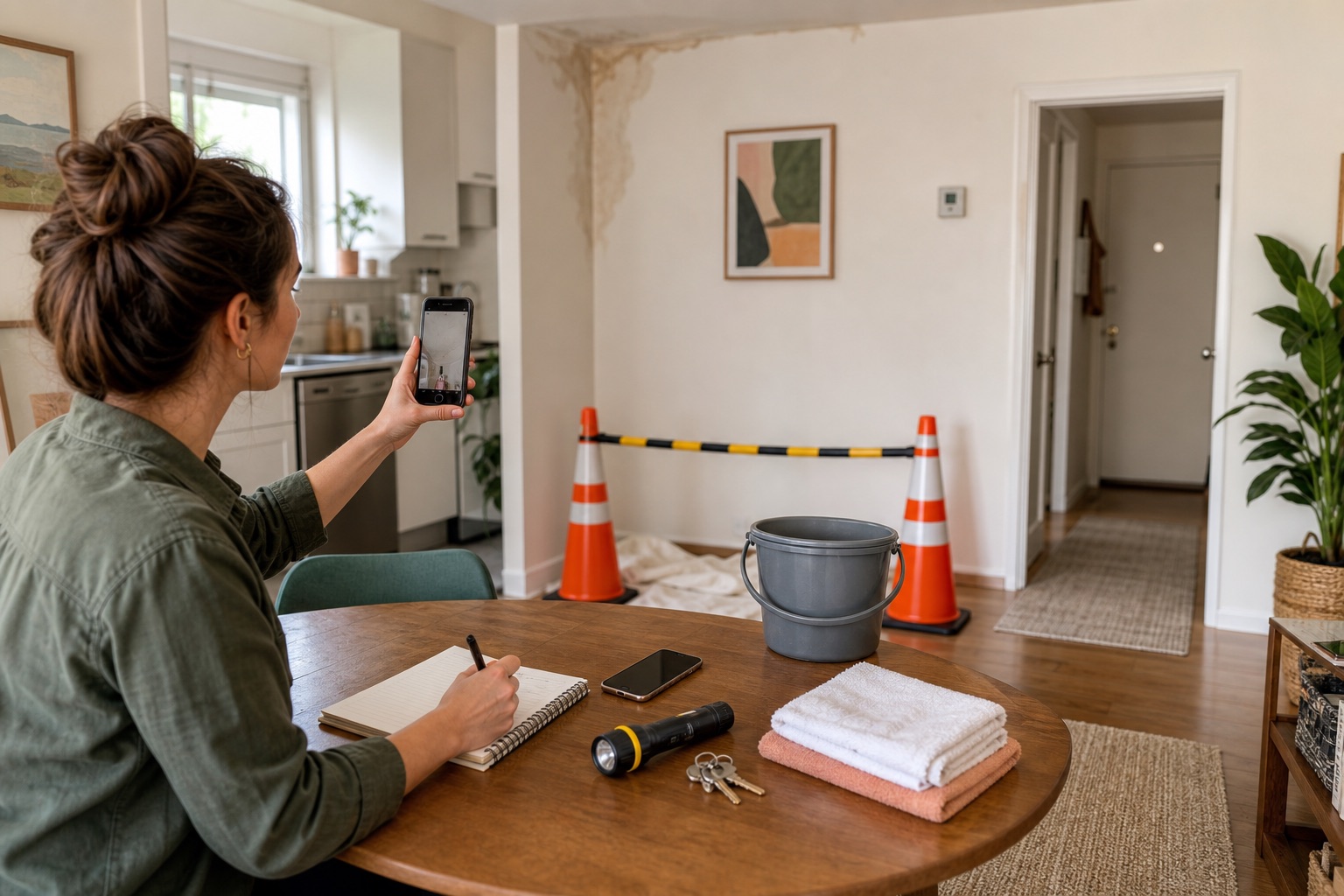
Once a maintenance request is submitted, the useful job is not to keep experimenting. It is to protect people, stop using anything unsafe, limit avoidable damage only when that can be done from a dry and stable position, and keep the request updated with new facts. This guide is a temporary safety plan, not a substitute for emergency help or the eventual repair.
By Portia Me'uan Thomas. Updated August 17, 2026. Edited for renter-aware safety.
Time: 5-20 minutes to set up and document. Difficulty: Easy. Safety: High importance — limit harm; do not attempt the repair.
Quick Answer
Choose the correct path first: leave and call the appropriate emergency service for immediate danger; use the property's urgent or emergency-maintenance channel for an unsafe or actively damaging condition; or follow the normal response window for a stable routine problem. While waiting, keep people away, stop using the affected fixture or appliance, move valuables only when it is safe, photograph any change from a distance, and record what you did and did not touch.
Before You Start
- Confirm that the request was submitted through the property's official channel and save the request number or sent message.
- Find the property's emergency-maintenance instructions before the condition changes.
- For fire, smoke, a carbon monoxide alarm, suspected gas, active sparking, fast flooding, violence, medical danger, or another immediate threat, move to safety and use the appropriate public emergency service.
- Do not approach water near an outlet, switch, cord, appliance, electrical panel, or other electrical equipment. Do not unplug or operate anything from the wet area.
- If you live alone, consider telling a trusted person what is happening, the request number, and when you expect the next update.
Tools Needed
- Charged phone
- Flashlight with working batteries
- Notes app or paper log
- Clean towels for a small dry-area drip only
- Stable bucket or bowl for a small accessible drip only
- Property emergency and routine maintenance contact information
Renter Notes
Temporary precautions do not determine or change who is responsible for the repair. Duties, emergency definitions, entry procedures, response expectations, and tenant options depend on the lease, housing program, property procedure, and applicable state or local law. Preserve the record and use location-specific resources when the process is unclear.
Step-by-Step Guide
- Classify the current condition as emergency, urgent, or stable routine maintenance. Immediate danger belongs to public emergency services as appropriate; active damage or a critical building-system failure belongs to the designated urgent property channel; a stable inconvenience can stay in the routine queue unless it changes.
What I check before the next step: Before continuing, I confirm the step stayed dry, visible, reversible, and within the lease or my comfort level. - Move yourself, other people, and pets away from the affected area. Keep exits, smoke and carbon monoxide alarms, sprinklers, and access routes clear. Do not improvise a barrier that creates a trip hazard or blocks escape.
What I check before the next step: I stay dry and hands-off with wiring or panels. Smoke, sparks, heat, burning smell, carbon monoxide alarms, repeated trips, or wet electrical areas mean stop immediately. - Stop using the affected fixture or appliance without approaching the hazard. Do not test it repeatedly, reset it repeatedly, or use it to see whether the problem has cleared.
What I check before the next step: I stay with accessible, user-facing checks only. Heat, burning smell, leaks, damaged cords, error codes, or panel access means the next step is maintenance. - For a small accessible drip, place a stable container or towels only from a dry floor and only when no electrical equipment, soft or bulging ceiling, sewage, contaminated water, or falling-material risk is present. Move valuables from a safe side of the area. Otherwise, keep away and escalate.
What I check before the next step: I look for spreading water, wet electrical areas, sewage odor, swelling, or moisture below the fixture. Any of those turns this into a stop-and-report issue. - For a slow drain or mild plumbing odor, avoid using the fixture and document the water level or odor timing. Do not run hot water as a test, reach into a disposal, remove plumbing, or pour chemical drain cleaner while waiting.
What I check before the next step: I make the note useful: date, location, what changed, one wide photo, and one close-up before I touch anything else. - For loss of heating or cooling, record the thermostat setting and room temperature from an accessible dry area, keep vents unobstructed, and follow the property's urgent-temperature procedure. Do not open HVAC equipment. Use a portable electric heater only if it is allowed, undamaged, placed on a solid flat surface at least three feet from anything combustible, plugged directly into a wall outlet, attended while on, and switched off before sleep or leaving the room.
What I check before the next step: I stay with accessible, user-facing checks only. Heat, burning smell, leaks, damaged cords, error codes, or panel access means the next step is maintenance. - For a door, lock, or window problem, confirm from the safe side that you still have an unobstructed exit. Do not remove or force hardware and do not brace a door in a way that could trap someone inside. A sole entry door that cannot secure or any exit that will not open needs urgent escalation.
What I check before the next step: I keep the door or window from trapping me while testing. Entry locks, broken latches, cracked frames, or security uncertainty belong with maintenance or a locksmith. - For an outage, use flashlights instead of candles, keep the refrigerator and freezer closed, and avoid the electrical panel if it is wet, hot, damaged, unfamiliar, or connected to burning odor, buzzing, sparks, or repeated tripping. Use the dedicated outage and breaker guides before considering any panel check.
What I check before the next step: I stay with accessible, user-facing checks only. Heat, burning smell, leaks, damaged cords, error codes, or panel access means the next step is maintenance. - For pest evidence, photograph it without disturbing it and keep people and pets away. Do not sweep or vacuum unknown rodent droppings, urine, or nesting material before following current public-health disinfection guidance; report widespread, structural, or ventilation-system evidence for professional assessment.
What I check before the next step: I make the note useful: date, location, what changed, one wide photo, and one close-up before I touch anything else. - Update the existing request when the condition changes. State the request number, date and time, new observable fact, current safety effect, temporary precaution taken, and anything you deliberately did not touch. Use the emergency channel immediately if the condition crosses a stop line.
What I check before the next step: I treat the result as information. If the problem improves, I verify once; if it stays the same or worsens, I do not keep repeating the step with more force.
Safe Next Steps
- If the result improved, do one normal-use test and finish with the checklist item: Correct routine, urgent, or emergency path selected.
- If the result is mixed, stop after the listed low-risk checks and decide whether the issue belongs with maintenance, your landlord, or a licensed professional.
- If the result did not improve or got worse, do not add force, stronger chemicals, hidden disassembly, or a new tool. Move to safety and contact the appropriate public emergency service for the stop signs listed below.
- For a rental, send a short maintenance message with where the issue is, when you noticed it, what changed, what safe check you tried, and two photos. Keep the confirmation.
Common Mistakes
- Trying one more repair after already deciding the problem belongs to maintenance.
- Approaching wet electrical equipment to unplug it or take a closer photo.
- Standing below a soft, bulging, cracked, or actively leaking ceiling to place a container.
- Using chemical drain cleaners, foggers, open flames, extension-cord heaters, or improvised door braces.
- Repeatedly resetting a breaker or restarting an appliance that trips, smells hot, sparks, or leaks.
- Sending a new disconnected message instead of updating the original request number and timeline.
Temporary renter safety and damage control
A temporary safety plan is a narrow set of actions that protects people, reduces avoidable secondary damage, and preserves a factual record until the responsible maintenance team or qualified professional arrives. It does not include diagnosing, dismantling, restarting, or repairing the underlying system.
The plan begins with triage. Immediate personal danger uses the appropriate public emergency service; an unsafe or actively damaging building condition uses the property's urgent channel; a stable inconvenience follows the normal maintenance process unless it changes.
What to Check Before You Act
This is a status-monitoring plan rather than a repair test. Record only information available from a safe position, and stop the observation the moment it would require approaching the hazard, moving damaged material, touching electricity, or restarting equipment.
| Check | Before | After | Interpretation |
|---|---|---|---|
| Time and change | First-noticed time and original photo | New time plus one changed observable fact | A meaningful change triggers a new urgency check; an unchanged condition stays in the documented response process. |
| Water boundary | Dry floor, drip location, nearby electricity, ceiling condition | Contained from a safe dry position or area left alone | Any spread, electrical involvement, contamination, or ceiling movement ends the containment path. |
| Temperature | Accessible thermostat and room reading | Trend, time, and effect on occupants | A continuing unsafe trend, vulnerable occupant risk, or freezing condition needs urgent location-specific guidance. |
| Access and security | Door locks and exit opens normally | Still secure and still opens without force | A sole entry that will not secure or an exit that will not open is an urgent stop line. |
| Request record | Request number and original channel | Update time, attachments, reply, and new channel if escalated | One continuous record makes the change and response easier to verify. |
Common Situations and Stop Points
| Symptom | Possible context | Safe first check | Stop point |
|---|---|---|---|
| Small accessible water drip | Unknown fixture or building-source moisture | From a dry stable floor, stop using the fixture and catch only a minor drip when no ceiling, electricity, sewage, or falling-material risk exists | Spreading water, wet electricity, contaminated water, fast leak, or soft/bulging/sagging ceiling |
| Slow drain or mild plumbing odor | Unknown surface or drainage condition | Avoid using the fixture and record water level, time, and odor without reaching into a disposal or opening plumbing | Rising water, backup, sewage odor, multiple affected drains, or leak |
| No heat, no cooling, or unusual HVAC behavior | Setting, power, equipment, or building-system issue | Record accessible thermostat setting and room temperature; keep vents clear and use lower-risk personal comfort measures | Gas or burning odor, CO alarm, smoke, sparks, unsafe temperature, or vulnerable occupant risk |
| Door, lock, or window problem | Alignment, hardware, frame, or security issue | Confirm from the safe side that the normal exit remains clear and usable without forcing hardware | Sole entry cannot secure, exit cannot open, glass is unstable, or suspected break-in |
| Power outage or repeated trip | Unit circuit, appliance, utility, or building issue | Use flashlights, stop using the affected equipment, keep cold-storage doors closed, and use the dedicated outage guide | Water at the panel, heat, buzzing, burning odor, sparks, damaged wiring, or repeated tripping |
| Pest evidence or unexplained material | Insect, rodent, moisture, or structural pathway | Photograph without disturbing it and keep people and pets away | Widespread droppings, nesting, ventilation contamination, bites, aggressive animals, or structural damage |
Try It or Report It?
| Situation | Beginner can try | Do not touch | Contact |
|---|---|---|---|
| Stable routine problem | Stop use, keep clear, document, and follow the official response window | Hidden parts or building systems | Routine maintenance channel |
| Active damage or critical-use failure | Move people and valuables only from a safe side; update the request | Water near electricity, damaged ceiling, sewage, HVAC interior, lock mechanism, or appliance panels | Urgent or emergency maintenance |
| Immediate personal danger | Leave or move to the safest available location | Source, equipment, alarm, flooded area, or damaged structure | Appropriate public emergency service, utility, security, and property emergency channel |
| Stable issue remains unresolved | Preserve the timeline and use the documented escalation path | Do not invent a repair or assume a universal legal remedy | Property management, housing-program contact, local housing resource, or qualified legal help |
Renter-Safe First Steps
- Stop using the affected fixture or appliance without approaching a hazard.
- Keep people and pets out while leaving exits, alarms, and response access clear.
- Move valuables only from a dry safe side of the area.
- Use towels or a stable container only for a small accessible drip with no electrical, ceiling, sewage, contamination, or falling-material risk.
- Photograph and write a status update from a safe position.
Stop Lines
- Move to safety for fire, smoke, a carbon monoxide alarm, suspected gas, active sparking, fast flooding, violence, medical danger, or structural movement.
- Do not approach or touch switches, plugs, lights, cords, appliances, breakers, panels, or wiring near water or while wet.
- Do not stand beneath or touch a soft, bulging, cracked, sagging, shedding, or rapidly leaking ceiling.
- Stop before chemical drains, pest foggers, open flames, extension-cord heaters, repeated resets, dismantling, force, or hidden parts.
- Escalate when a sole entry will not secure, an exit will not open, temperature becomes unsafe, sewage appears, or damage begins spreading.
Additional FAQ
Should I keep checking the problem every few minutes?
No. Keep distance and use a reasonable observation point only when the area remains safe. Repeated close checks can expose you to a changing hazard. Update the request when there is a meaningful new fact.
Can I move a wet bucket after it fills?
Only if the path and floor remain dry, stable, and free of electrical or falling-material hazards. If the setup becomes heavy, unstable, contaminated, close to electricity, or beneath damaged material, leave it and escalate.
What if maintenance tells me to take another step?
Ask for the instruction through the official channel and make sure it is specific to the property. Do not follow it if conditions have changed, you cannot identify the part, or the action would expose you to electricity, gas, contaminated water, height, force, or damaged structure.
Does taking temporary precautions make me responsible for the repair?
This guide cannot determine responsibility. A narrow safety precaution and a clear record show what happened, but duties and liability depend on the facts, lease, housing program, insurance, and local law.
Related Next Steps
- How to Write a Clear Maintenance Request (Renter Templates + Photo Checklist) - Submit a clear original request and preserve the correct system-of-record details.
- Small Water Leak: What to Do While Waiting for Maintenance - Use the dedicated narrow plan for a small accessible leak with explicit electrical and ceiling stop lines.
- Heat or AC Stopped in an Apartment: Safe First Moves - Use temperature tracking and HVAC-specific emergency boundaries.
- Power Outage Alone: A Calm Apartment Safety Plan - Follow outage lighting, food, charging, and carbon-monoxide guidance.
- Front Door Security Check for Renters - Document entry security without altering the lock or blocking egress.
- Pest Evidence in a Rental: Where to Check First - Record pest evidence without disturbing material that may need public-health precautions.
- Safe to DIY? A Renter's Home Repair Filter - Use the broader stop-point filter before any temporary action becomes a repair attempt.
What Not to Do
- Do not open walls, ceilings, appliance panels, electrical covers, HVAC equipment, lock cases, or hidden plumbing.
- Do not touch switches, plugs, lights, cords, appliances, breakers, or panels when water or damp surfaces are nearby.
- Do not use candles for outage lighting or a grill, generator, camp stove, or other fuel-burning equipment indoors.
- Do not block exits, disable alarms, cover detectors, remove doors, or create a trip hazard around the affected area.
- Do not sweep or vacuum unknown rodent waste before appropriate disinfection guidance is followed.
- Do not assume that a generic online deadline or legal remedy applies to the property or location.
When to Pause and Ask for Help
Move to safety and contact the appropriate public emergency service for fire, smoke, a carbon monoxide alarm, suspected gas, active sparking, fast flooding, violence, medical danger, structural movement, or any condition that makes the home unsafe to remain in. Use emergency maintenance for active water damage, sewage, a failed sole entry lock, an unusable exit, dangerous indoor temperature, failed life-safety equipment, or another urgent building-system problem. For unresolved stable repairs, preserve the record and use the property's escalation path plus local housing or tenant resources when needed.
FAQ
How often should I update maintenance while I wait?
Update the request when there is a meaningful change in severity, location, safety effect, or damage—not for every unchanged observation. For a stable issue, use the property's published response window and follow-up process rather than an assumed universal deadline.
Can I unplug an appliance if water is nearby?
Do not approach or touch the plug, cord, appliance, switch, or outlet from a wet area or while you are wet. Keep people away and use the appropriate urgent or emergency channel. Electrical isolation should come from a known safe location and qualified guidance, not an improvised reach around water.
Can I put a bucket under a ceiling leak?
Only for a small drip when the floor is dry, the ceiling is firm and unchanged, and you can place the container without standing under a damaged area. If the ceiling is soft, bulging, cracked, sagging, shedding material, near electricity, or leaking rapidly, move away and escalate instead.
Is a portable space heater safe while the heat is out?
It adds fire and electrical risk. If property rules allow it, use only an undamaged listed unit on a solid flat surface, keep at least three feet of clearance, plug it directly into a wall outlet, keep it attended, and turn it off before sleeping or leaving. Never use an extension cord or power strip.
What should I write in a worsening-condition update?
Include the original request number, exact time, the new observable fact, how it changes safety or normal use, the temporary precaution taken, updated photos if safe, and the response you are requesting. Do not guess the cause.
What if the property does not respond?
Keep confirmations, photos, timestamps, follow-ups, and any promised response window. Use the property's documented escalation path, then consult a local housing agency, tenant resource, housing-program contact, or qualified legal resource for rules that apply where you live.
Final Checklist
- Correct routine, urgent, or emergency path selected
- People and pets kept away from the affected area
- Exits and alarms left clear and usable
- Affected fixture or appliance no longer being used
- No wet electrical equipment approached or touched
- Only dry, stable, low-risk containment used
- Original condition and meaningful changes photographed safely
- Time, status, and temporary precaution recorded
- Original request number included in the update
- What was not touched stated clearly
- Trusted contact informed if useful
- Escalation channel ready if the condition changes
References
Use these official resources as background context. Product manuals, lease rules, local requirements, property maintenance instructions, and qualified professional advice should still come first for your exact home.
- Ways to protect yourself and others from shock or electrocution - U.S. Consumer Product Safety Commission. Use as the electrical boundary: do not touch electrical products or wiring when wet or in contact with wet surfaces.
- Portable heater fire safety - U.S. Fire Administration. Portable heaters need a solid flat surface, at least three feet of clearance, an undamaged cord, and a direct wall-outlet connection rather than an extension cord or power strip.
- How to clean up after rodents - Centers for Disease Control and Prevention. Do not sweep or vacuum rodent urine, droppings, or nesting material before it has been disinfected according to public-health guidance.
- Power outages - Ready.gov. Use for flashlight, food, charging, generator, and carbon-monoxide safety while power is out.
You May Also Like
More beginner-safe guides that connect to this repair, the same room, or the next safety decision a renter may need.
- How to Write a Clear Maintenance Request (Renter Templates + Photo Checklist) - Write a clear rental maintenance request with copy-ready templates, a privacy-aware photo checklist, urgency guidance, and a simple follow-up log.
- Small Water Leak: What to Do While Waiting for Maintenance - Contain a small apartment water leak while waiting for maintenance, document the damage, avoid electrical danger, and know when to escalate.
- Heat or AC Stopped in an Apartment: Safe First Moves - Handle apartment heat or AC problems safely while you document the issue and contact maintenance.
- Power Outage Alone: A Calm Apartment Safety Plan - A calm power outage plan for people living alone, with clear electrical safety boundaries.
- Front Door Security Check for Renters - Improve front-door confidence with renter-safe checks, habits, and clear lock repair boundaries.
- Pest Evidence in a Rental: Where to Check First - Look for early pest evidence in a rental apartment and report it before the problem spreads.
- Safe to DIY? A Renter's Home Repair Filter - Use a simple safety filter before deciding whether to DIY a repair in your first place.
- Move-In Inspection Before You Unpack - Inspect a rental apartment before unpacking so you can document damage, leaks, locks, and safety issues early.