Front Door Security Check for Renters
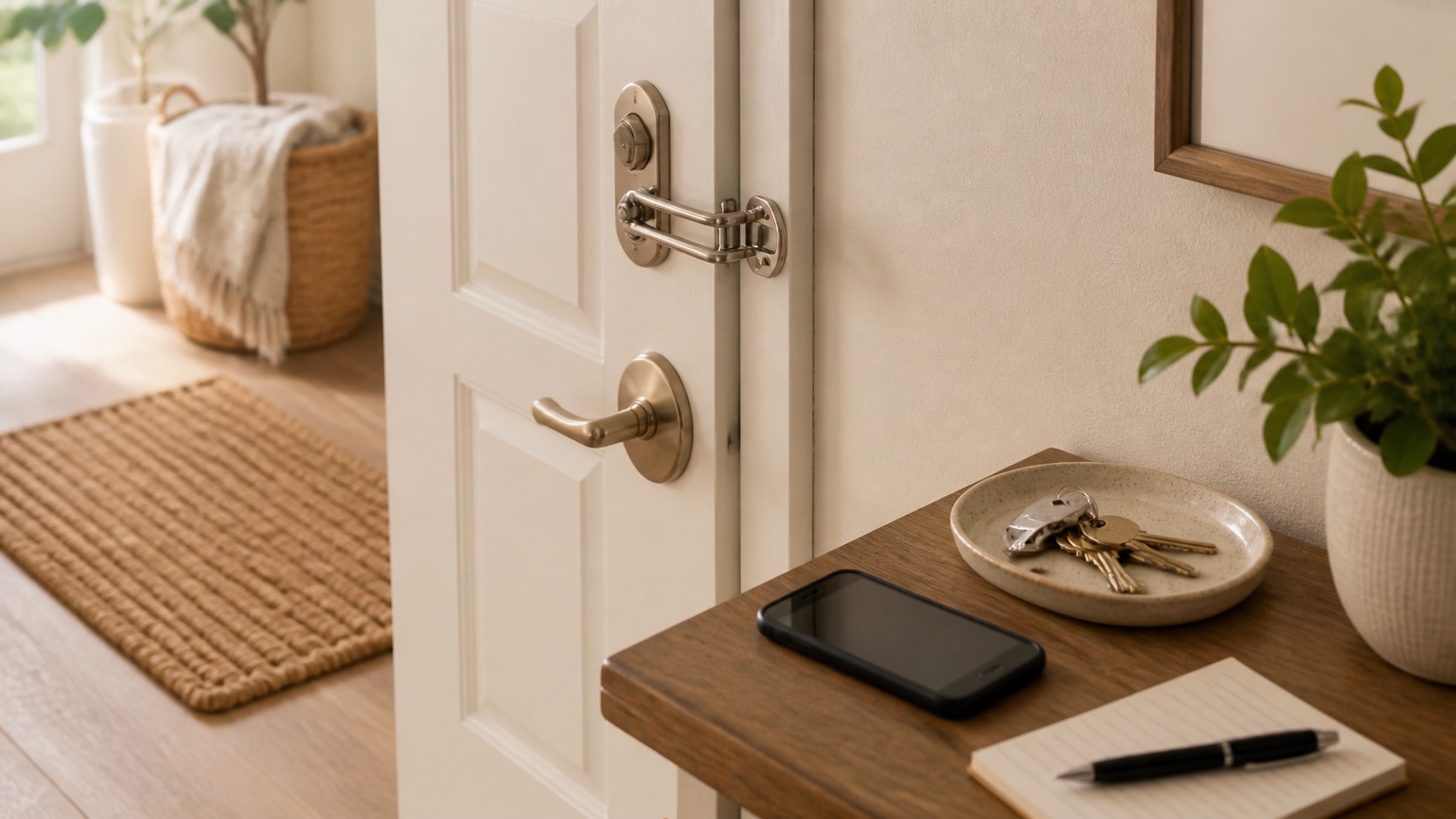
Start here if you live alone or are new to an apartment and want your entry door to feel more secure. This guide focuses on inspection, documentation, lighting, routines, and landlord-approved changes, not lock replacement or door modification.
By Portia Me'uan Thomas. Updated August 17, 2026. Edited for renter-aware safety.
Time: 20-30 minutes. Difficulty: Easy. Safety: High importance.
Quick Answer
Check that the door closes, latches, locks, and peephole work; document gaps, loose hardware, or damaged strike plates; improve lighting and habits; and ask the landlord about approved security devices. Report any lock, frame, or forced-entry concern immediately.
Material Fit
Hardware and setup tasks depend on what the screw or load is biting into. When the material is unknown, I stop before drilling or anchoring.
| Material or surface | Safest first method | Conditional next method | Avoid / stop line |
|---|---|---|---|
| Solid wood or sturdy cabinet face | Hand-tighten visible screws a quarter-turn at a time. | Use normal-use testing before adding load. | Stop for splitting, spinning screws, or shifting alignment. |
| Particleboard / MDF furniture | Gentle cam-lock or screw adjustment only. | Unload shelves before testing. | Avoid over-tightening; it can crumble the material. |
| Drywall or plaster wall | Use removable or approved methods first. | Anchors only with landlord approval and correct hardware. | Stop if the wall crumbles, flexes, or hides utilities. |
| Tile, brick, metal frame, entry door | Document and request approval or maintenance. | Professional installation may be needed. | Do not drill or modify without written permission. |
Before You Start
- Do the check during daylight if possible so you can see the frame and threshold clearly.
- Keep the door open while inspecting hardware so you do not lock yourself out.
- Know your building's maintenance or emergency contact process before there is a lock problem.
Tools Needed
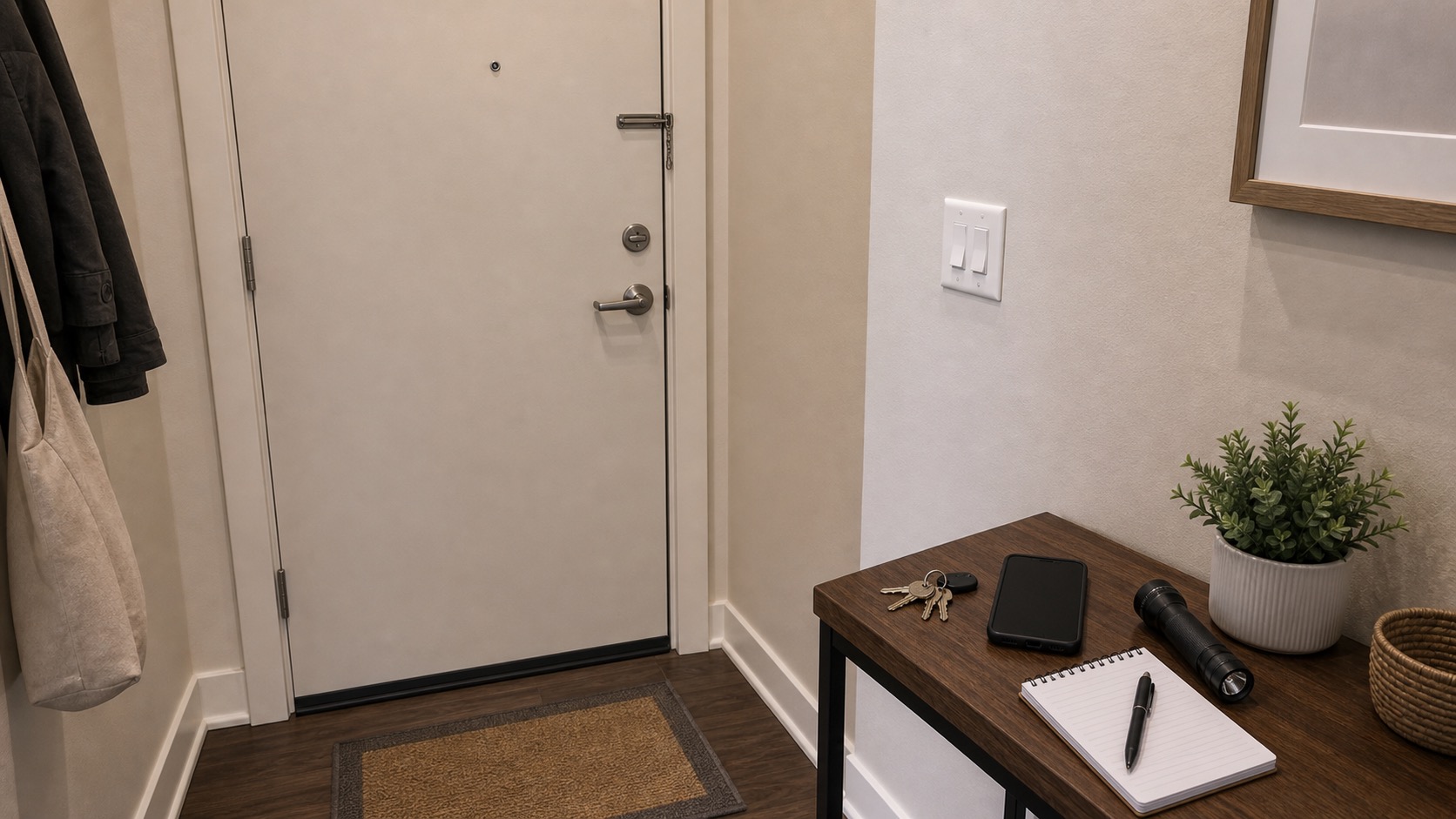
- Phone camera
- Flashlight
- Notepad or notes app
- Small screwdriver only for loose visible interior screws if allowed
- Rug pad or door mat if needed
Renter Notes
Entry locks, door frames, peepholes, and strike plates are usually landlord-controlled. Do not change locks, drill into the door, or add hardware without written permission.
Step-by-Step Guide
- Close the door normally and confirm it latches without lifting, slamming, or pushing hard.
What I check before the next step: I keep the door or window from trapping me while testing. Entry locks, broken latches, cracked frames, or security uncertainty belong with maintenance or a locksmith. - Lock and unlock every provided lock from inside while checking for sticking or looseness.
What I check before the next step: I keep the door or window from trapping me while testing. Entry locks, broken latches, cracked frames, or security uncertainty belong with maintenance or a locksmith. - Inspect the strike plate, hinges, door frame, threshold, peephole, and weatherstripping for damage or gaps.
What I check before the next step: I keep the door or window from trapping me while testing. Entry locks, broken latches, cracked frames, or security uncertainty belong with maintenance or a locksmith. - Take photos of loose screws, cracked wood, missing hardware, or signs of forced entry.
What I check before the next step: I make the note useful: date, location, what changed, one wide photo, and one close-up before I touch anything else. - Improve non-permanent basics such as keeping the entry light working, using the peephole, and not hiding spare keys outside.
What I check before the next step: I keep the door or window from trapping me while testing. Entry locks, broken latches, cracked frames, or security uncertainty belong with maintenance or a locksmith. - Ask your landlord in writing before adding door bars, chain locks, smart locks, cameras, or any drilled hardware.
What I check before the next step: I keep the door or window from trapping me while testing. Entry locks, broken latches, cracked frames, or security uncertainty belong with maintenance or a locksmith.
Safe Next Steps
- If the result improved, do one normal-use test and finish with the checklist item: Door latches normally.
- If the result is mixed, stop after the listed low-risk checks and decide whether the issue belongs with maintenance, your landlord, or a licensed professional.
- If the result did not improve or got worse, do not add force, stronger chemicals, hidden disassembly, or a new tool. Contact your landlord, maintenance team, or a licensed locksmith for the stop signs listed below.
- For a rental, send a short maintenance message with where the issue is, when you noticed it, what changed, what safe check you tried, and two photos. Keep the confirmation.
Common Mistakes
- Changing locks without permission and creating lease or emergency-access problems.
- Ignoring a door that only locks when lifted or slammed.
- Relying on a decorative chain instead of reporting a damaged latch or frame.
Entry security documentation
front door security concern is treated here as a beginner observation and control problem first, not a chance to prove you can take apart the home. The safe version is visible, reversible, and easy to stop.
For renters, the important line is ownership. You can usually observe, photograph, time, clean lightly, or tighten a visible non-security part, but hidden systems, building-owned fixtures, and lease-controlled hardware belong to maintenance.
What to Check Before You Act
Use this as a door-confidence checklist, not a lock-repair test. If the lock fails, skip the experiment and contact help.
| Check | Before | After | Interpretation |
|---|---|---|---|
| Latch catch | Closes normally? yes/no | Record needs lift/slam/push? | Any force means maintenance. |
| Deadbolt travel | Turns smoothly? yes/no | Record sticks/rubs/free | Sticking locks can worsen. |
| Frame gap | Even gap photo | Record gap notes | Gaps help maintenance diagnose alignment. |
| Lighting/peephole | Usable? yes/no | Record visibility note | Security is also visibility and routine. |
Common Situations and Stop Points
| Symptom | Possible context | Safe first check | Stop point |
|---|---|---|---|
| Door locks only when lifted | Alignment or strike issue | Document latch behavior | No drilling |
| Loose deadbolt | Hardware or door damage | Photograph | Entry lock work |
| Peephole missing/cloudy | Hardware issue | Report | Do not modify door |
| Signs of forced entry | Security incident | Stay safe | Emergency/property contact |
Try It or Report It?
| Situation | Beginner can try | Do not touch | Contact |
|---|---|---|---|
| Routine confidence check | Test latch/lock from inside and photograph | Lock cylinder or strike drilling | Maintenance for defects |
| Broken lock | Stay safe and document | DIY lock replacement | Urgent property/locksmith channel |
| Add-on security device | Ask in writing | Drilled or exit-blocking hardware | Landlord approval |
| Immediate threat | Leave or shelter safely | Confrontation | Emergency services |
Renter-Safe First Steps
- Test lock from inside.
- Photograph frame and strike.
- Improve lighting habits.
- Ask before add-on devices.
Stop Lines
- Stop if the door does not latch.
- Stop if the lock sticks or fails.
- Stop for forced-entry signs.
- Stop before changing locks.
- Stop before blocking emergency exit.
Additional FAQ
Can I install a smart lock?
Only with written approval and a plan for property access, emergency access, and move-out restoration.
Are portable door bars allowed?
Maybe, but they must not block emergency exit or violate building rules. Ask first.
What if I lost my keys?
Report it through the property process and ask about rekeying or fob deactivation.
Related Next Steps
- Lost Keys or Locked Out: What to Do First - Lost keys and lockout process.
- Loose Interior Door Handle: A Safe One-Person Tightening Check - Interior handles are lower risk than entry locks.
- Move-In Inspection Before You Unpack - Document entry condition at move-in.
- Safer Mail and Package Habits for Apartment Living - Keep mailroom and package habits aligned with entry security.
What Not to Do
- Do not drill into an entry door or frame without written approval.
- Do not block required exits or install devices that prevent emergency access.
- Do not confront suspected intruders or investigate suspicious activity alone.
When to Pause and Ask for Help
Contact your landlord, maintenance team, or a licensed locksmith for loose locks, damaged frames, missing strike plates, broken peepholes, lost keys, or signs of forced entry. Call emergency services if someone is trying to enter, you feel threatened, or there is immediate danger.
FAQ
Can I change my apartment lock?
Usually only with landlord approval. Many leases require management to keep emergency access or use approved hardware.
What should I report first?
Report any lock that sticks, does not latch, moves in the door, or requires lifting the door to lock.
Are portable door bars allowed?
Rules vary. Ask your landlord and make sure any device does not block emergency exit or required access.
What if I lost my keys?
Contact your landlord or property manager immediately and follow their lock or rekey process.
Final Checklist
- Door latches normally
- Locks tested from inside
- Frame and strike plate inspected
- Peephole and lighting checked
- Photos taken for damage
- No unapproved drilling or lock changes
- Urgent security concerns reported
You May Also Like
More beginner-safe guides that connect to this repair, the same room, or the next safety decision a renter may need.
- Loose Interior Door Handle: A Safe One-Person Tightening Check - Tighten a loose interior door handle safely, with renter-aware stop points for locks and entry doors.
- Sticky Apartment Door: Find the Rub Before You Force It - Troubleshoot a sticky interior apartment door with safe, reversible first steps.
- Apartment Smoke Detector Test: A Safe Monthly Check - Learn how to test an apartment smoke detector with its test button, what a failed test or chirp means, and when renters should call maintenance.
- When Not to DIY a Home Repair - Clear stop signs for repairs that are unsafe, lease-sensitive, or require licensed help.
- Quiet a Squeaky Door Without Pulling Hinge Pins - Quiet a squeaky apartment door hinge without removing the door or pulling hinge pins.
- Lost Keys or Locked Out: What to Do First - Handle lost keys or an apartment lockout without damaging the door, lock, or lease relationship.
- Move-In Inspection Before You Unpack - Inspect a rental apartment before unpacking so you can document damage, leaks, locks, and safety issues early.
- First Apartment Maintenance Checklist - A realistic monthly checklist for keeping a first apartment safer and easier to manage.