Slow Bathroom Sink: Renter-Safe First Checks Before Maintenance
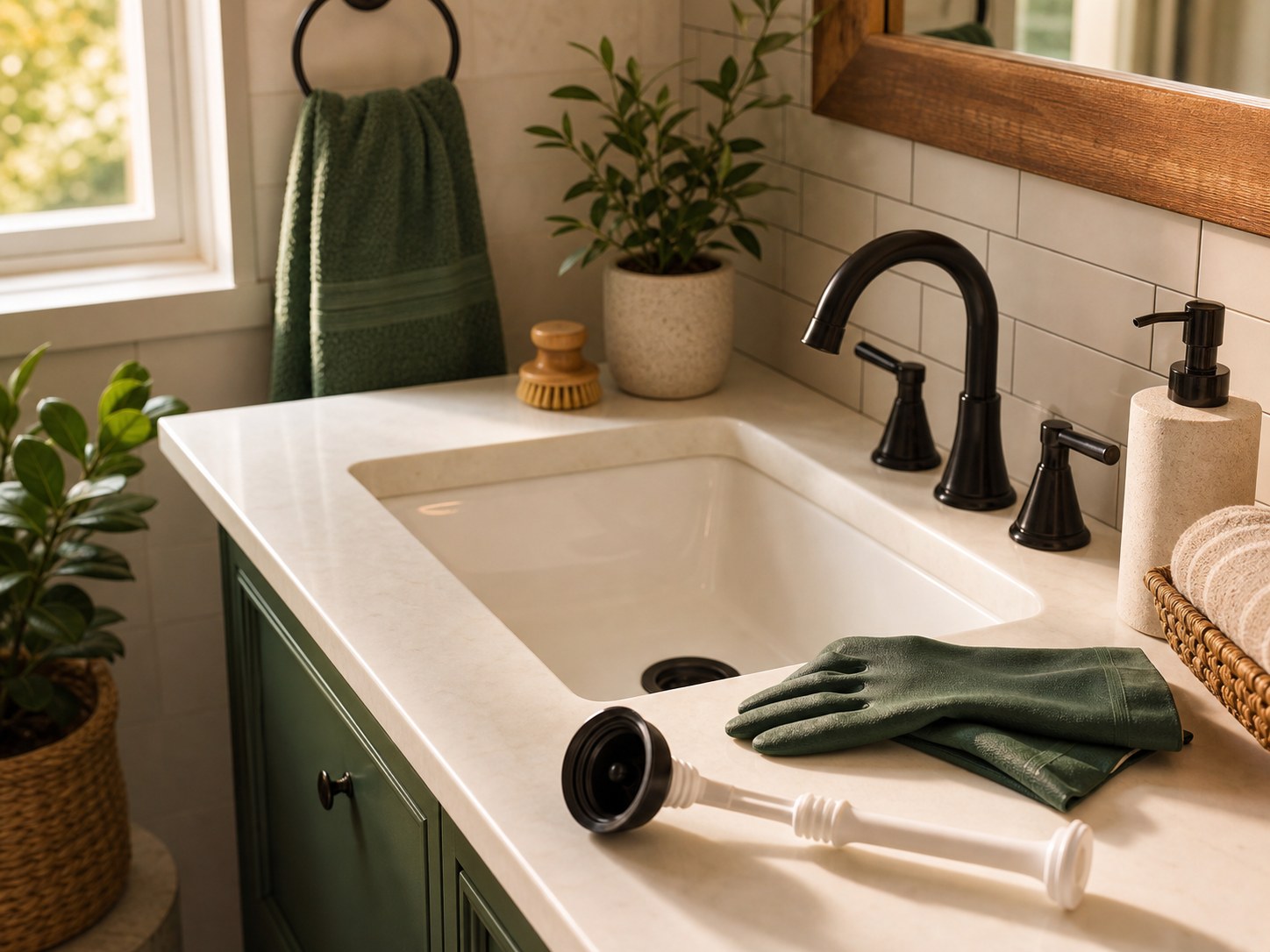
Use this when a bathroom sink drains slowly from hair, soap residue, or buildup near the stopper. Do not use this guide for sewage odors, multiple backed-up fixtures, active leaks, or standing water that will not move.
By Portia Me'uan Thomas. Updated August 17, 2026. Edited for renter-aware safety.
Time: 15-25 minutes. Difficulty: Easy to moderate. Safety: Low if chemicals are avoided.
Quick Answer
Remove visible hair from the stopper area, flush with hot tap water, use a sink plunger with the overflow covered, and try a short plastic drain snake near the opening. If water backs up elsewhere or you see a leak, stop and call maintenance.
Before You Start
- Do not mix drain cleaners with any other product.
- Clear the cabinet under the sink so you can spot leaks.
- Run water briefly and note whether it drains slowly or not at all.
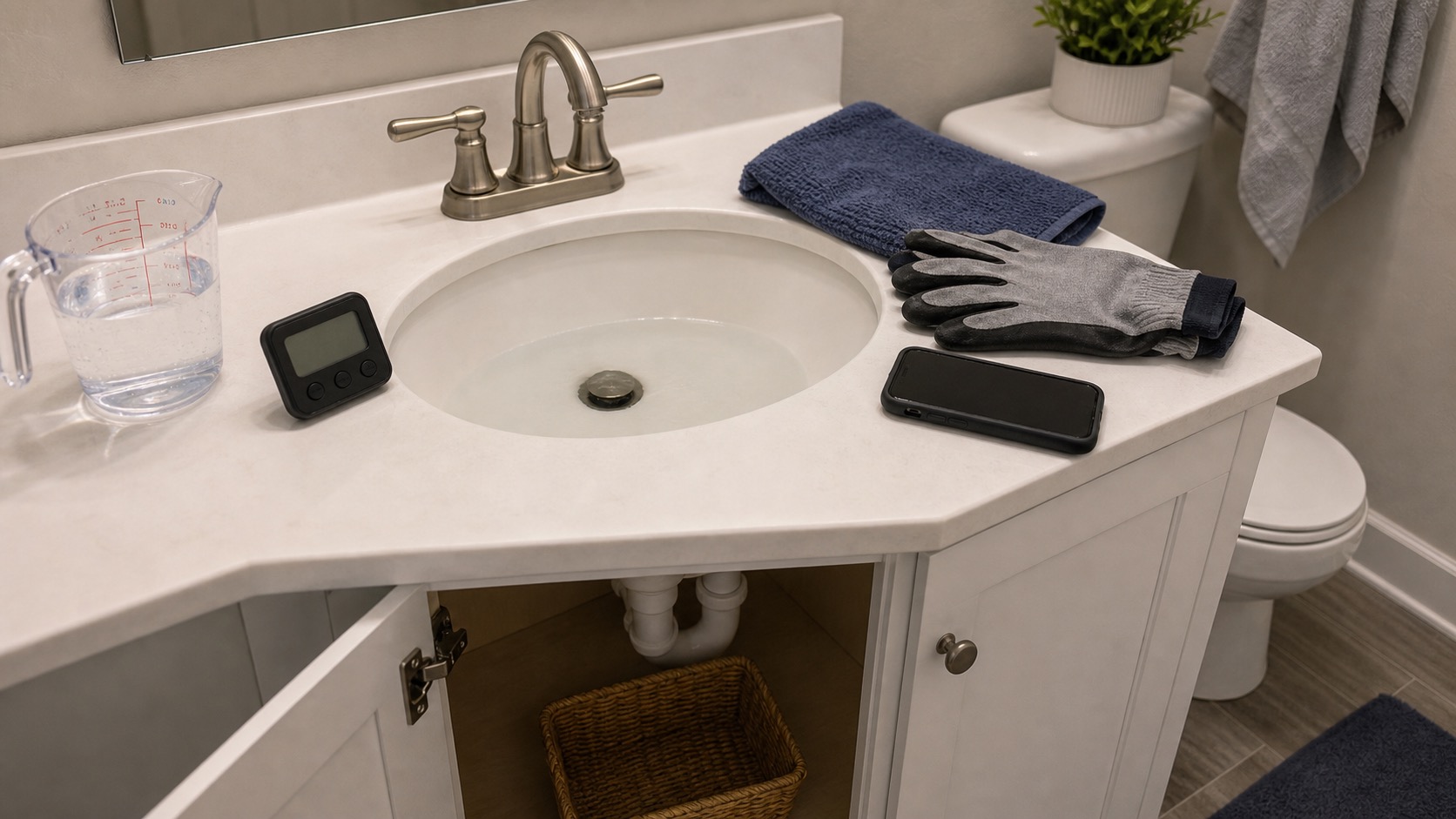
Tools Needed
- Rubber gloves
- Paper towels
- Small sink plunger
- Damp rag for overflow opening
- Short plastic drain snake
- Bucket for checking under-sink leaks
Renter Notes
Many leases expect tenants to report plumbing problems early. Do not disassemble pipes, use harsh drain chemicals, or force a metal snake into shared apartment plumbing without approval.
Step-by-Step Guide
- Put on gloves and remove hair or debris you can reach at the drain opening.
What I check before the next step: I look for spreading water, wet electrical areas, sewage odor, swelling, or moisture below the fixture. Any of those turns this into a stop-and-report issue. - Run hot tap water for 30-60 seconds and watch whether the drain improves.
What I check before the next step: I look for spreading water, wet electrical areas, sewage odor, swelling, or moisture below the fixture. Any of those turns this into a stop-and-report issue. - Cover the overflow hole with a damp rag so the plunger can create suction.
What I check before the next step: Before continuing, I confirm the step stayed dry, visible, reversible, and within the lease or my comfort level.
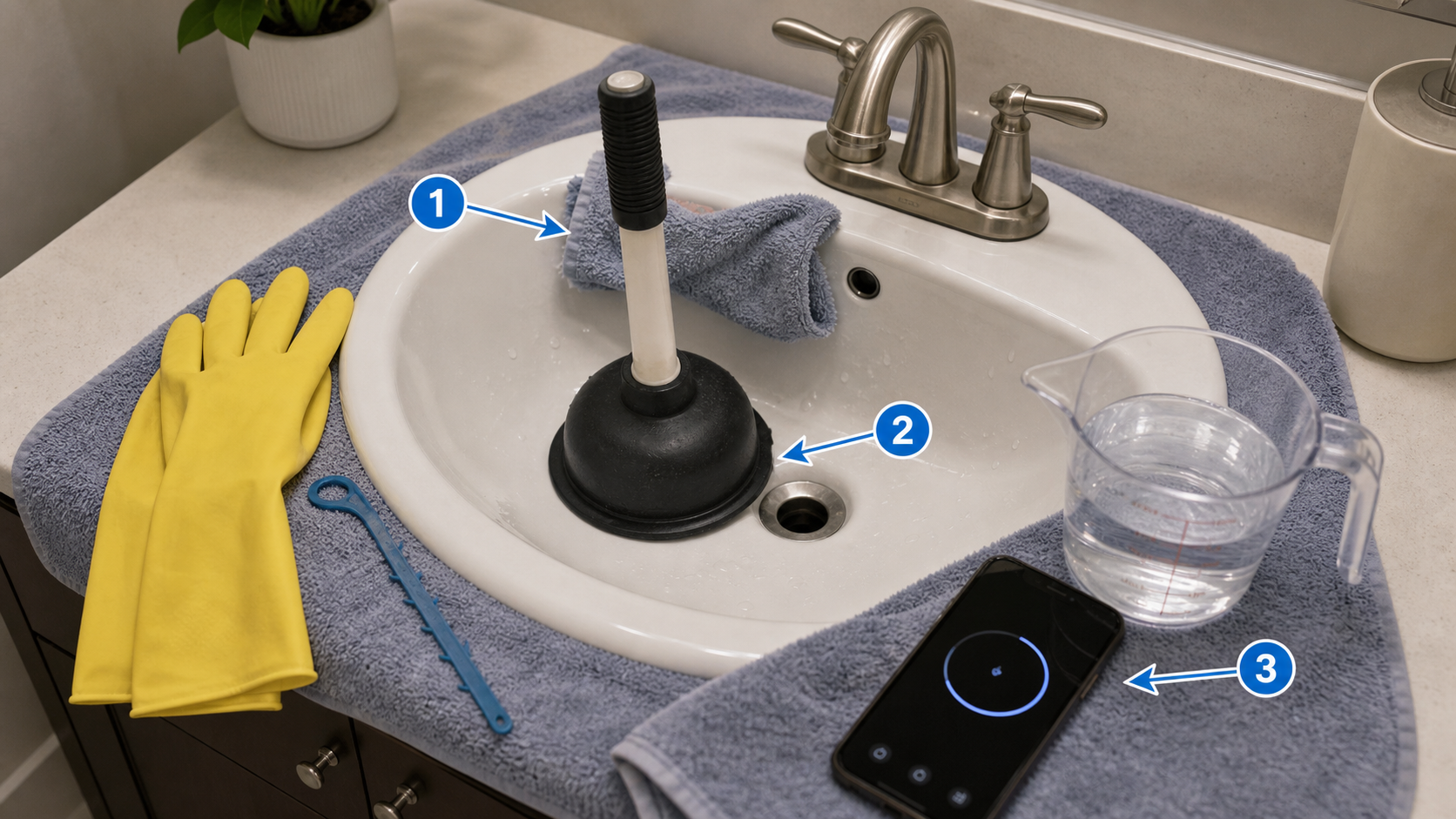
- Use a sink plunger with gentle, short pumps, then lift straight up.
What I check before the next step: I look for spreading water, wet electrical areas, sewage odor, swelling, or moisture below the fixture. Any of those turns this into a stop-and-report issue. - If needed, use a short plastic drain snake only near the drain opening and pull debris out slowly.
What I check before the next step: I look for spreading water, wet electrical areas, sewage odor, swelling, or moisture below the fixture. Any of those turns this into a stop-and-report issue. - Run water again and check under the sink for drips.
What I check before the next step: I look for spreading water, wet electrical areas, sewage odor, swelling, or moisture below the fixture. Any of those turns this into a stop-and-report issue.
Safe Next Steps
- If the result improved, do one normal-use test and finish with the checklist item: Visible hair removed.
- If the result is mixed, stop after the listed low-risk checks and decide whether the issue belongs with maintenance, your landlord, or a licensed professional.
- If the result did not improve or got worse, do not add force, stronger chemicals, hidden disassembly, or a new tool. Call maintenance if any stop sign appears.
- For a rental, send a short maintenance message with where the issue is, when you noticed it, what changed, what safe check you tried, and two photos. Keep the confirmation.
Common Mistakes
- Using a toilet plunger in a sink.
- Pouring chemical cleaner into a drain after plunging, which can splash back.
- Ignoring a slow leak under the sink after the clog improves.
Bathroom sink drain timing
slow bathroom sink is treated here as a beginner observation and control problem first, not a chance to prove you can take apart the home. The safe version is visible, reversible, and easy to stop.
For renters, the important line is ownership. You can usually observe, photograph, time, clean lightly, or tighten a visible non-security part, but hidden systems, building-owned fixtures, and lease-controlled hardware belong to maintenance.
What to Check Before You Act
Run the drain-time test only if the basin can empty and there is no leak below. Do not keep adding water to a sink that is close to overflowing.
| Check | Before | After | Interpretation |
|---|---|---|---|
| Baseline drain time | One cup of water added | Record seconds to empty | Shows whether the drain is slow or nearly blocked. |
| Visible hair removal | Drain opening photographed | Record seconds after debris removal | Measures the safest first improvement. |
| Hot tap-water flush | No chemicals used | Record seconds after flush | Useful only for light soap buildup. |
| Gentle plunger test | Overflow covered with damp rag | Record seconds after plunging | Stop if water appears below or in another fixture. |
Common Situations and Stop Points
| Symptom | Possible context | Safe first check | Stop point |
|---|---|---|---|
| Water drains slowly but steadily | Hair or soap near stopper | Remove visible debris and retime | Recurring clog within days |
| Sink gurgles | Vent or shared drain issue | Stop adding water and document | Call maintenance |
| Cabinet gets wet | Drain leak or loose connection | Stop using sink and photograph | Leak protocol |
| Another fixture backs up | Shared line backup | Do not plunge further | Maintenance immediately |
Try It or Report It?
| Situation | Beginner can try | Do not touch | Contact |
|---|---|---|---|
| Slow single sink | Timing, visible hair removal, hot tap water, gentle sink plunger | P-trap, wall pipe, metal snake, chemicals | Maintenance if not improved |
| Standing water nearly full | Stop adding water and document | Chemical cleaner or aggressive plunging | Maintenance |
| Leak under sink | Bucket if safe, photos | Pipe tightening | Urgent maintenance |
| Sewage odor or multi-fixture backup | Avoid use and isolate area | Drain chemicals | Emergency maintenance |
Renter-Safe First Steps
- Time a small amount of water.
- Remove visible hair near the opening.
- Use hot tap water, not boiling water.
- Use a sink plunger gently with the overflow covered.
Stop Lines
- Stop for leaks under the sink.
- Stop for sewage smell.
- Stop if another drain backs up.
- Stop if standing water will not move.
- Stop before chemicals or pipe disassembly.
Additional FAQ
Should I use baking soda and vinegar?
It may freshen light residue, but it is not a reliable hair-clog fix. Mechanical removal and timing tell you more.
Can I remove the stopper?
Only if it is a simple removable stopper you can reinstall. Take a photo first and stop if it resists.
What should I tell maintenance?
Give the drain time, what you removed, whether you used chemicals, and whether any leak or gurgle appeared.
Related Next Steps
- Under-Sink Leak Check: What to Look For Before Touching Plumbing - Check for leaks after any drain work.
- Slow Shower Drain: Safe Hair and Soap Buildup Cleanup - Compare shower drain stop lines.
- When Not to DIY a Home Repair - Shared plumbing belongs outside beginner DIY.
What Not to Do
- Do not use multiple chemical drain cleaners.
- Do not force a metal snake into apartment plumbing.
- Do not take apart the P-trap unless you know your lease allows it and you can manage leaks.
When to Pause and Ask for Help
Call maintenance if two fixtures back up at once, water leaks under the sink, sewage odor appears, the clog returns within days, or standing water will not drain after gentle first steps.
FAQ
Is boiling water safe for a bathroom sink?
Use hot tap water instead. Boiling water can stress some sink materials and pipe connections.
Can baking soda and vinegar help?
It may freshen light buildup, but it is not a reliable fix for hair clogs. Mechanical removal works better.
Should I remove the stopper?
Only remove simple stopper parts you understand and can reinstall. Take a photo first.
When is it definitely a maintenance issue?
Leaks, recurring clogs, sewage smells, or multiple slow drains should be reported.
Final Checklist
- Visible hair removed
- Overflow covered before plunging
- No harsh chemical mixing
- Drain retested
- Under-sink area checked for leaks
References
Use these official resources as background context. Product manuals, lease rules, local requirements, property maintenance instructions, and qualified professional advice should still come first for your exact home.
- Drain cleaner poisoning - MedlinePlus. Use as background for why harsh drain chemicals, mixing products, and splash exposure are not beginner-friendly steps.
- Safer Choice - U.S. Environmental Protection Agency. Use as general context for choosing safer household cleaning products and reading labels before use.
You May Also Like
More beginner-safe guides that connect to this repair, the same room, or the next safety decision a renter may need.
- Running Toilet in an Apartment: What You Can Check Safely - Check a running toilet tank without replacing plumbing parts or risking a leak.
- First Apartment Maintenance Checklist - A realistic monthly checklist for keeping a first apartment safer and easier to manage.
- Apartment Showerhead Replacement: The Renter-Safe Version - Find out whether renters can replace an apartment showerhead, how to ask permission, save the original part, and avoid damaging wall plumbing.
- When Not to DIY a Home Repair - Clear stop signs for repairs that are unsafe, lease-sensitive, or require licensed help.
- Under-Sink Leak Check: What to Look For Before Touching Plumbing - Check under a kitchen or bathroom sink for early leak signs without taking plumbing apart.
- Small Water Leak: What to Do While Waiting for Maintenance - Contain a small apartment water leak while waiting for maintenance, document the damage, avoid electrical danger, and know when to escalate.
- Slow Shower Drain: Safe Hair and Soap Buildup Cleanup - Clear hair and soap buildup from a slow shower drain without harsh chemicals or pipe damage.
- Garbage Disposal Smell: Safe Cleaning Without Reaching Inside - Freshen a garbage disposal with safe cleaning steps and clear stop points for jams or leaks.