HVAC Air Filter First Check: What Renters Can Safely Do
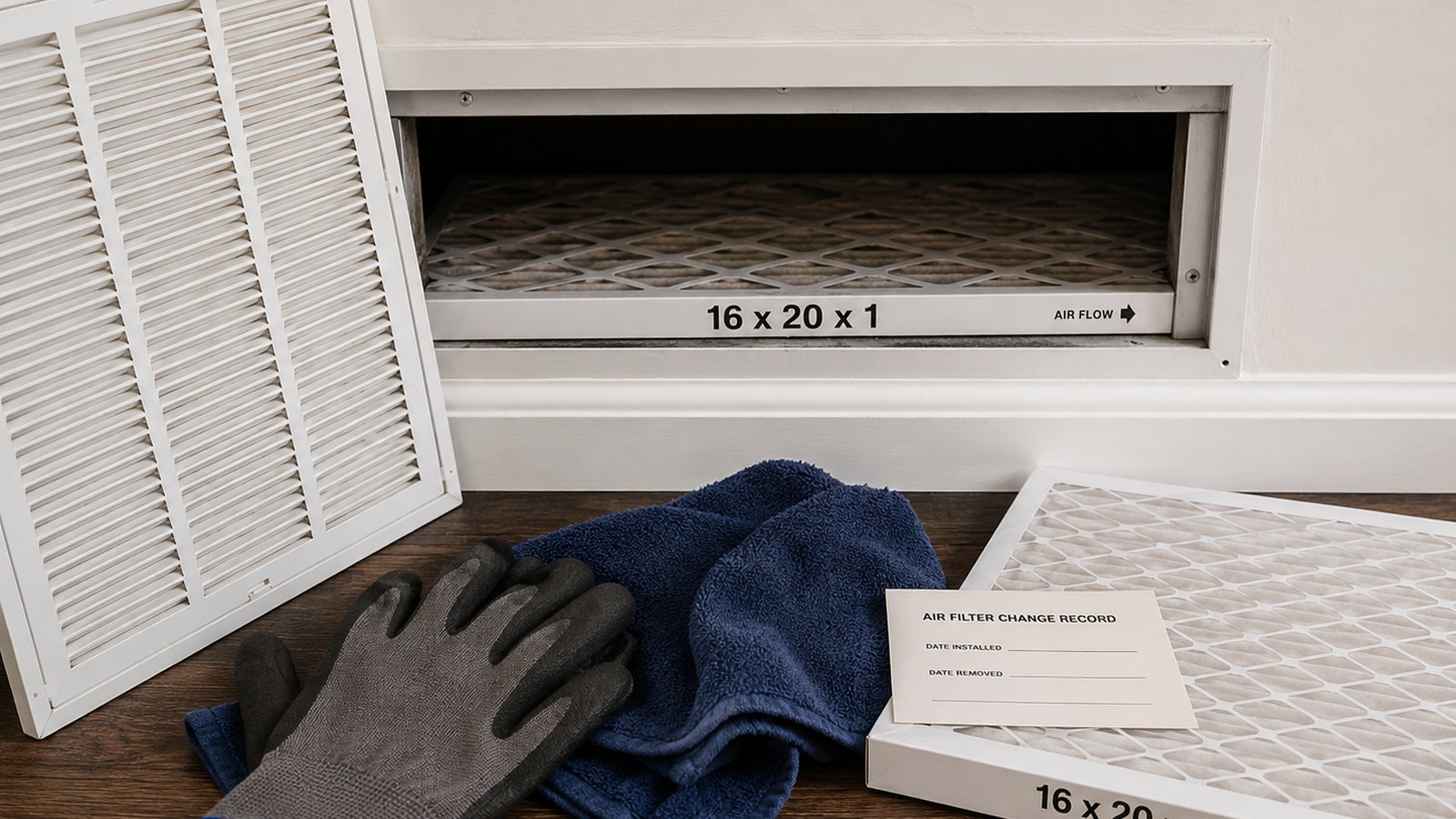
Start here if apartment air feels dusty, airflow seems weak, or your move-in checklist mentions a washable HVAC filter. This guide is for accessible return-air filters, not furnace repair, refrigerant, ducts, or locked mechanical equipment.
By Portia Me'uan Thomas. Updated August 17, 2026. Edited for renter-aware safety.
Time: 15 minutes active work, plus full drying time. Difficulty: Easy if the filter is accessible. Safety: Low to medium.
Quick Answer
Turn the system off, find the filter, check whether it is washable or disposable, photograph the airflow direction, clean only a reusable filter with gentle rinsing, let it dry completely, and reinstall it the same way. Contact maintenance if the filter is disposable, missing, damaged, moldy, or hard to access.
Before You Start
- Turn the thermostat system off before removing the filter.
- Read the filter label to see whether it says washable, reusable, or disposable.
- Take a photo showing the airflow arrow and filter orientation.
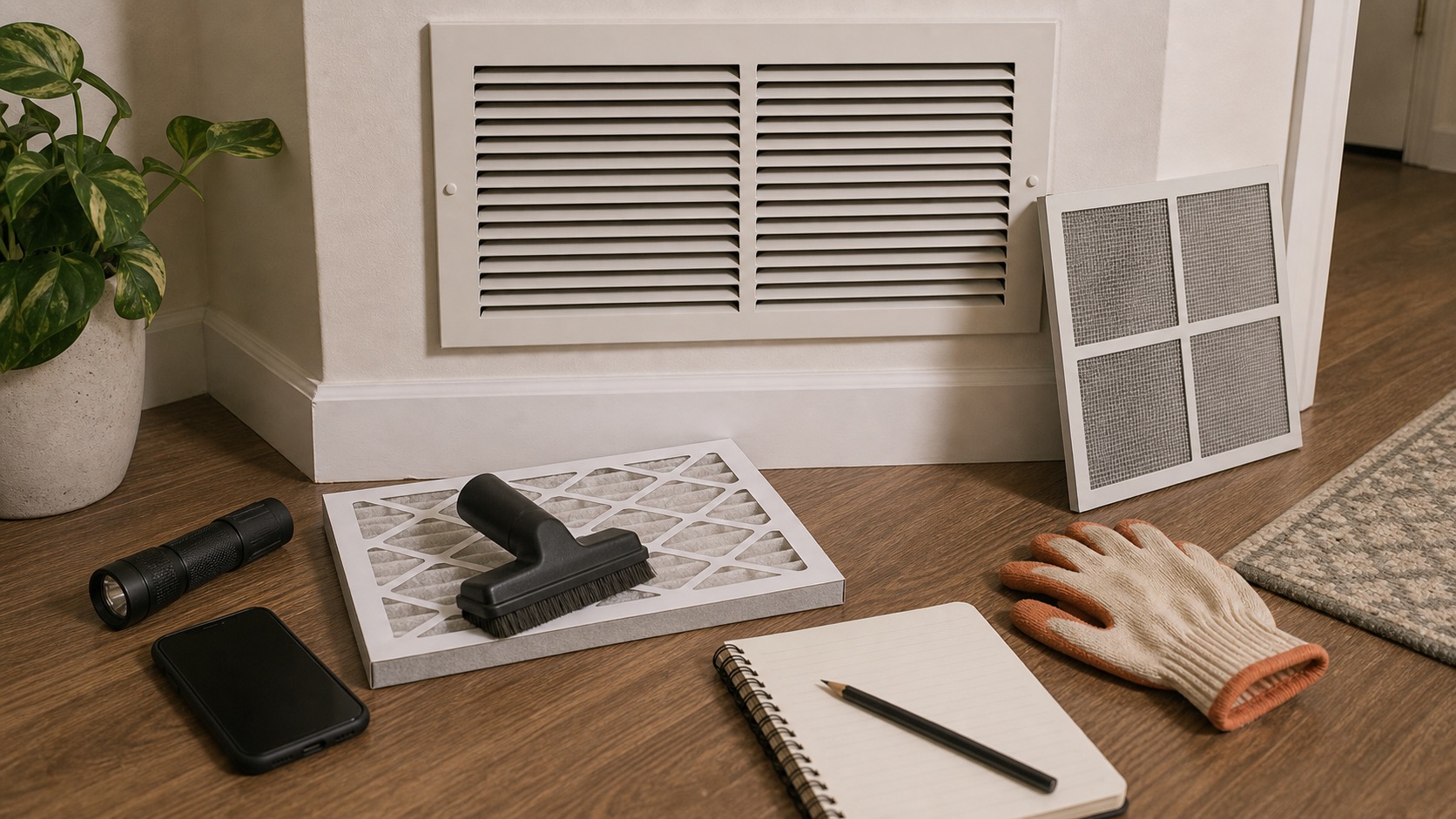
Tools Needed
- Phone camera
- Vacuum with brush attachment if available
- Sink or tub for rinsing a washable filter
- Mild dish soap if allowed by filter instructions
- Clean towel
- Mask if dust bothers you
Renter Notes
Many rentals require maintenance to replace HVAC filters on a schedule. Do not open furnace panels, climb into mechanical closets, or run the system without a dry filter installed unless maintenance instructs you.
Step-by-Step Guide
- Turn the HVAC system off at the thermostat.
What I check before the next step: I stay with accessible, user-facing checks only. Heat, burning smell, leaks, damaged cords, error codes, or panel access means the next step is maintenance. - Open only the filter grille or return cover you can access safely.
What I check before the next step: Before continuing, I confirm the step stayed dry, visible, reversible, and within the lease or my comfort level. - Slide the filter out and photograph its size, label, and airflow direction.
What I check before the next step: I make the note useful: date, location, what changed, one wide photo, and one close-up before I touch anything else. - If the filter is disposable, stop and ask maintenance about replacement instead of washing it.
What I check before the next step: Before continuing, I confirm the step stayed dry, visible, reversible, and within the lease or my comfort level. - If it is washable, vacuum loose dust or rinse from the clean side toward the dirty side using gentle water pressure.
What I check before the next step: I look for spreading water, wet electrical areas, sewage odor, swelling, or moisture below the fixture. Any of those turns this into a stop-and-report issue. - Let the filter dry completely before reinstalling it in the same direction and turning the system back on.
What I check before the next step: This is where I decide: if the issue is clearly better, I finish with the checklist; if not, I document it and use the stop line instead of improvising.
Safe Next Steps
- If the result improved, do one normal-use test and finish with the checklist item: System turned off.
- If the result is mixed, stop after the listed low-risk checks and decide whether the issue belongs with maintenance, your landlord, or a licensed professional.
- If the result did not improve or got worse, do not add force, stronger chemicals, hidden disassembly, or a new tool. Contact maintenance if any stop sign appears.
- For a rental, send a short maintenance message with where the issue is, when you noticed it, what changed, what safe check you tried, and two photos. Keep the confirmation.
Common Mistakes
- Washing a disposable filter and ruining it.
- Forgetting the airflow direction before reinstalling.
- Putting a damp filter back and encouraging odor or mold.
HVAC filter identification and replacement
checking or replacing a renter-accessible HVAC air filter is treated here as a beginner observation and control problem first, not a chance to prove you can take apart the home. The safe version is visible, reversible, and easy to stop.
For renters, the important line is ownership. You can usually observe, photograph, time, clean lightly, or tighten a visible non-security part, but hidden systems, building-owned fixtures, and lease-controlled hardware belong to maintenance.
What to Check Before You Act
Record the starting condition, perform only one low-risk check at a time, and compare responsibility and access, filter specification, old filter condition, post-change airflow. Do not repeat a step that needs more force, chemical, height, access, or disassembly.
| Check | Before | After | Interpretation |
|---|---|---|---|
| Responsibility and access | Record lease rule, filter location, height, grille condition, and access instructions | After one safe check: confirm the identified user-access point | Property instructions define whether this is a renter task Stop if access requires an equipment panel, ladder, or unknown latch. |
| Filter specification | Record printed dimensions, airflow arrow, type, and stated rating | After one safe check: match the exact property or manufacturer specification | Correct fit and resistance protect airflow and equipment Stop if size or rating is uncertain. |
| Old filter condition | Record dust coverage, dampness, collapse, odor, and date | After one safe check: photograph before bagging the dry filter | A dry dusty filter differs from moisture, mold-like growth, or equipment contamination Stop if the filter is wet, damaged, or has suspicious growth. |
| Post-change airflow | Record grille closed, arrow direction, sound, and room airflow | After one safe check: restart once from the thermostat and observe | Normal sound and airflow support the completed change Stop if the grille will not close, noise changes, or airflow remains poor. |
Common Situations and Stop Points
| Symptom | Possible context | Safe first check | Stop point |
|---|---|---|---|
| Responsibility and access | Property instructions define whether this is a renter task | confirm the identified user-access point | access requires an equipment panel, ladder, or unknown latch |
| Filter specification | Correct fit and resistance protect airflow and equipment | match the exact property or manufacturer specification | size or rating is uncertain |
| Old filter condition | A dry dusty filter differs from moisture, mold-like growth, or equipment contamination | photograph before bagging the dry filter | the filter is wet, damaged, or has suspicious growth |
| Post-change airflow | Normal sound and airflow support the completed change | restart once from the thermostat and observe | the grille will not close, noise changes, or airflow remains poor |
Try It or Report It?
| Situation | Beginner can try | Do not touch | Contact |
|---|---|---|---|
| Observe and document | Confirm the lease assigns this accessible filter to the renter. Turn the system off at the thermostat before access. | Hidden, fixed, energized, pressurized, structural, or lease-controlled parts | Use the record if the baseline is abnormal |
| One reversible first step | Match the exact size, type, and airflow direction. Close the access fully and observe one restart. | Anything that needs force, drilling, cutting, panel removal, or mixed chemicals | Maintenance if the first step fails or the condition returns |
| Condition persists | Repeat the observation for responsibility and access and filter specification, not the repair | Do not escalate tools or improvise a workaround | Landlord, maintenance, manufacturer support, or the responsible professional |
| Warning sign appears | Stop, keep distance, and photograph only if that is safe | Stop before opening HVAC equipment panels. Stop if access requires a ladder, force, or unknown fastener. Stop for a wet filter, water, ice, burning odor, gas odor, or mold-like growth. | Urgent maintenance, utility, emergency services, or another appropriate safety channel |
Renter-Safe First Steps
- Confirm the lease assigns this accessible filter to the renter.
- Turn the system off at the thermostat before access.
- Match the exact size, type, and airflow direction.
- Close the access fully and observe one restart.
Stop Lines
- Stop before opening HVAC equipment panels.
- Stop if access requires a ladder, force, or unknown fastener.
- Stop for a wet filter, water, ice, burning odor, gas odor, or mold-like growth.
- Stop if size, rating, or airflow direction is uncertain.
- Stop if unsafe indoor temperature makes waiting risky.
Additional FAQ
Can I install a higher-rated filter?
Not by assumption. A denser filter can change airflow; use the type approved by the property or manufacturer.
Should I wash a disposable filter?
No. Wash only a filter explicitly labeled reusable and follow its drying instructions; never reinstall it damp.
What should I include in a maintenance message?
Include the exact location, when it started, photos, the responsibility and access and filter specification and old filter condition and post-change airflow, what safe check you performed, and whether the condition improved, stayed the same, or worsened.
Related Next Steps
- Heat or AC Stopped in an Apartment: Safe First Moves - Use the outage guide if comfort or temperature is already unsafe.
- Bathroom Mold Spots: Clean, Document, or Report? - Use stricter boundaries for moisture or suspected growth.
- First Apartment Maintenance Checklist - Record the filter date in a repeatable schedule.
What Not to Do
- Do not open furnace, air handler, or electrical panels.
- Do not run HVAC without a filter unless maintenance specifically instructs you.
- Do not use harsh cleaners, bleach, or high-pressure spray on filter material.
When to Pause and Ask for Help
Contact maintenance if the filter is missing, disposable, torn, moldy, very dirty at move-in, behind a locked panel, too high to reach safely, or if airflow stays weak after the filter is handled correctly.
FAQ
How do I know if a filter is washable?
The filter label usually says washable or reusable. If it does not, assume it is disposable and ask maintenance.
How often should apartment filters be changed?
It depends on the system, lease, pets, dust, and building policy. Ask maintenance for the schedule.
Can I buy my own replacement filter?
Only if your lease allows it and you match the exact size and type. Many properties supply approved filters.
What if I see mold on the filter?
Do not clean it as a routine task. Photograph it and contact maintenance.
Final Checklist
- System turned off
- Filter label checked
- Airflow direction photographed
- Disposable filters not washed
- Washable filter fully dried
- Maintenance contacted for access, mold, or missing filters
References
Use these official resources as background context. Product manuals, lease rules, local requirements, property maintenance instructions, and qualified professional advice should still come first for your exact home.
- Energy Saver 101: Home Cooling - U.S. Department of Energy. Use for general filter and airflow context; renters should not open HVAC equipment panels.
You May Also Like
More beginner-safe guides that connect to this repair, the same room, or the next safety decision a renter may need.
- First Apartment Maintenance Checklist - A realistic monthly checklist for keeping a first apartment safer and easier to manage.
- Bad Fridge Smell: A Step-by-Step Odor Reset - Track down refrigerator odors with a safe cleanout routine for renters and first apartments.
- Basic Emergency Kit for Living Alone - Build a practical emergency kit for outages, storms, minor injuries, and apartment disruptions.
- Safe to DIY? A Renter's Home Repair Filter - Use a simple safety filter before deciding whether to DIY a repair in your first place.
- Heat or AC Stopped in an Apartment: Safe First Moves - Handle apartment heat or AC problems safely while you document the issue and contact maintenance.
- Drafty Apartment Window: Renter-Safe First Fixes - Reduce cold window drafts with removable renter-friendly steps before asking maintenance for repair.
- When Not to DIY a Home Repair - Clear stop signs for repairs that are unsafe, lease-sensitive, or require licensed help.
- Small Water Leak: What to Do While Waiting for Maintenance - Contain a small apartment water leak while waiting for maintenance, document the damage, avoid electrical danger, and know when to escalate.