Apartment Balcony Cleaning and Safety Check
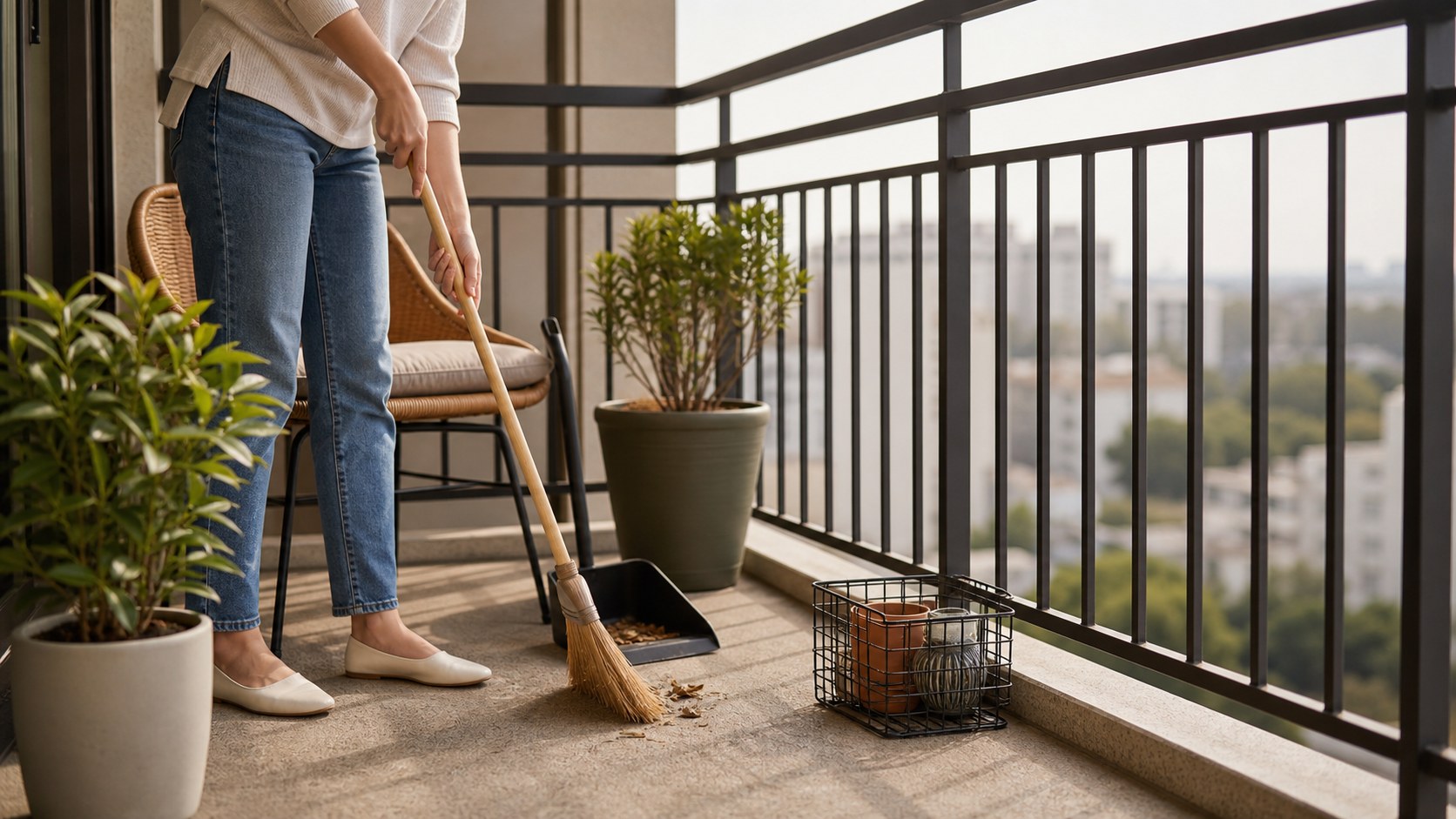
To maintain a clean apartment balcony, choose calm dry weather, bring loose items inward, sweep debris into a dustpan, and keep any visible drainage path clear from floor level. Check building rules before adding planters, rugs, storage, or wash water. Railing, structural, exterior electrical, façade, and drainage repairs belong to management.
By Portia Me'uan Thomas. Updated August 17, 2026. Edited for renter-aware safety.
Time: 15-30 minutes. Difficulty: Easy. Safety: Low if you stay on the balcony floor.
Quick Answer
Remove loose items, sweep debris, wipe furniture, keep drains or scuppers visible if present, avoid overloading railings, and report loose rails, standing water, cracks, pests, or electrical issues. Do not climb, hang over edges, or do exterior repairs.
Material Fit
Hardware and setup tasks depend on what the screw or load is biting into. When the material is unknown, I stop before drilling or anchoring.
| Material or surface | Safest first method | Conditional next method | Avoid / stop line |
|---|---|---|---|
| Solid wood or sturdy cabinet face | Hand-tighten visible screws a quarter-turn at a time. | Use normal-use testing before adding load. | Stop for splitting, spinning screws, or shifting alignment. |
| Particleboard / MDF furniture | Gentle cam-lock or screw adjustment only. | Unload shelves before testing. | Avoid over-tightening; it can crumble the material. |
| Drywall or plaster wall | Use removable or approved methods first. | Anchors only with landlord approval and correct hardware. | Stop if the wall crumbles, flexes, or hides utilities. |
| Tile, brick, metal frame, entry door | Document and request approval or maintenance. | Professional installation may be needed. | Do not drill or modify without written permission. |
Before You Start
- Stay inside the railing and keep both feet on the balcony floor.
- Check building rules before washing water over the edge or using outdoor mats.
- Do not use ladders, climb furniture, or lean over railings.
- Bring loose items inside before wind or heavy rain.
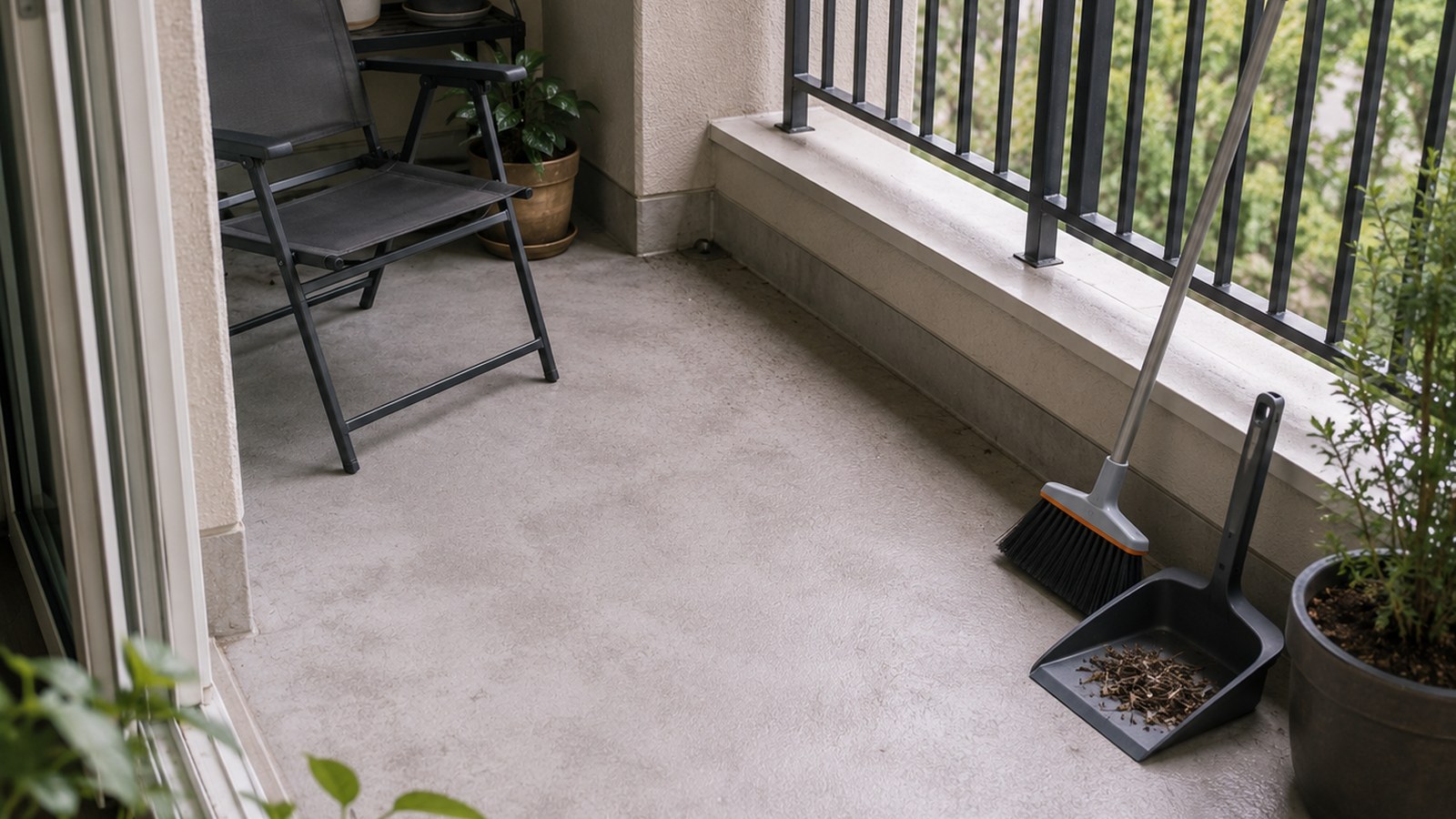
Tools Needed
- Broom
- Dustpan
- Trash bag
- Soft cloth
- Mild dish soap
- Bucket with a small amount of water
- Phone camera
Renter Notes
Balconies are often covered by lease and building rules. Check what can be stored, hung, washed, or placed outside, and report structural, drainage, railing, or exterior-light problems to management.
Step-by-Step Guide
- Remove lightweight decor, trash, and loose items that could blow away.
What I check before the next step: I treat this as a safety check, not a repair. I do not disable, bypass, cover, or alter safety equipment. - Sweep debris into a dustpan instead of pushing it over the edge.
What I check before the next step: I treat this as a safety check, not a repair. I do not disable, bypass, cover, or alter safety equipment. - Wipe furniture and rail surfaces you can reach from inside the balcony.
What I check before the next step: I do not mix chemicals or scrub harder if the finish changes. I ventilate, spot-check, and stop for strong odor, spreading stains, mold growth, or damaged surfaces. - Keep any visible drain path clear without removing fixed covers.
What I check before the next step: I look for spreading water, wet electrical areas, sewage odor, swelling, or moisture below the fixture. Any of those turns this into a stop-and-report issue. - Check for standing water, loose railings, cracks, pests, or damaged exterior outlets.
What I check before the next step: I document evidence before cleaning it away, then avoid sprays, foggers, or sealing large gaps until maintenance or pest control can review the pattern. - Photograph and report building issues through maintenance.
What I check before the next step: I make the note useful: date, location, what changed, one wide photo, and one close-up before I touch anything else.
Safe Next Steps
- If the result improved, do one normal-use test and finish with the checklist item: Loose items removed.
- Put safety equipment back exactly as it was, keep exits clear, and record the test date. Failed alarms, entry-security problems, outages with hazards, or immediate danger should escalate quickly.
- If the result did not improve or got worse, do not add force, stronger chemicals, hidden disassembly, or a new tool. Contact your landlord or building maintenance for the stop signs listed below.
- For a rental, send a short maintenance message with where the issue is, when you noticed it, what changed, what safe check you tried, and two photos. Keep the confirmation.
Common Mistakes
- Letting water run onto neighbors below.
- Hanging heavy planters or storage from railings without permission.
- Standing on chairs to clean high areas.
- Ignoring loose railings because they seem minor.
How to Maintain a Clean Apartment Balcony
routine cleaning and safety checks on an apartment balcony is treated here as a beginner observation and control problem first, not a chance to prove you can take apart the home. The safe version is visible, reversible, and easy to stop.
For renters, the important line is ownership. You can usually observe, photograph, time, clean lightly, or tighten a visible non-security part, but hidden systems, building-owned fixtures, and lease-controlled hardware belong to maintenance.
What to Check Before You Act
Record the starting condition, perform only one low-risk check at a time, and compare weather and access, railing and structure, drainage, loose-item risk. Do not repeat a step that needs more force, chemical, height, access, or disassembly.
| Check | Before | After | Interpretation |
|---|---|---|---|
| Weather and access | Record wind, rain, ice, heat, lighting, footwear, and door function | After one safe check: choose a dry calm daylight period | Stable conditions reduce slip and dropped-object risk Stop if surfaces are wet, icy, windy, dark, or the door may lock behind you. |
| Railing and structure | Record movement, rust, cracks, spalling, gaps, and loose panels | After one safe check: inspect visually without leaning or loading the rail | Any movement or deterioration is a property issue Stop if the railing or balcony surface moves, cracks, or sheds material. |
| Drainage | Record visible drain, leaves, standing water, stains, and overflow path | After one safe check: sweep loose surface debris only from a safe position | A visible clear surface path supports normal drainage Stop if water stands, drain parts are fixed, or overflow affects another unit. |
| Loose-item risk | Record furniture, planters, tools, rugs, and objects near edges | After one safe check: move approved lightweight items low and inward | Secured low items are less likely to fall or blow away Stop if an item is heavy, attached, unstable, or requires lifting near the edge. |
Common Situations and Stop Points
| Symptom | Possible context | Safe first check | Stop point |
|---|---|---|---|
| Weather and access | Stable conditions reduce slip and dropped-object risk | choose a dry calm daylight period | surfaces are wet, icy, windy, dark, or the door may lock behind you |
| Railing and structure | Any movement or deterioration is a property issue | inspect visually without leaning or loading the rail | the railing or balcony surface moves, cracks, or sheds material |
| Drainage | A visible clear surface path supports normal drainage | sweep loose surface debris only from a safe position | water stands, drain parts are fixed, or overflow affects another unit |
| Loose-item risk | Secured low items are less likely to fall or blow away | move approved lightweight items low and inward | an item is heavy, attached, unstable, or requires lifting near the edge |
Try It or Report It?
| Situation | Beginner can try | Do not touch | Contact |
|---|---|---|---|
| Observe and document | Check weather, footwear, lighting, and door access first. Secure loose lightweight objects away from edges. | Hidden, fixed, energized, pressurized, structural, or lease-controlled parts | Use the record if the baseline is abnormal |
| One reversible first step | Dry-sweep debris while staying fully inside the railing. Photograph drainage, railing, cracks, and standing water for management. | Anything that needs force, drilling, cutting, panel removal, or mixed chemicals | Maintenance if the first step fails or the condition returns |
| Condition persists | Repeat the observation for weather and access and railing and structure, not the repair | Do not escalate tools or improvise a workaround | Landlord, maintenance, manufacturer support, or the responsible professional |
| Warning sign appears | Stop, keep distance, and photograph only if that is safe | Stop before climbing, leaning, sitting, or reaching over a railing. Stop for railing movement, cracks, spalling, rust-through, or structural change. Stop for wet, icy, windy, or poorly lit conditions. | Urgent maintenance, utility, emergency services, or another appropriate safety channel |
Renter-Safe First Steps
- Check weather, footwear, lighting, and door access first.
- Secure loose lightweight objects away from edges.
- Dry-sweep debris while staying fully inside the railing.
- Photograph drainage, railing, cracks, and standing water for management.
Stop Lines
- Stop before climbing, leaning, sitting, or reaching over a railing.
- Stop for railing movement, cracks, spalling, rust-through, or structural change.
- Stop for wet, icy, windy, or poorly lit conditions.
- Stop before washing water or debris over an edge.
- Stop before drain, electrical, façade, or structural repair.
Additional FAQ
How often should I clean an apartment balcony?
Use a light schedule based on weather, leaves, dust, and building rules. A quick dry sweep before debris blocks drainage is safer than infrequent heavy washing.
Can I hose down the balcony?
Only if building rules explicitly allow it and drainage cannot affect lower units, façades, or pedestrians. Dry methods are usually easier to control.
What if the railing moves slightly?
Do not test it further or use the balcony normally. Keep away and report the movement urgently.
What should I include in a maintenance message?
Include the exact location, when it started, photos, the weather and access and railing and structure and drainage and loose-item risk, what safe check you performed, and whether the condition improved, stayed the same, or worsened.
Related Next Steps
- Patio Door Track Cleaning Without Removing the Door - Keep the interior door track clean without removing the door.
- Basic Emergency Kit for Living Alone - Plan for severe weather without using the balcony unsafely.
- Move-In Inspection Before You Unpack - Document balcony condition at move-in.
What Not to Do
- Do not use a ladder on a balcony.
- Do not do electrical, railing, structural, roof, or drainage repair.
- Do not pressure wash unless your building explicitly allows it.
- Do not store flammable, heavy, or prohibited items outside.
When to Pause and Ask for Help
Contact your landlord or building maintenance for loose railings, cracks, drainage problems, standing water, exterior electrical issues, pests, falling debris, or anything that requires work from height or outside the balcony.
FAQ
Can I wash an apartment balcony with water?
Check building rules first. Dry sweeping is easier to control, while rinse water can affect lower units, façades, pedestrians, or a drainage system you cannot inspect.
Is it safe to clean the outside of the railing?
Only wipe what you can reach from inside without leaning or climbing. Leave exterior work to maintenance.
Can I put plants on the railing?
Only if the lease and building rules allow secure railing planters. Falling objects are a serious risk.
What if water pools after rain?
Photograph it and report it because drainage may be a building issue.
Final Checklist
- Loose items removed
- Debris swept into dustpan
- No ladder used
- No water pushed over edge
- Drain path visible
- Railing and cracks checked
- Problems reported
You May Also Like
More beginner-safe guides that connect to this repair, the same room, or the next safety decision a renter may need.
- Patio Door Track Cleaning Without Removing the Door - Clean dirt from a sliding patio door track without removing the door or damaging rental hardware.
- Stop Dirt at the Door: First-Apartment Entry Setup - Reduce entryway dirt with renter-safe mats, shoe habits, and simple cleaning routines.
- Move-In Inspection Before You Unpack - Inspect a rental apartment before unpacking so you can document damage, leaks, locks, and safety issues early.
- Safe to DIY? A Renter's Home Repair Filter - Use a simple safety filter before deciding whether to DIY a repair in your first place.
- What I Do Differently Now When Something Breaks at Night (Living Alone Edition) - Use a calm nighttime decision plan when something breaks while you live alone: screen for immediate danger, contact the right help, document safely, and decide whether the home is safe for rest.
- Apartment Smoke Detector Test: A Safe Monthly Check - Learn how to test an apartment smoke detector with its test button, what a failed test or chirp means, and when renters should call maintenance.
- Power Outage Alone: A Calm Apartment Safety Plan - A calm power outage plan for people living alone, with clear electrical safety boundaries.
- Basic Emergency Kit for Living Alone - Build a practical emergency kit for outages, storms, minor injuries, and apartment disruptions.