Safer Mail and Package Habits for Apartment Living
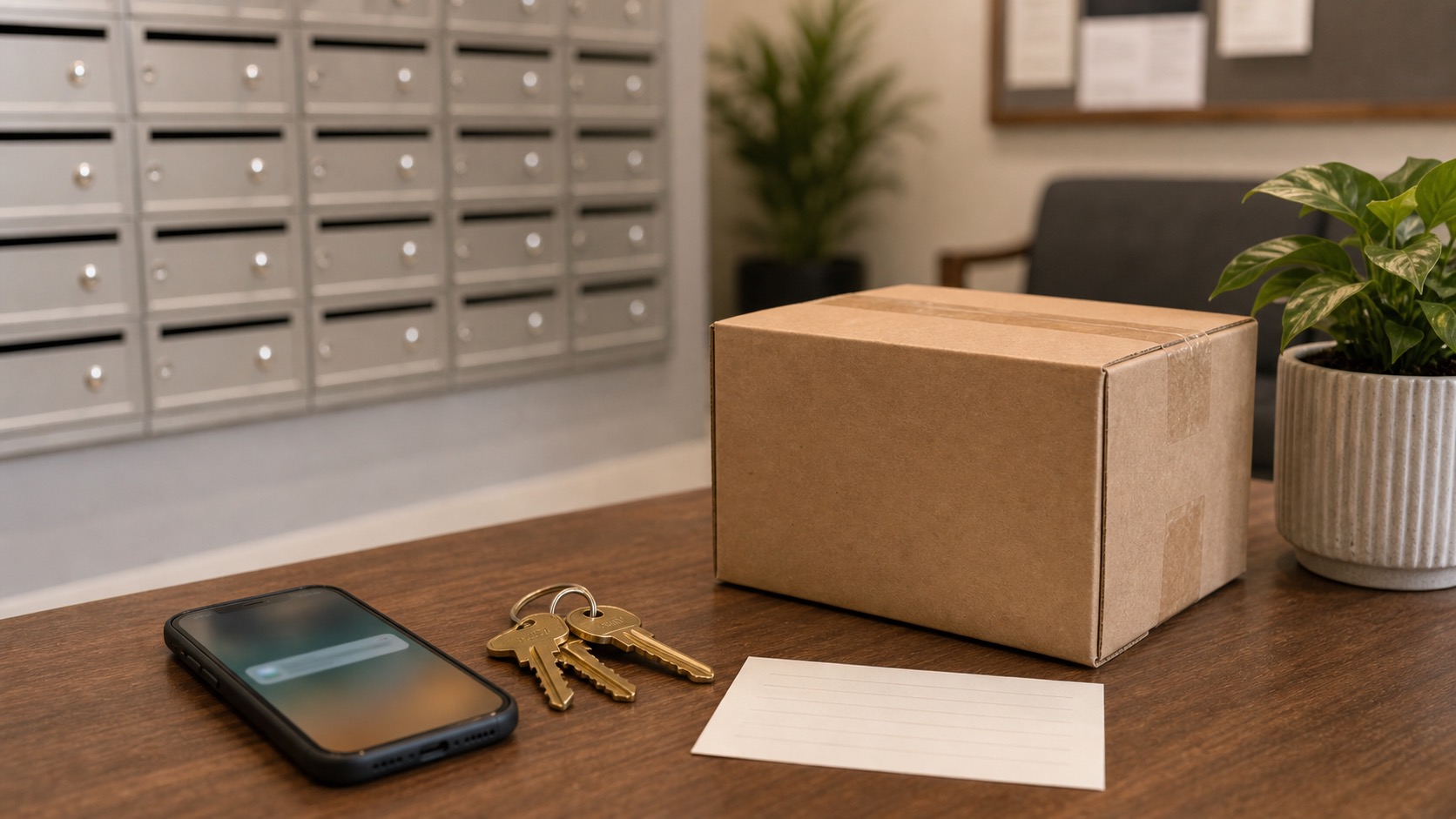
Good apartment mailroom habits combine secure delivery choices, prompt pickup, private access details, and a clear record when something goes missing. Use this guide for lobby, parcel-room, locker, front-desk, hallway, and door deliveries where theft, misdelivery, or exposed label information is a concern.
By Portia Me'uan Thomas. Updated August 17, 2026. Edited for renter-aware safety.
Time: 10 minutes to set up, then ongoing habits. Difficulty: Easy. Safety: Low.
Quick Answer
Use delivery notifications, choose the building's most secure approved delivery option, collect packages the same day, keep parcel codes and entry details private, remove labels before discarding boxes, and report broken locks, failed lockers, or repeated theft patterns to property management. For a missing item, preserve the tracking record and contact the carrier or seller promptly.
Before You Start
- Confirm how your building handles packages, parcel lockers, front desk pickup, or delivery rooms.
- Save tracking numbers until each package is actually in your hands.
- Do not share door codes widely or prop entry doors open for convenience.
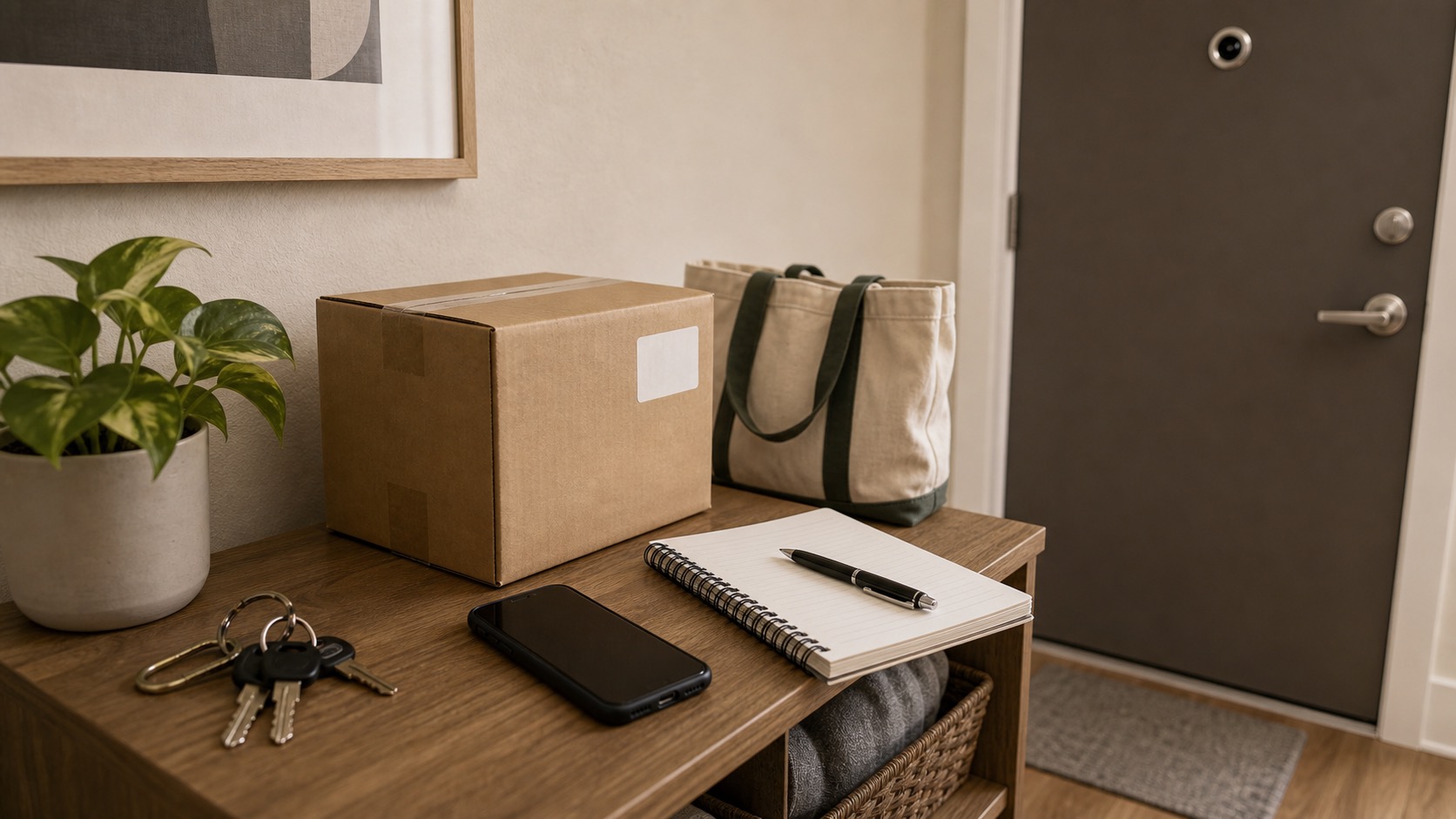
Tools Needed
- Carrier tracking apps or notifications
- Notes app for tracking numbers
- Mailbox key
- Permanent marker for old labels
- Secure indoor spot for packages
Renter Notes
Building package rooms, mailboxes, lobby doors, cameras, and access systems are property responsibilities. Report broken locks, propped doors, repeated theft, or missing mailbox keys to your landlord or property manager.
Step-by-Step Guide
- Turn on delivery notifications for carriers and stores when available.
What I check before the next step: I treat this as a safety check, not a repair. I do not disable, bypass, cover, or alter safety equipment. - Use the safest delivery option your building offers, such as a package room, locker, office, or pickup location.
What I check before the next step: I treat this as a safety check, not a repair. I do not disable, bypass, cover, or alter safety equipment. - Pick up packages the same day when possible, especially visible or valuable items.
What I check before the next step: I treat this as a safety check, not a repair. I do not disable, bypass, cover, or alter safety equipment. - Break down boxes and cover or remove shipping labels before disposal.
What I check before the next step: I treat this as a safety check, not a repair. I do not disable, bypass, cover, or alter safety equipment. - Keep mailbox keys, parcel codes, and building access details private.
What I check before the next step: I treat this as a safety check, not a repair. I do not disable, bypass, cover, or alter safety equipment. - Report repeated missing packages, broken mailbox locks, or unsecured package areas to property management.
What I check before the next step: I keep the door or window from trapping me while testing. Entry locks, broken latches, cracked frames, or security uncertainty belong with maintenance or a locksmith.
Safe Next Steps
- If the result improved, do one normal-use test and finish with the checklist item: Notifications enabled.
- Put safety equipment back exactly as it was, keep exits clear, and record the test date. Failed alarms, entry-security problems, outages with hazards, or immediate danger should escalate quickly.
- If the result did not improve or got worse, do not add force, stronger chemicals, hidden disassembly, or a new tool. Contact your landlord or property manager for the stop signs listed below.
- For a rental, send a short maintenance message with where the issue is, when you noticed it, what changed, what safe check you tried, and two photos. Keep the confirmation.
Common Mistakes
- Letting packages sit in a lobby overnight.
- Throwing boxes out with full name, address, and tracking information visible.
- Assuming a delivery photo means the item is safe until you get home.
Apartment Mailroom Best Practices
keeping apartment mail and package deliveries safer is treated here as a beginner observation and control problem first, not a chance to prove you can take apart the home. The safe version is visible, reversible, and easy to stop.
For renters, the important line is ownership. You can usually observe, photograph, time, clean lightly, or tighten a visible non-security part, but hidden systems, building-owned fixtures, and lease-controlled hardware belong to maintenance.
What to Check Before You Act
Record the starting condition, perform only one low-risk check at a time, and compare delivery record, building process, exposure, incident pattern. Do not repeat a step that needs more force, chemical, height, access, or disassembly.
| Check | Before | After | Interpretation |
|---|---|---|---|
| Delivery record | Record carrier, tracking status, delivery photo, time, and stated location | After one safe check: verify through the carrier's official site or app | A verified record narrows the search without exposing account details Stop if the message requests unusual payment, credentials, or an unknown link. |
| Building process | Record package room, locker, desk, access hours, and camera/reporting policy | After one safe check: follow the written retrieval and missing-package process | Building systems determine the safe next step Stop if access is broken, unsecured, or requires sharing a code. |
| Exposure | Record visible name, unit number, delivery pattern, and time left unattended | After one safe check: remove labels before recycling and retrieve promptly when safe | Less unattended time and exposed data reduce opportunity Stop if retrieval would require confrontation or unsafe timing. |
| Incident pattern | Record dates, carriers, locations, and repeated losses | After one safe check: keep a factual incident log | A pattern supports property, carrier, insurance, or police reporting Stop if there is stalking, threats, forced entry, or immediate danger. |
Common Situations and Stop Points
| Symptom | Possible context | Safe first check | Stop point |
|---|---|---|---|
| Delivery record | A verified record narrows the search without exposing account details | verify through the carrier's official site or app | the message requests unusual payment, credentials, or an unknown link |
| Building process | Building systems determine the safe next step | follow the written retrieval and missing-package process | access is broken, unsecured, or requires sharing a code |
| Exposure | Less unattended time and exposed data reduce opportunity | remove labels before recycling and retrieve promptly when safe | retrieval would require confrontation or unsafe timing |
| Incident pattern | A pattern supports property, carrier, insurance, or police reporting | keep a factual incident log | there is stalking, threats, forced entry, or immediate danger |
Try It or Report It?
| Situation | Beginner can try | Do not touch | Contact |
|---|---|---|---|
| Observe and document | Verify notifications through official carrier channels. Use building lockers, desks, or approved alternate delivery options. | Hidden, fixed, energized, pressurized, structural, or lease-controlled parts | Use the record if the baseline is abnormal |
| One reversible first step | Retrieve promptly when the area is safe. Remove personal labels and document incidents factually. | Anything that needs force, drilling, cutting, panel removal, or mixed chemicals | Maintenance if the first step fails or the condition returns |
| Condition persists | Repeat the observation for delivery record and building process, not the repair | Do not escalate tools or improvise a workaround | Landlord, maintenance, manufacturer support, or the responsible professional |
| Warning sign appears | Stop, keep distance, and photograph only if that is safe | Stop before sharing or posting building access codes. Stop before confronting a suspected thief. Stop if retrieval requires entering an unsafe or restricted area. | Urgent maintenance, utility, emergency services, or another appropriate safety channel |
Renter-Safe First Steps
- Verify notifications through official carrier channels.
- Use building lockers, desks, or approved alternate delivery options.
- Retrieve promptly when the area is safe.
- Remove personal labels and document incidents factually.
Stop Lines
- Stop before sharing or posting building access codes.
- Stop before confronting a suspected thief.
- Stop if retrieval requires entering an unsafe or restricted area.
- Stop for suspicious packages, threats, stalking, or forced-entry signs.
- Use emergency services for immediate danger.
Additional FAQ
What are the most useful apartment mailroom best practices?
Use official tracking, the most secure approved delivery option, prompt pickup, private access details, label removal, and a factual incident record when an item goes missing.
Should I post delivery photos online to find a package?
Avoid exposing your address, unit, building layout, tracking number, or access details. Use official property and carrier channels first.
What should I do before reporting theft?
Verify the delivery record and location, check the approved building process, save evidence, and follow carrier, property, insurance, and local reporting requirements.
What should I include in a maintenance message?
Include the exact location, when it started, photos, the delivery record and building process and exposure and incident pattern, what safe check you performed, and whether the condition improved, stayed the same, or worsened.
Related Next Steps
- Front Door Security Check for Renters - Keep package habits aligned with entry security.
- Lost Keys or Locked Out: What to Do First - Protect access credentials when keys or fobs are involved.
- Move-In Inspection Before You Unpack - Learn the building's delivery and access process early.
What Not to Do
- Do not confront a suspected thief by yourself.
- Do not share building codes in delivery notes if your property forbids it.
- Do not install cameras or door hardware in shared areas without approval.
When to Pause and Ask for Help
Contact your landlord or property manager for broken mailboxes, failed parcel lockers, unsecured package rooms, or repeated theft patterns. Contact the carrier or seller for missing deliveries, and use emergency services if you witness a crime in progress or feel unsafe.
FAQ
What are the first apartment mailroom checks when a package is missing?
Check the delivery photo, tracking timestamp, lobby, parcel room, locker notice, front desk, and permitted neighbor handoff, then contact the carrier or seller and save the case number.
Can I install a door camera?
Ask your landlord first, especially in hallways or shared spaces where privacy and building rules apply.
Should I use pickup locations?
For valuable or time-sensitive items, a carrier pickup point or staffed location can be safer than an unattended lobby.
How do I protect personal information on boxes?
Remove or cover labels before recycling or discarding packaging.
Final Checklist
- Notifications enabled
- Building package process known
- Packages picked up quickly
- Labels removed or covered
- Access details kept private
- Security issues reported
You May Also Like
More beginner-safe guides that connect to this repair, the same room, or the next safety decision a renter may need.
- Front Door Security Check for Renters - Improve front-door confidence with renter-safe checks, habits, and clear lock repair boundaries.
- Move-In Inspection Before You Unpack - Inspect a rental apartment before unpacking so you can document damage, leaks, locks, and safety issues early.
- Lost Keys or Locked Out: What to Do First - Handle lost keys or an apartment lockout without damaging the door, lock, or lease relationship.
- First Apartment Maintenance Checklist - A realistic monthly checklist for keeping a first apartment safer and easier to manage.
- What I Do Differently Now When Something Breaks at Night (Living Alone Edition) - Use a calm nighttime decision plan when something breaks while you live alone: screen for immediate danger, contact the right help, document safely, and decide whether the home is safe for rest.
- Apartment Smoke Detector Test: A Safe Monthly Check - Learn how to test an apartment smoke detector with its test button, what a failed test or chirp means, and when renters should call maintenance.
- Power Outage Alone: A Calm Apartment Safety Plan - A calm power outage plan for people living alone, with clear electrical safety boundaries.
- Basic Emergency Kit for Living Alone - Build a practical emergency kit for outages, storms, minor injuries, and apartment disruptions.