Lost Keys or Locked Out: What to Do First
Start here if you are outside without keys, cannot find your mailbox key or building fob, left keys inside, or realize your keys may be lost somewhere public. A lockout is stressful because it feels urgent and embarrassing at the same time, but the safest path is usually procedural: get to a safe place, contact the approved person, verify your identity, and document lost access if the keys are truly missing. The goal is safe access and proper reporting, not breaking in or making an unauthorized lock change. Slow down for one minute before acting, because panic is when people damage doors, invite scam locksmiths, or skip security reporting.
By Portia Me'uan Thomas. Updated August 17, 2026. Edited for renter-aware safety.
Time: Immediate action, timing depends on property response. Difficulty: Easy but stressful. Safety: Medium.
Quick Answer
Stay in a safe, well-lit area, contact your landlord, property manager, front desk, roommate, maintenance line, or approved lockout number, verify your identity, and ask about rekeying, fob deactivation, mailbox keys, or building access replacement if keys are truly lost. Do not force the door, climb through windows, use fire escapes, pick locks, drill hardware, or hire an unapproved locksmith without checking lease rules.
Before You Start
- Move to a safe, well-lit place if you are outside at night or feel exposed.
- Check bags, pockets, car, laundry room, package room, and recent stops before assuming keys are gone.
- Do not attempt risky entry through windows, balconies, fire escapes, or shared utility areas.
- If your phone battery is low, send one concise text to a trusted person with your location and plan.
- If a child, vulnerable adult, pet in distress, medication, stove, water, or fire risk is inside, treat the lockout as urgent.
Tools Needed
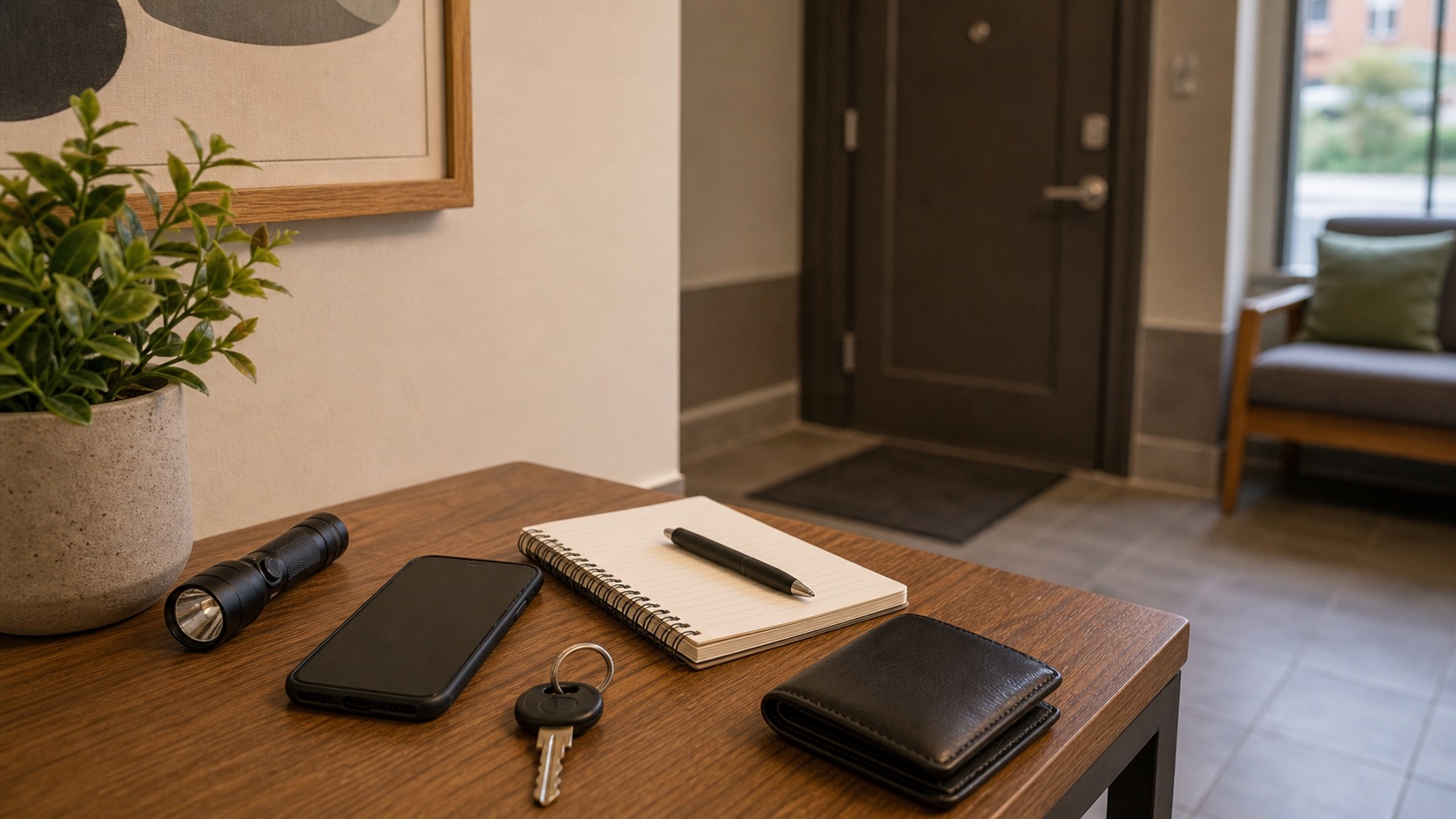
- Phone
- Photo ID
- Property manager or maintenance contact
- Roommate or trusted contact
- Payment method if your lease has lockout fees
- Carrier or ride app if you need a safer waiting place
Renter Notes
Many leases have lockout procedures, fees, approved locksmith rules, after-hours numbers, fob replacement steps, and rekey requirements. Follow the property process so you do not damage the door, create an unauthorized lock change, lose deposit money, or compromise building access. If keys were stolen with an ID, address label, bag, or wallet, tell management that detail because the security decision may be different from a key simply locked inside.
Step-by-Step Guide
- Get to a safe location where you can wait and make calls.
What I check before the next step: Before continuing, I confirm the step stayed dry, visible, reversible, and within the lease or my comfort level. - Contact your landlord, property manager, front desk, roommate, or approved lockout number.
What I check before the next step: Before continuing, I confirm the step stayed dry, visible, reversible, and within the lease or my comfort level. - Be ready to verify your identity and unit before anyone grants access.
What I check before the next step: Before continuing, I confirm the step stayed dry, visible, reversible, and within the lease or my comfort level. - If keys are lost rather than locked inside, ask whether the lock, fob, mailbox key, or building access needs to be changed.
What I check before the next step: I keep the door or window from trapping me while testing. Entry locks, broken latches, cracked frames, or security uncertainty belong with maintenance or a locksmith. - Do not force the door, pick the lock, drill hardware, or climb into the unit.
What I check before the next step: I keep the door or window from trapping me while testing. Entry locks, broken latches, cracked frames, or security uncertainty belong with maintenance or a locksmith. - If an approved locksmith is required, confirm who is allowed to call them and whether the lock may be changed or only opened.
What I check before the next step: I keep the door or window from trapping me while testing. Entry locks, broken latches, cracked frames, or security uncertainty belong with maintenance or a locksmith. - Ask for the expected arrival window, fee, and identity check process so you know who should appear at the door.
What I check before the next step: I keep the door or window from trapping me while testing. Entry locks, broken latches, cracked frames, or security uncertainty belong with maintenance or a locksmith. - After access is restored, test the lock normally and report any damage, looseness, or key trouble right away.
What I check before the next step: I keep the door or window from trapping me while testing. Entry locks, broken latches, cracked frames, or security uncertainty belong with maintenance or a locksmith. - Update your spare-key plan in a way your lease allows, such as a trusted person or property-approved system.
What I check before the next step: This is where I decide: if the issue is clearly better, I finish with the checklist; if not, I document it and use the stop line instead of improvising.
Safe Next Steps
- If the result improved, do one normal-use test and finish with the checklist item: Safe waiting spot found.
- If the result is mixed, stop after the listed low-risk checks and decide whether the issue belongs with maintenance, your landlord, or a licensed professional.
- If the result did not improve or got worse, do not add force, stronger chemicals, hidden disassembly, or a new tool. Contact your landlord, property manager, maintenance line, front desk, or an approved locksmith for the stop signs listed below.
- For a rental, send a short maintenance message with where the issue is, when you noticed it, what changed, what safe check you tried, and two photos. Keep the confirmation.
Common Mistakes
- Calling a random locksmith before checking property rules.
- Trying to pry or kick the door and turning a lockout into damage.
- Hiding a spare key outside in an obvious place.
- Failing to report a lost fob or key because you eventually got back inside.
- Letting a stranger follow you into the building during the stress of getting access.
- Leaving ID, wallet, phone, or bag unattended while searching for keys.
Rental lockout response
lost apartment keys, fob, or a lockout is treated here as a beginner observation and control problem first, not a chance to prove you can take apart the home. The safe version is visible, reversible, and easy to stop.
For renters, the important line is ownership. You can usually observe, photograph, time, clean lightly, or tighten a visible non-security part, but hidden systems, building-owned fixtures, and lease-controlled hardware belong to maintenance.
What to Check Before You Act
Record the starting condition, perform only one low-risk check at a time, and compare personal safety, key status, official process, entry result. Do not repeat a step that needs more force, chemical, height, access, or disassembly.
| Check | Before | After | Interpretation |
|---|---|---|---|
| Personal safety | Record location, lighting, weather, phone battery, and immediate threats | After one safe check: move to a staffed or public safe place and contact someone trusted | Safety comes before searching or waiting at the door Stop if there is immediate danger or severe exposure. |
| Key status | Record lost, stolen, locked inside, broken, fob-only, and whether identifying information is attached | After one safe check: write down the last confirmed time and place | Compromised labeled keys may require security action beyond entry Stop if the loss may involve theft, stalking, or known address exposure. |
| Official process | Record lease contact, after-hours number, identity requirement, fee, and authorized locksmith rule | After one safe check: verify through the property website, lease, or known contact | Authorization prevents damage and scams Stop if the contact or payment request cannot be verified. |
| Entry result | Record door, frame, lock, key, fob, and receipt condition after entry | After one safe check: photograph any damage and confirm the door secures | A secure undamaged entry closes the event Stop if the lock or frame is damaged or the door will not secure. |
Common Situations and Stop Points
| Symptom | Possible context | Safe first check | Stop point |
|---|---|---|---|
| Personal safety | Safety comes before searching or waiting at the door | move to a staffed or public safe place and contact someone trusted | there is immediate danger or severe exposure |
| Key status | Compromised labeled keys may require security action beyond entry | write down the last confirmed time and place | the loss may involve theft, stalking, or known address exposure |
| Official process | Authorization prevents damage and scams | verify through the property website, lease, or known contact | the contact or payment request cannot be verified |
| Entry result | A secure undamaged entry closes the event | photograph any damage and confirm the door secures | the lock or frame is damaged or the door will not secure |
Try It or Report It?
| Situation | Beginner can try | Do not touch | Contact |
|---|---|---|---|
| Observe and document | Move to a safe place and preserve phone battery. Verify the official property lockout process. | Hidden, fixed, energized, pressurized, structural, or lease-controlled parts | Use the record if the baseline is abnormal |
| One reversible first step | Prepare identity and factual key-loss details. Document the authorized entry and confirm the door secures afterward. | Anything that needs force, drilling, cutting, panel removal, or mixed chemicals | Maintenance if the first step fails or the condition returns |
| Condition persists | Repeat the observation for personal safety and key status, not the repair | Do not escalate tools or improvise a workaround | Landlord, maintenance, manufacturer support, or the responsible professional |
| Warning sign appears | Stop, keep distance, and photograph only if that is safe | Stop before climbing, forcing doors or windows, picking locks, or bypassing access control. Stop before sharing entry codes or accepting an unverified locksmith/payment request. Stop for suspected theft, stalking, threats, or forced-entry signs. | Urgent maintenance, utility, emergency services, or another appropriate safety channel |
Renter-Safe First Steps
- Move to a safe place and preserve phone battery.
- Verify the official property lockout process.
- Prepare identity and factual key-loss details.
- Document the authorized entry and confirm the door secures afterward.
Stop Lines
- Stop before climbing, forcing doors or windows, picking locks, or bypassing access control.
- Stop before sharing entry codes or accepting an unverified locksmith/payment request.
- Stop for suspected theft, stalking, threats, or forced-entry signs.
- Stop if a child, vulnerable person, active appliance, fire, or medical risk is inside.
- Use emergency services for immediate danger.
Additional FAQ
Should I call the first locksmith in search results?
Check the lease and property process first, verify identity and pricing, and confirm the provider is authorized to work on the rental.
Do lost keys always require changing the lock?
The landlord or authorized security professional should decide based on key identification, theft risk, building system, and lease rules.
What should I include in a maintenance message?
Include the exact location, when it started, photos, the personal safety and key status and official process and entry result, what safe check you performed, and whether the condition improved, stayed the same, or worsened.
Related Next Steps
- Front Door Security Check for Renters - Recheck the door and reporting plan after access is restored.
- Safer Mail and Package Habits for Apartment Living - Limit address and entry information exposure.
- Basic Emergency Kit for Living Alone - Keep backup contacts and charging support ready.
What Not to Do
- Do not break a window, climb a balcony, or enter through a fire escape.
- Do not change locks without landlord approval.
- Do not leave lost keys unreported if they include building access or identifying information.
- Do not share door codes or lockbox codes with an unverified locksmith or delivery driver.
- Do not prop open exterior doors while waiting for someone to arrive.
- Do not try lock-picking tools or online tricks on a rental lock.
When to Pause and Ask for Help
Contact your landlord, property manager, maintenance line, front desk, or an approved locksmith for lockouts and lost keys. Ask property management before authorizing any lock change. Call emergency services if a child, vulnerable person, pet in distress, medical equipment, stove, active water, fire, suspected break-in, or immediate danger is involved.
FAQ
Can I call any locksmith?
Check your lease or property rules first. Some buildings require approved locksmiths or management access, especially for exterior doors and electronic fobs.
Should I change the lock if my keys are lost?
Ask your landlord. Lost keys with building access, address information, theft risk, or a missing wallet may require rekeying or fob deactivation.
Where should I keep a spare key?
Use a lease-compliant option such as a trusted person or property-approved system, not an obvious outdoor hiding spot.
What if I am locked out late at night?
Prioritize safety, use the building emergency line, and wait in a safe public place if possible.
What if my phone is locked inside too?
Go to a safe staffed place, neighbor, front desk, or nearby business and ask to call the approved property contact or a trusted person.
Do I need to report a lost mailbox key?
Yes. Mailbox keys and parcel access can involve security and mail rules, so follow the property or carrier process.
Final Checklist
- Safe waiting spot found
- Property contact called
- Identity ready
- Approved lockout process followed
- No forced entry
- Lost access reported
- Lock tested after entry
- Spare-key plan updated safely
You May Also Like
More beginner-safe guides that connect to this repair, the same room, or the next safety decision a renter may need.
- Front Door Security Check for Renters - Improve front-door confidence with renter-safe checks, habits, and clear lock repair boundaries.
- Safer Mail and Package Habits for Apartment Living - Use apartment mailroom best practices to reduce missing packages, protect delivery details, and report broken locks or repeated security problems.
- Move-In Inspection Before You Unpack - Inspect a rental apartment before unpacking so you can document damage, leaks, locks, and safety issues early.
- When Not to DIY a Home Repair - Clear stop signs for repairs that are unsafe, lease-sensitive, or require licensed help.
- Loose Interior Door Handle: A Safe One-Person Tightening Check - Tighten a loose interior door handle safely, with renter-aware stop points for locks and entry doors.
- Quiet a Squeaky Door Without Pulling Hinge Pins - Quiet a squeaky apartment door hinge without removing the door or pulling hinge pins.
- Sticky Apartment Door: Find the Rub Before You Force It - Troubleshoot a sticky interior apartment door with safe, reversible first steps.
- First Apartment Maintenance Checklist - A realistic monthly checklist for keeping a first apartment safer and easier to manage.