Apartment Laundry Without Damaging Clothes
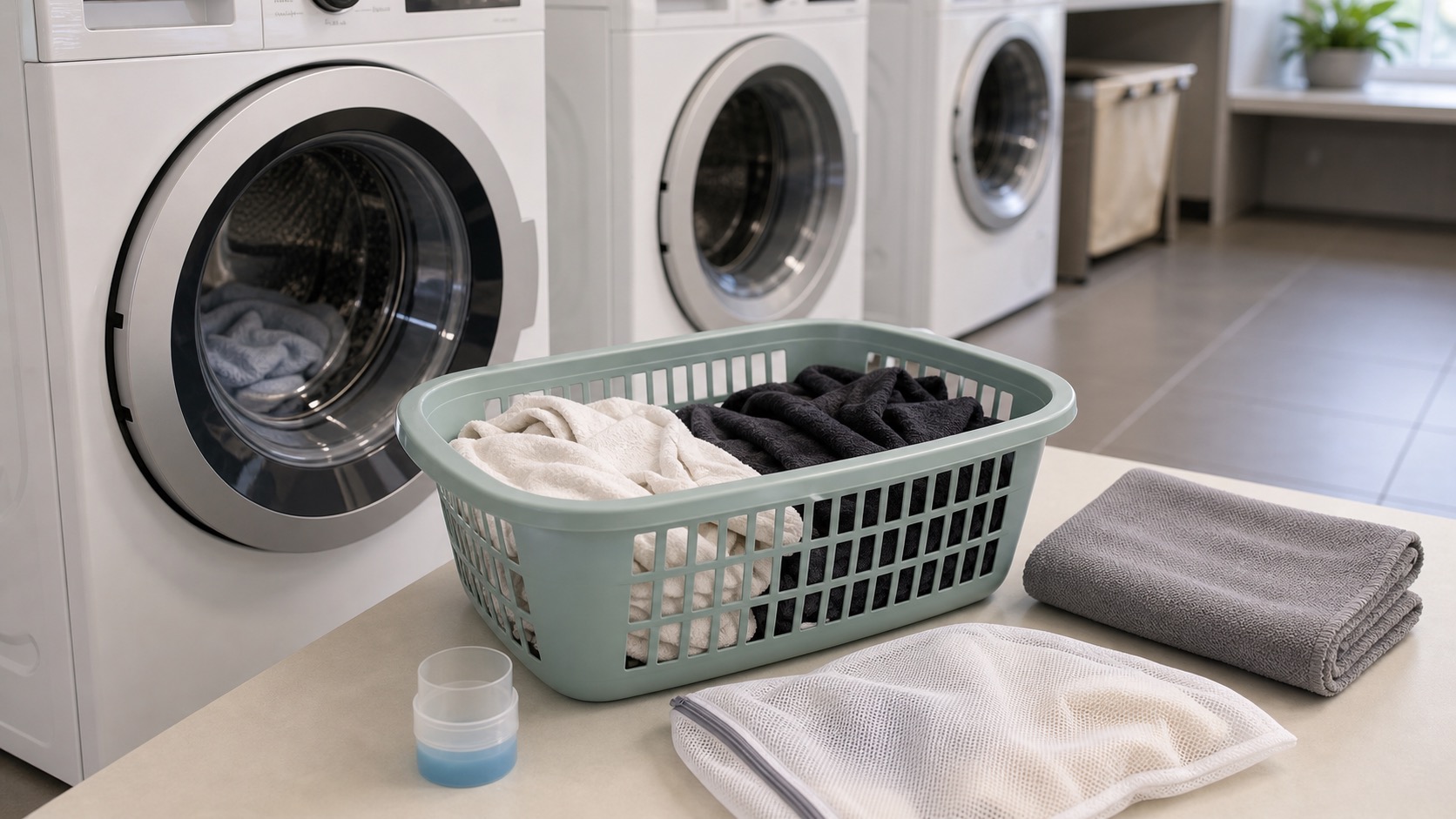
For a first trip to a shared laundry room, use this guide to choose a basic cycle, measure detergent, and spot machines that look dirty, damaged, or unsafe to use.
By Portia Me'uan Thomas. Updated August 17, 2026. Edited for renter-aware safety.
Time: 1.5-2.5 hours including drying. Difficulty: Easy. Safety: Low.
Quick Answer
Sort clothes by color and fabric weight, check pockets, use a small amount of detergent, choose cold or warm water for most loads, avoid overloading machines, clean the lint trap before drying, and report broken or leaking machines to maintenance.
Before You Start
- Read garment care labels for anything delicate, wool, silk, or new and dark-colored.
- Check pockets for keys, lip balm, pens, receipts, and tissues.
- Look inside shared machines before loading clothes.
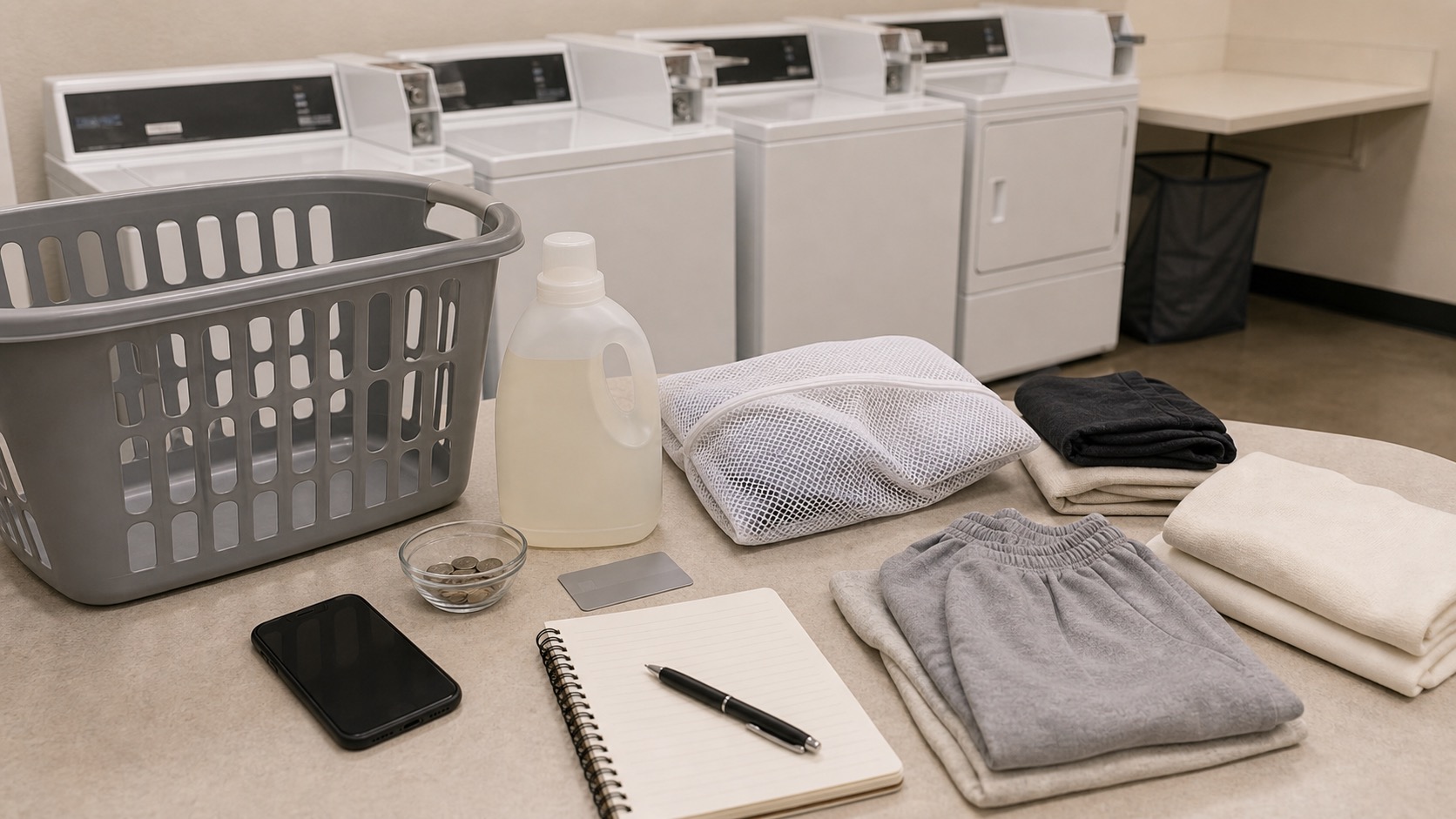
Tools Needed
- Laundry basket or bag
- Detergent
- Stain remover if needed
- Mesh bag for delicates
- Dryer sheet or wool dryer balls if you use them
- Timer
Renter Notes
Shared laundry rooms are building equipment. Do not repair machines, remove panels, force coin or card readers, or use a machine that leaks, sparks, smells like burning, or does not drain.
Step-by-Step Guide
- Sort laundry into basics: lights, darks, towels or heavy items, and delicates.
What I check before the next step: Before continuing, I confirm the step stayed dry, visible, reversible, and within the lease or my comfort level. - Treat visible stains before washing instead of hoping the dryer will fix them.
What I check before the next step: I stay with accessible, user-facing checks only. Heat, burning smell, leaks, damaged cords, error codes, or panel access means the next step is maintenance. - Load the washer loosely so clothes can move; do not pack it full.
What I check before the next step: I stay with accessible, user-facing checks only. Heat, burning smell, leaks, damaged cords, error codes, or panel access means the next step is maintenance. - Use the detergent amount recommended for the load size, usually less than beginners expect.
What I check before the next step: I stay with accessible, user-facing checks only. Heat, burning smell, leaks, damaged cords, error codes, or panel access means the next step is maintenance. - Choose cold water for most mixed loads and warm only when labels and fabric type allow it.
What I check before the next step: I look for spreading water, wet electrical areas, sewage odor, swelling, or moisture below the fixture. Any of those turns this into a stop-and-report issue. - Before drying, clean the lint trap, choose a moderate heat setting, and set a timer so clothes do not sit unattended for long.
What I check before the next step: I stay with accessible, user-facing checks only. Heat, burning smell, leaks, damaged cords, error codes, or panel access means the next step is maintenance.
Safe Next Steps
- If the result improved, do one normal-use test and finish with the checklist item: Pockets checked.
- If the result is mixed, stop after the listed low-risk checks and decide whether the issue belongs with maintenance, your landlord, or a licensed professional.
- If the result did not improve or got worse, do not add force, stronger chemicals, hidden disassembly, or a new tool. Contact maintenance or property management for the stop signs listed below.
- For a rental, send a short maintenance message with where the issue is, when you noticed it, what changed, what safe check you tried, and two photos. Keep the confirmation.
Common Mistakes
- Using too much detergent and leaving residue in clothes and machines.
- Drying stained clothes before the stain is actually gone.
- Overloading washers or dryers, which cleans poorly and strains machines.
Shared laundry load planning
washing and drying clothes in an apartment laundry room without avoidable damage is treated here as a beginner observation and control problem first, not a chance to prove you can take apart the home. The safe version is visible, reversible, and easy to stop.
For renters, the important line is ownership. You can usually observe, photograph, time, clean lightly, or tighten a visible non-security part, but hidden systems, building-owned fixtures, and lease-controlled hardware belong to maintenance.
What to Check Before You Act
Record the starting condition, perform only one low-risk check at a time, and compare garment requirements, machine condition, detergent and load, drying result. Do not repeat a step that needs more force, chemical, height, access, or disassembly.
| Check | Before | After | Interpretation |
|---|---|---|---|
| Garment requirements | Record care labels, colorfastness, fabric weight, closures, and stains | After one safe check: sort into compatible loads before entering the laundry room | Sorting prevents many wash and dry failures Stop if an item requires dry cleaning, hand washing, or unknown special care. |
| Machine condition | Record posted status, drum residue, odor, sharp edges, water, and previous load | After one safe check: inspect the empty user area without reaching into hidden parts | A clean intact available machine supports normal use Stop if the machine leaks, is damaged, smells burned, or is marked unavailable. |
| Detergent and load | Record machine type, product label, load size, and dispenser markings | After one safe check: measure the smallest correct amount for the load and machine | Correct dosing reduces residue and oversudsing Stop if the product or dispenser use is unclear. |
| Drying result | Record fabric temperature, dampness, shrink risk, lint screen rule, and cycle time | After one safe check: use the care-label setting and remove delicate items early | Normal drying should not require repeated hot cycles Stop if burning odor, excessive heat, smoke, or repeated slow drying occurs. |
Common Situations and Stop Points
| Symptom | Possible context | Safe first check | Stop point |
|---|---|---|---|
| Garment requirements | Sorting prevents many wash and dry failures | sort into compatible loads before entering the laundry room | an item requires dry cleaning, hand washing, or unknown special care |
| Machine condition | A clean intact available machine supports normal use | inspect the empty user area without reaching into hidden parts | the machine leaks, is damaged, smells burned, or is marked unavailable |
| Detergent and load | Correct dosing reduces residue and oversudsing | measure the smallest correct amount for the load and machine | the product or dispenser use is unclear |
| Drying result | Normal drying should not require repeated hot cycles | use the care-label setting and remove delicate items early | burning odor, excessive heat, smoke, or repeated slow drying occurs |
Try It or Report It?
| Situation | Beginner can try | Do not touch | Contact |
|---|---|---|---|
| Observe and document | Sort by care label, color, weight, and soil level. Inspect the shared machine's user area before loading. | Hidden, fixed, energized, pressurized, structural, or lease-controlled parts | Use the record if the baseline is abnormal |
| One reversible first step | Measure detergent for the machine and load. Use conservative settings and remove items promptly. | Anything that needs force, drilling, cutting, panel removal, or mixed chemicals | Maintenance if the first step fails or the condition returns |
| Condition persists | Repeat the observation for garment requirements and machine condition, not the repair | Do not escalate tools or improvise a workaround | Landlord, maintenance, manufacturer support, or the responsible professional |
| Warning sign appears | Stop, keep distance, and photograph only if that is safe | Stop using a leaking, damaged, dirty, or out-of-service machine. Stop for burning odor, smoke, sparks, excessive heat, or standing water. Stop before mixing laundry chemicals. | Urgent maintenance, utility, emergency services, or another appropriate safety channel |
Renter-Safe First Steps
- Sort by care label, color, weight, and soil level.
- Inspect the shared machine's user area before loading.
- Measure detergent for the machine and load.
- Use conservative settings and remove items promptly.
Stop Lines
- Stop using a leaking, damaged, dirty, or out-of-service machine.
- Stop for burning odor, smoke, sparks, excessive heat, or standing water.
- Stop before mixing laundry chemicals.
- Stop before opening panels, filters, hoses, or shared-machine parts not designated for users.
- Stop if a garment label prohibits the planned cycle.
Additional FAQ
How full should the washer be?
Follow the machine instructions and leave enough room for the load to move. Dense or heavy loads may need more space.
Can I use more detergent for a dirty load?
More is not automatically better. Follow the product and machine dose; excess can leave residue and create oversudsing.
What should I include in a maintenance message?
Include the exact location, when it started, photos, the garment requirements and machine condition and detergent and load and drying result, what safe check you performed, and whether the condition improved, stayed the same, or worsened.
Related Next Steps
- Washing Machine Smells Bad: Renter-Safe Odor Checks - Handle washer odor without opening the machine.
- Dryer Taking Too Long: Lint and Vent Clues to Check - Use the fire-safe airflow checks for repeated slow drying.
- Simple Weekly Cleaning Routine for a First Apartment - Schedule towels and bedding without overloading one day.
What Not to Do
- Do not use a machine that leaks, smokes, sparks, smells like burning, or has standing water inside.
- Do not mix bleach with other cleaners or pour it into the wrong dispenser.
- Do not leave laundry unattended overnight in a shared room.
When to Pause and Ask for Help
Contact maintenance or property management for broken locks, leaking machines, standing water, damaged outlets, burning smells, stuck clothing, or machines that do not drain, spin, heat, or stop properly.
FAQ
How do I avoid using too much detergent?
Start with the label amount for the load size and machine type. Too much detergent is a common beginner mistake.
Should I wash everything on cold?
Cold is safe for many everyday loads, but follow care labels for towels, bedding, delicates, and heavily soiled items.
What if a machine ruins my clothes?
Take photos, keep the damaged item, and report the machine problem to property management.
How do I avoid shrinking clothes?
Check labels, avoid high heat for shrink-prone items, and air dry anything uncertain.
Final Checklist
- Pockets checked
- Loads sorted
- Machine inspected
- Detergent measured
- Lint trap cleaned
- Timer set
- Broken machines reported
You May Also Like
More beginner-safe guides that connect to this repair, the same room, or the next safety decision a renter may need.
- Simple Weekly Cleaning Routine for a First Apartment - Create a realistic weekly cleaning routine for a first apartment without turning it into a full-day project.
- First Apartment Maintenance Checklist - A realistic monthly checklist for keeping a first apartment safer and easier to manage.
- Basic Emergency Kit for Living Alone - Build a practical emergency kit for outages, storms, minor injuries, and apartment disruptions.
- Safe to DIY? A Renter's Home Repair Filter - Use a simple safety filter before deciding whether to DIY a repair in your first place.
- The Quiet Habit That Helped at Move-Out: Why I Photograph Apartment Problems Now - Build a simple, privacy-aware apartment photo record with safe wide and detail images, useful notes, original files, official request confirmations, and move-out comparisons.
- Move-In Inspection Before You Unpack - Inspect a rental apartment before unpacking so you can document damage, leaks, locks, and safety issues early.
- Pest Evidence in a Rental: Where to Check First - Look for early pest evidence in a rental apartment and report it before the problem spreads.
- Curtains in a Rental: Hang Them Without Wall Damage - Add privacy with renter-friendly curtain options that avoid drilling and wall damage.