Shared-Wall Noise Problems: A Renter's Documentation Plan
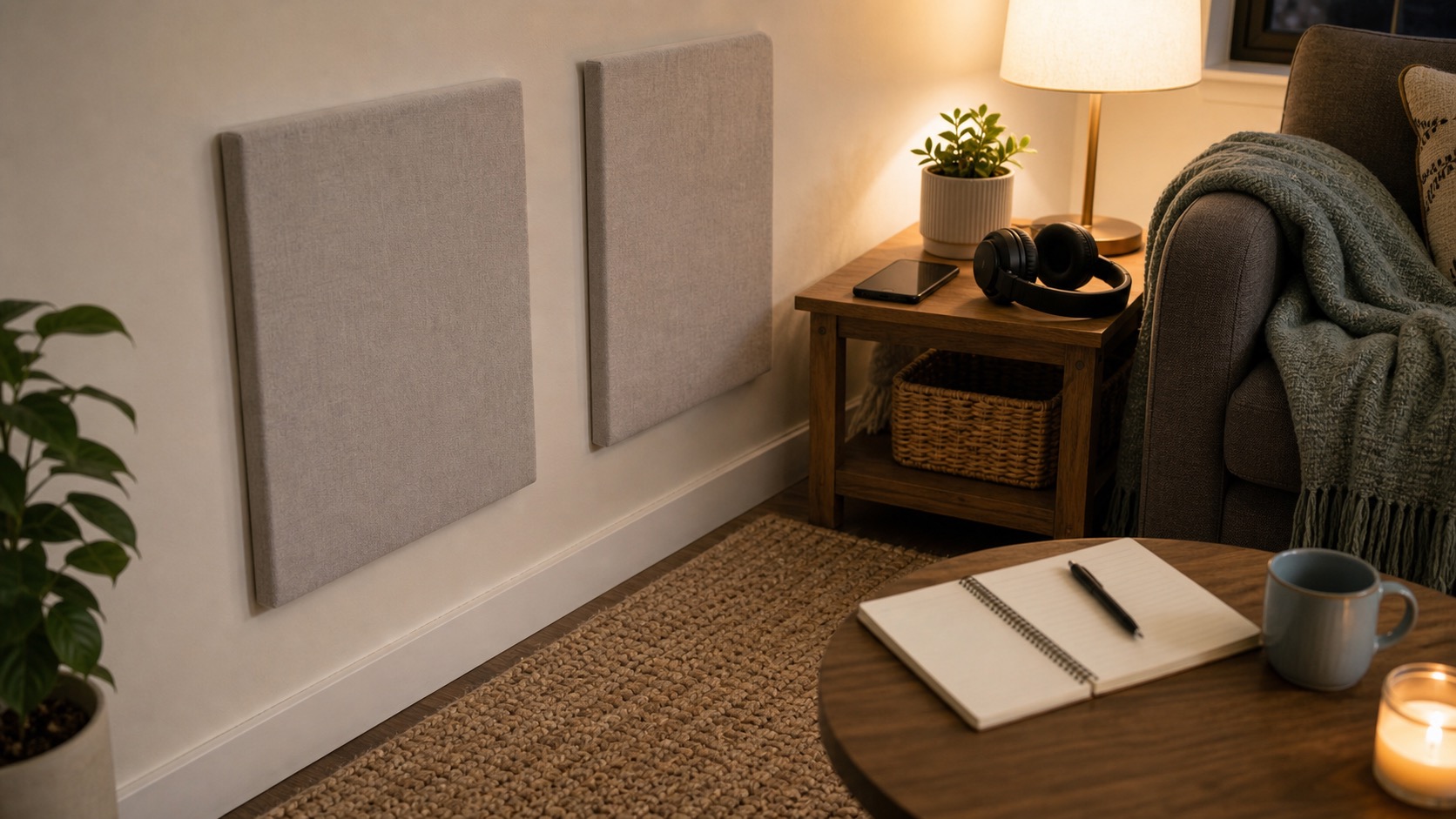
Use this when footsteps, music, voices, barking, plumbing sounds, or hallway noise are making it hard to sleep or work in a shared-wall apartment. The goal is calm documentation and renter-safe comfort steps, not confrontation.
By Portia Me'uan Thomas. Updated August 17, 2026. Edited for renter-aware safety.
Time: 15 minutes to set up tracking, then ongoing. Difficulty: Easy. Safety: Low unless there is conflict or danger.
Quick Answer
Track when the noise happens, try simple comfort steps like rugs, curtains, door draft blockers, or a white-noise machine, check your lease quiet-hours policy, and contact property management if noise is repeated, extreme, or linked to safety concerns.
Material Fit
Hardware and setup tasks depend on what the screw or load is biting into. When the material is unknown, I stop before drilling or anchoring.
| Material or surface | Safest first method | Conditional next method | Avoid / stop line |
|---|---|---|---|
| Solid wood or sturdy cabinet face | Hand-tighten visible screws a quarter-turn at a time. | Use normal-use testing before adding load. | Stop for splitting, spinning screws, or shifting alignment. |
| Particleboard / MDF furniture | Gentle cam-lock or screw adjustment only. | Unload shelves before testing. | Avoid over-tightening; it can crumble the material. |
| Drywall or plaster wall | Use removable or approved methods first. | Anchors only with landlord approval and correct hardware. | Stop if the wall crumbles, flexes, or hides utilities. |
| Tile, brick, metal frame, entry door | Document and request approval or maintenance. | Professional installation may be needed. | Do not drill or modify without written permission. |
Before You Start
- Check your lease or resident handbook for quiet hours and reporting steps.
- Keep notes factual: date, time, duration, type of noise, and impact.
- Do not record private conversations or enter shared areas in a way that violates rules or privacy.
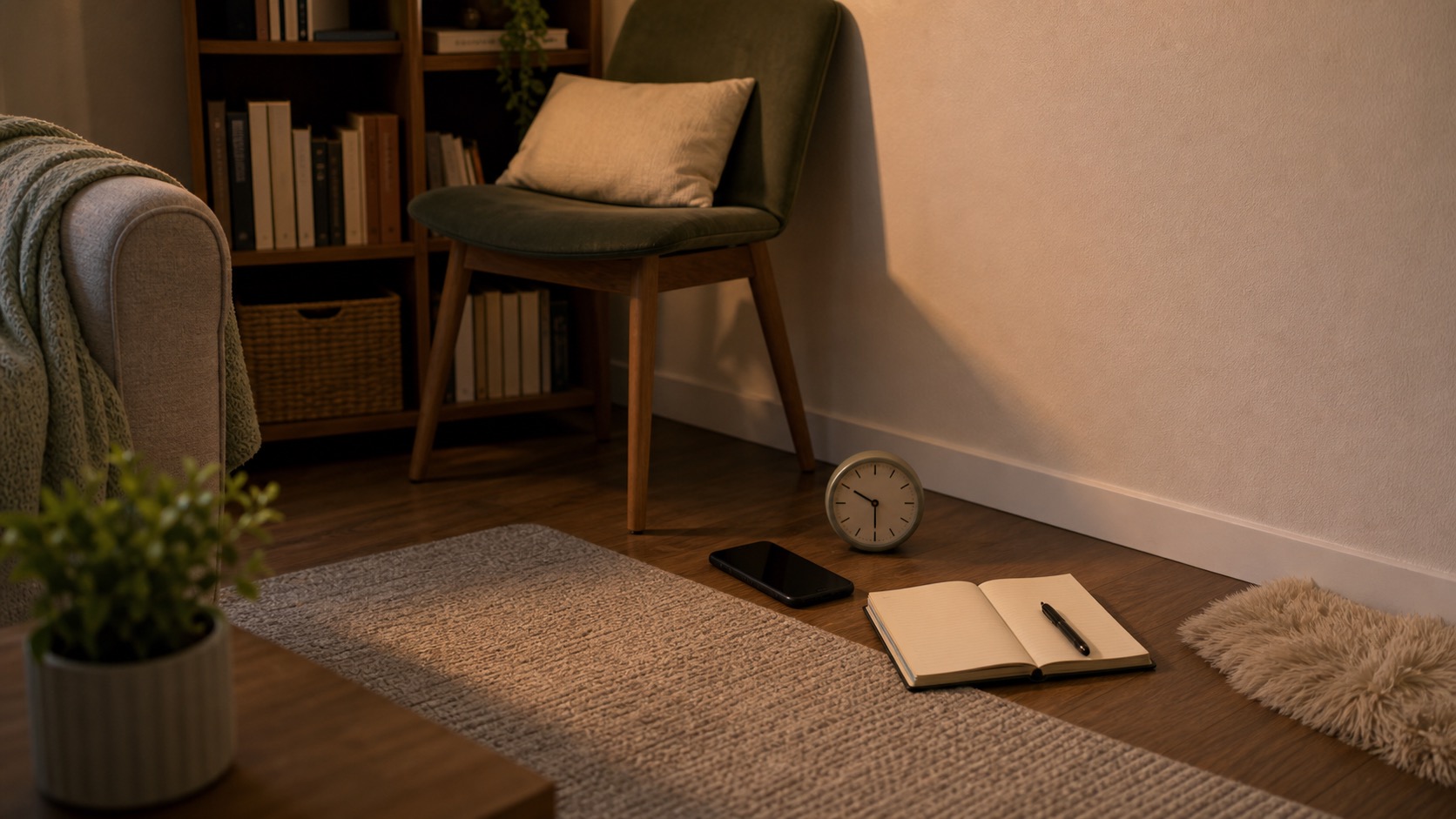
Tools Needed
- Notes app
- Calendar
- Phone for non-invasive timestamped notes
- Rugs or soft furnishings if you have them
- Door draft blocker
- White-noise machine or fan
Renter Notes
Noise rules usually run through the lease, building policies, local ordinances, and property management. Avoid retaliation, ceiling banging, or direct conflict that could escalate.
Step-by-Step Guide
- Identify whether the noise is ordinary living noise, building noise, or repeated disruptive noise.
What I check before the next step: Before continuing, I confirm the step stayed dry, visible, reversible, and within the lease or my comfort level. - Start a simple log with dates, times, duration, and where you heard it.
What I check before the next step: Before continuing, I confirm the step stayed dry, visible, reversible, and within the lease or my comfort level. - Try renter-friendly comfort steps inside your unit, such as rugs, curtains, door draft blockers, and white noise.
What I check before the next step: I keep the door or window from trapping me while testing. Entry locks, broken latches, cracked frames, or security uncertainty belong with maintenance or a locksmith. - If appropriate and safe, use the building's preferred neighbor communication process rather than an angry confrontation.
What I check before the next step: Before continuing, I confirm the step stayed dry, visible, reversible, and within the lease or my comfort level. - Submit a factual report to property management if the issue continues or violates quiet hours.
What I check before the next step: Before continuing, I confirm the step stayed dry, visible, reversible, and within the lease or my comfort level. - Escalate immediately if noise includes threats, violence, alarms, breaking glass, or suspected emergency.
What I check before the next step: I stay dry and hands-off with wiring or panels. Smoke, sparks, heat, burning smell, carbon monoxide alarms, repeated trips, or wet electrical areas mean stop immediately.
Safe Next Steps
- If the result improved, do one normal-use test and finish with the checklist item: Lease quiet hours checked.
- If the result is mixed, stop after the listed low-risk checks and decide whether the issue belongs with maintenance, your landlord, or a licensed professional.
- If the result did not improve or got worse, do not add force, stronger chemicals, hidden disassembly, or a new tool. Contact property management for the stop signs listed below.
- For a rental, send a short maintenance message with where the issue is, when you noticed it, what changed, what safe check you tried, and two photos. Keep the confirmation.
Common Mistakes
- Sending an emotional complaint without dates or details.
- Banging on walls or ceilings and creating a second complaint.
- Assuming all noise is lease-violating when some shared-wall sound is normal.
Shared-wall noise documentation
recurring shared-wall, ceiling, floor, or building-system noise is treated here as a beginner observation and control problem first, not a chance to prove you can take apart the home. The safe version is visible, reversible, and easy to stop.
For renters, the important line is ownership. You can usually observe, photograph, time, clean lightly, or tighten a visible non-security part, but hidden systems, building-owned fixtures, and lease-controlled hardware belong to maintenance.
What to Check Before You Act
Record the starting condition, perform only one low-risk check at a time, and compare time pattern, sound character, location and transfer, impact. Do not repeat a step that needs more force, chemical, height, access, or disassembly.
| Check | Before | After | Interpretation |
|---|---|---|---|
| Time pattern | Record start, end, duration, frequency, and days | After one safe check: keep a simple dated log | A repeatable pattern is more actionable than a general complaint Stop if the event involves immediate danger or a welfare concern. |
| Sound character | Record impact, voice, music, vibration, water, mechanical hum, alarm, or animal noise | After one safe check: describe volume and effect without diagnosing the source | Neutral descriptors help route the request Stop if there are alarms, breaking, threats, or signs of equipment failure. |
| Location and transfer | Record room, wall, floor, ceiling, vent, window, and closed-door difference | After one safe check: compare from normal occupied positions | Location can distinguish airborne, impact, and mechanical paths Stop if checking requires entering restricted areas or touching equipment. |
| Impact | Record sleep, work, vibration, damaged items, or inability to use a room | After one safe check: record specific effects and reasonable steps tried | Concrete impact supports a proportional property response Stop if health, safety, harassment, or retaliation concerns arise. |
Common Situations and Stop Points
| Symptom | Possible context | Safe first check | Stop point |
|---|---|---|---|
| Time pattern | A repeatable pattern is more actionable than a general complaint | keep a simple dated log | the event involves immediate danger or a welfare concern |
| Sound character | Neutral descriptors help route the request | describe volume and effect without diagnosing the source | there are alarms, breaking, threats, or signs of equipment failure |
| Location and transfer | Location can distinguish airborne, impact, and mechanical paths | compare from normal occupied positions | checking requires entering restricted areas or touching equipment |
| Impact | Concrete impact supports a proportional property response | record specific effects and reasonable steps tried | health, safety, harassment, or retaliation concerns arise |
Try It or Report It?
| Situation | Beginner can try | Do not touch | Contact |
|---|---|---|---|
| Observe and document | Keep a neutral date, time, duration, room, and sound-character log. Compare normal doors and windows open versus closed. | Hidden, fixed, energized, pressurized, structural, or lease-controlled parts | Use the record if the baseline is abnormal |
| One reversible first step | Use ordinary rugs, pads, or layout changes only within lease rules. Send a factual request through the property's process. | Anything that needs force, drilling, cutting, panel removal, or mixed chemicals | Maintenance if the first step fails or the condition returns |
| Condition persists | Repeat the observation for time pattern and sound character, not the repair | Do not escalate tools or improvise a workaround | Landlord, maintenance, manufacturer support, or the responsible professional |
| Warning sign appears | Stop, keep distance, and photograph only if that is safe | Stop before confronting or retaliating against a neighbor. Stop before invasive recording, trespass, or opening building equipment. Stop for threats, violence, breaking glass, alarms, or forced-entry sounds. | Urgent maintenance, utility, emergency services, or another appropriate safety channel |
Renter-Safe First Steps
- Keep a neutral date, time, duration, room, and sound-character log.
- Compare normal doors and windows open versus closed.
- Use ordinary rugs, pads, or layout changes only within lease rules.
- Send a factual request through the property's process.
Stop Lines
- Stop before confronting or retaliating against a neighbor.
- Stop before invasive recording, trespass, or opening building equipment.
- Stop for threats, violence, breaking glass, alarms, or forced-entry sounds.
- Stop if the noise pairs with gas odor, burning smell, water, or structural movement.
- Use the appropriate emergency or welfare channel for immediate danger.
Additional FAQ
Should I record my neighbors?
Privacy and recording laws vary. Prefer a written log and non-invasive evidence from your own space; seek local guidance before recording conversations.
What makes a useful noise report?
Specific dates, duration, location, sound character, impact, safe steps tried, and whether the pattern is changing.
What should I include in a maintenance message?
Include the exact location, when it started, photos, the time pattern and sound character and location and transfer and impact, what safe check you performed, and whether the condition improved, stayed the same, or worsened.
Related Next Steps
- First Apartment Maintenance Checklist - Separate recurring building noise from a one-time event.
- Heat or AC Stopped in an Apartment: Safe First Moves - Use the HVAC guide if noise changes with system operation.
- Front Door Security Check for Renters - Use the security route when noise involves entry damage or threats.
What Not to Do
- Do not confront someone if you feel unsafe.
- Do not retaliate with loud music, wall banging, or harassment.
- Do not install soundproofing materials that damage walls or violate fire rules.
When to Pause and Ask for Help
Contact property management for repeated quiet-hours violations, building equipment noise, broken windows or doors, or unresolved neighbor issues. Call emergency services if you hear violence, threats, alarms, or signs that someone may be in danger.
FAQ
What details should I track?
Date, start and end time, type of noise, room affected, and whether it violates quiet hours.
Should I talk to my neighbor first?
Only if you feel safe and your building allows it. A polite note can help, but property management may prefer formal reports.
Can rugs help with apartment noise?
Rugs and soft furnishings can reduce echo inside your unit, but they will not fix severe structural or neighbor noise.
When is noise a safety issue?
Threats, fighting, breaking glass, alarms, or someone calling for help should be treated as urgent.
Final Checklist
- Lease quiet hours checked
- Noise log started
- Comfort steps tried
- No retaliation
- Property management contacted if repeated
- Emergency help called for danger
You May Also Like
More beginner-safe guides that connect to this repair, the same room, or the next safety decision a renter may need.
- Drafty Apartment Window: Renter-Safe First Fixes - Reduce cold window drafts with removable renter-friendly steps before asking maintenance for repair.
- Curtains in a Rental: Hang Them Without Wall Damage - Add privacy with renter-friendly curtain options that avoid drilling and wall damage.
- Front Door Security Check for Renters - Improve front-door confidence with renter-safe checks, habits, and clear lock repair boundaries.
- Safe to DIY? A Renter's Home Repair Filter - Use a simple safety filter before deciding whether to DIY a repair in your first place.
- The Quiet Habit That Helped at Move-Out: Why I Photograph Apartment Problems Now - Build a simple, privacy-aware apartment photo record with safe wide and detail images, useful notes, original files, official request confirmations, and move-out comparisons.
- Move-In Inspection Before You Unpack - Inspect a rental apartment before unpacking so you can document damage, leaks, locks, and safety issues early.
- First Apartment Maintenance Checklist - A realistic monthly checklist for keeping a first apartment safer and easier to manage.
- Pest Evidence in a Rental: Where to Check First - Look for early pest evidence in a rental apartment and report it before the problem spreads.